
Join us for Open House on November 13, 2026. Register now.

Menu

Menu
Join us for Open House on November 13, 2026. Register now.
Join the Scrivner Institute of Public Policy for the next Scrivner Policy Roundtable, an event series designed to build a collaborative learning network among local policy actors and the campus community. This special election edition of the roundtable is open to our broader community and will explore several ballot measures that Coloradans will be voting on in the upcoming election.
This fall's ballot has a diverse array of measures, including 13 citizen-initiated ones! Join us to learn more about several important measures, including:
The event will include short, informative panel discussions with experts on each issue, followed by an opportunity for audience Q&A. Join us for an informative evening ahead of the election!
This reflection was written by Izzy Knaus (MA, International Security), one of four students selected to represent the Josef Korbel School of Global and Public Affairs at the 2026 Aspen Security Forum.
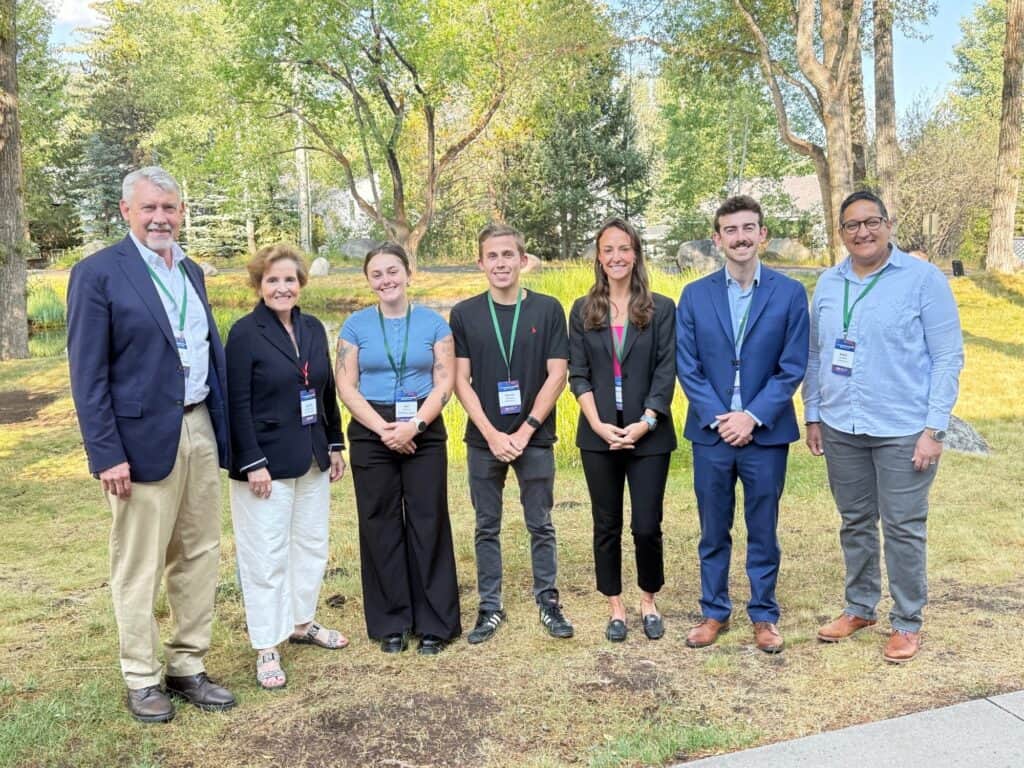
As a student in the International Security program here at Korbel, my studies, conversations, and assignments are often centered on war: its causes, its conduct, and the systems designed to contain it. We analyze evolving methods of warfare, emerging technologies, and the strategic frameworks that shape global conflict.
But throughout the 2026 Aspen Security Forum, I began to reconsider the lens through which I approach these questions. My true interest is not in war itself, but in who it impacts and how. That is the essence of human security, and it emerged as a quiet but persistent thread woven through many of the discussions in Aspen.
One of the most striking examples came from conversations on technology and security, particularly the panel on digital resilience through integration featuring Ambassador Nick Burns, Lisa Monaco, Wolfgang Schmidt, and Kaupo Rosin. In a moment where artificial intelligence is often framed in existential or zero-sum terms, the discussion reframed the stakes. The future of technological competition, they emphasized, is not about replacing human decision-making, but about augmenting it. Even in the most high-stakes domains, including nuclear command and control, human beings will remain at the center. The “winners” of the AI era will not be those who build the most advanced systems alone, but those who most effectively harness technology to expand human judgment, coordination, and resilience. In this sense, digital resilience is fundamentally human.
This human-centered lens also shaped conversations on alliances and collective security. In discussions on NATO and the so-called “continental drift” of global power, speakers repeatedly underscored the importance of allies not just as strategic assets, but as communities bound by shared commitments. The war in Ukraine was a powerful case study. Panelists noted a stark contrast in how the conflict is being fought: Ukraine’s approach reflects a prioritization of its people, while Russia’s strategy has often appeared indifferent to human cost. This distinction is not just moral; it is strategic. The legitimacy and endurance of a security effort are inseparable from how it values human life.
In sessions focused on the Western Hemisphere, the human dimension of security became even more visible. Conversations around Venezuela, Haiti, and broader regional instability emphasized that conflict is rarely confined to battlefields. Economic collapse, political repression, and natural disasters all produce cascading human consequences: displacement, food insecurity, and the erosion of public trust. These are not secondary effects of insecurity; they are central to it. Addressing them requires not only policy coordination, but sustained attention to the lived experiences of affected populations.
The Forum also made space for a more personal dimension of human security through reflections on military service. Speakers such as Colonel Jack Jacobs, Lieutenant Colonel Will Swenson, and Joseph Dinkel spoke about service across generations, offering a perspective grounded in lived experience rather than abstraction. One idea in particular stood out: the notion that heroism is not something one owns, but something one holds “in trust.” It is a reminder that the burdens of conflict are carried by individuals, often shaped by a sense of duty that transcends any single moment. Their stories highlighted that the human spirit, with its capacity for resilience and sacrifice, remains at the core of security.
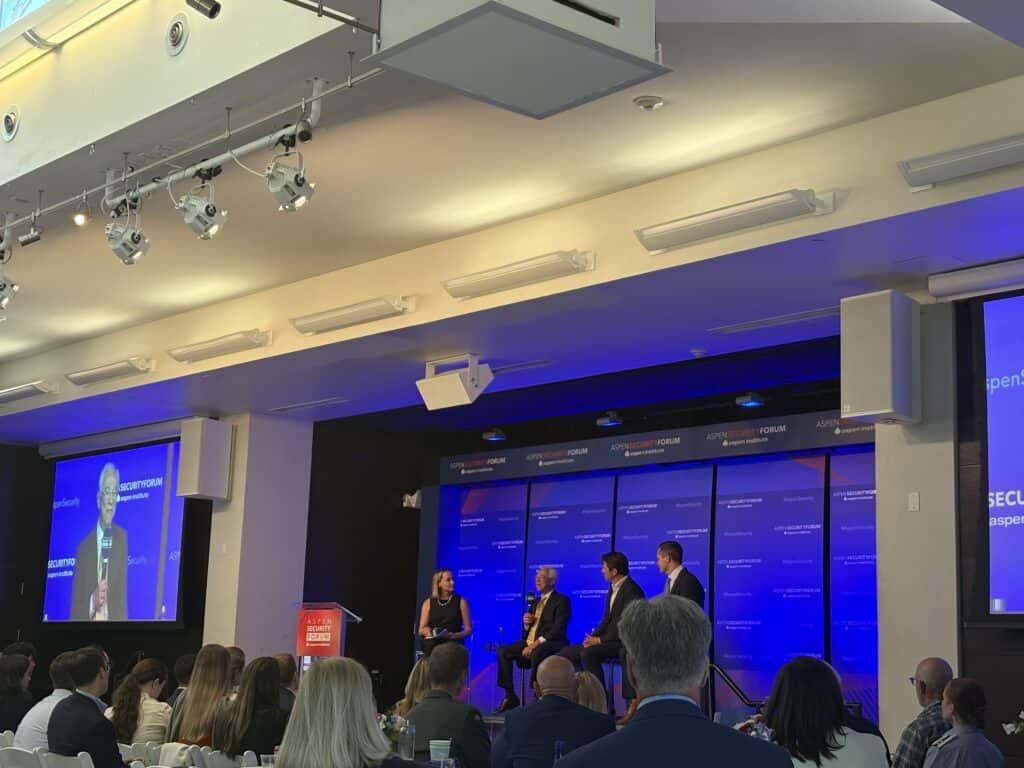
In a powerful intervention, Jordanian Foreign Minister Ayman Safadi emphasized the centrality of dignity in any lasting peace. Speaking about Gaza, he underscored the urgent need for humanitarian aid while also articulating a broader vision: that Palestinians and Israelis must be able to live in dignity and mutual acceptance. His assertion that “in order for peace to prevail, it must be just” encapsulated a key takeaway from the Forum. Security cannot be reduced to stability alone. Without justice and human dignity, it remains fragile and incomplete.
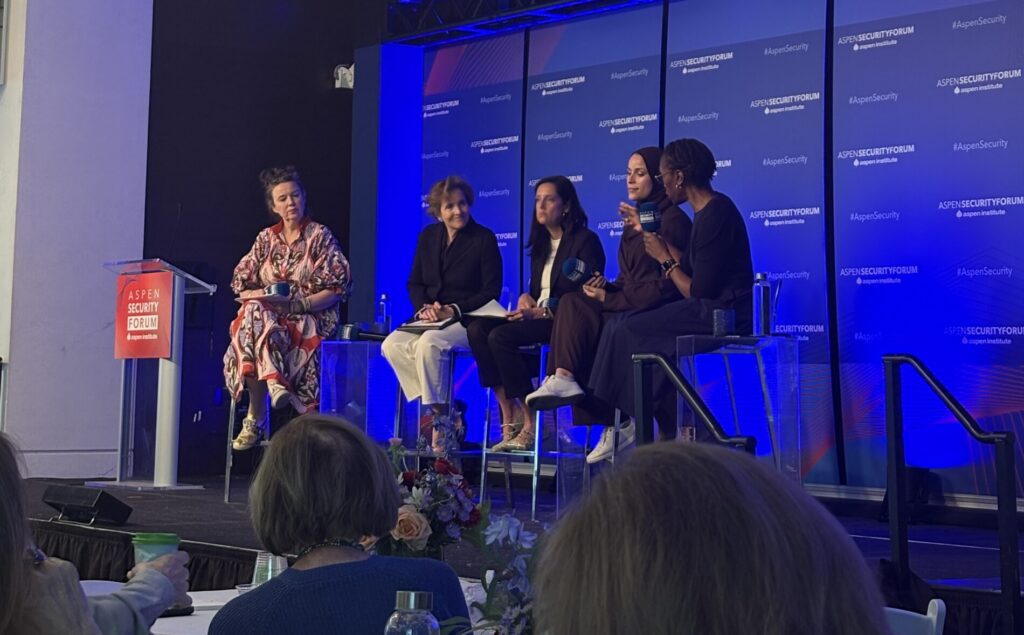
Perhaps the most meaningful session I attended at the Forum was the Denver Dialogues session on foreign assistance and national security in partnership with the Korbel School, which reflected the strong connection between Korbel and the Aspen Institute. The session included Alice Albright, granddaughter of the school’s founder and namesake, Josef Korbel. Her career has centered on development, diplomacy, and the kinds of human-centered priorities that sit at the heart of human security. Her conversations with fellow panelists (Comfort Ero, Alaa Murabit, and Ana Zacapa) and with us Korbel students before the session reflected a broader message that security is not just about states, strategy, or power, but about the conditions that allow people and communities to live with dignity, stability, and opportunity.
This is a complete reframing of traditional security concerns. Technology, alliances, and military strength remain essential, but their significance lies in how they shape human lives. If human security is foundational, then our frameworks for thinking about war, deterrence, and stability must account for more than territory and power. They must account for people.
As I return to my studies at Korbel, that is the shift I will carry forward. Understanding conflict now means not only analyzing strategy and systems, but also centering the human beings who live with their consequences. As panelist Alaa Murabit argued in the Denver Dialogues session, “We need to really start thinking about education and healthcare and water and food security as upstream of national security… They are actually what create national security.” Her insight reinforced what emerged throughout the Aspen Security Forum: that security is not built solely through deterrence or defense, but through the conditions that allow societies to thrive.
Huge thanks to the Korbel School of Global and Public Affairs and the Scrivner Institute of Public Policy for sponsoring this opportunity, and to the Aspen Institute and Aspen Strategy Group for hosting us!
June 2026 marks five years since the first cohort of Korbel School Master of Public Policy (MPP) students graduated in affiliation with the newly launched Scrivner Institute of Public Policy. Their time in the program coincided with a period of transformation for the program—new leadership in Fall 2020 under founding Scrivner Institute Director and MPP degree director Naazneen Barma, the beginning of a revitalized and more interdisciplinary curriculum, and deeper integration within the Korbel School, leading to a unique MPP degree that addressed policy at the local, comparative, and global comparative levels. This cohort learned and graduated under very unique circumstances—including being forced into remote learning during the Covid-19 pandemic—and they have been shaping policy across different sectors and with various perspectives ever since.
Today, these alumni are working across government, research, nonprofit leadership, advocacy, and international policy—with analytical rigor, adaptability, and a commitment to impact. From leading health policy research and advocacy and running for city council, to negotiating international trade agreements, bridging academic research and policy, and expanding access to youth programs, their paths reflect the interdisciplinary promise and excellence of the Korbel MPP experience in partnership with the Scrivner Institute.
Five years after graduating, we asked some alumni from that first cohort to reflect on their path since graduating and how the MPP program shaped and prepared them for their careers. Thank you to cohort member Michelle Popovi for this wonderful feature idea!
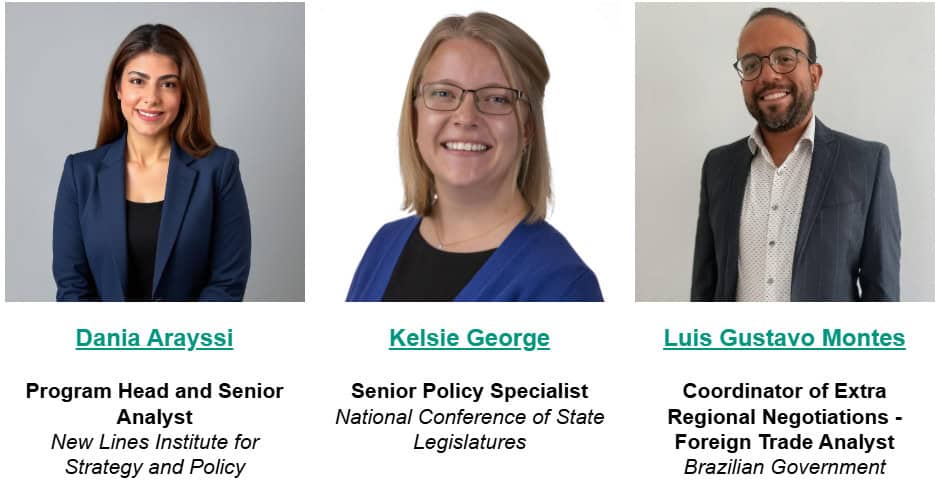
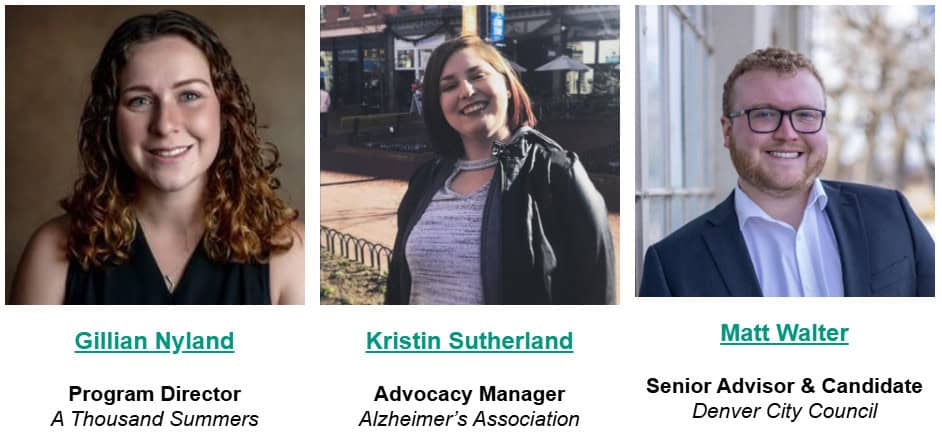
What drew you to the MPP program at Korbel? What was it like being part of the first cohort to graduate under the Scrivner Institute as the program was being revamped?
Dania: What initially drew me to the MPP program at Korbel was its unique combination of rigorous policy analysis, quantitative methods, and its strong focus on international affairs. Coming from Lebanon and being deeply interested in the intersection of politics, economics, and development, I wanted a program that would equip me with both analytical tools and practical policy skills. Being part of the first cohort to graduate under the Scrivner Institute was an exciting experience. The program was evolving and adapting to better prepare students for real-world policy challenges, and there was a strong sense that we were helping shape that transformation. The faculty were highly engaged and receptive to student feedback, which created a collaborative learning environment and made us feel invested in the program's success.
Luis: When I decided to pursue an MPP, I already had about ten years of experience in the Brazilian public service. During that time, I often felt the need for a more technical, analytical, and evidence-based approach to public policy in government. I chose Korbel after carefully researching different programs. What drew me to the MPP was its connection to the U.S. public service experience, combined with its emphasis on research, quantitative methods, and practical policy analysis. For me, it offered the right balance between academic training and real-world application.
Gillian: Attending DU as both an undergraduate and graduate student, I knew that the MPP program was right for me. The courses were immediately of interest and a top tier policy education in a city I already knew and loved made the Scrivner Institute a perfect fit. As a member of the first graduate cohort, I have felt a responsibility to continue to positively impact the Korbel community and offer advice to those still to come. I have seen the program change immensely since graduating, and have been impressed by the ways in which the school is able to meet the moment.
Kristin: I originally sought out admission to DU’s MSW program but decided to also add a dual degree in public policy, as I knew it would better help prepare me for the macro social change work I was interested in.
Matt: I was an undergraduate majoring in public policy, where I spent most of my time focusing on state and local issues for Colorado. Hoping to get an edge up in the job market, I extended my degree into the MPP through the 4+1 program. As the policy program transitioned, I enjoyed taking advantage of electives at Korbel through the international studies program. I got to indulge my love of foreign affairs in classes which used case studies from around the world, while still refining my policy skills and their applications to Colorado.
What has your career path looked like in the five years since graduation? How did the program shape your path?
Dania: Since graduating, my career has centered on bridging academic research and public policy. I have worked with organizations including the World Bank, USAID, Oxfam America, and the U.S. Army War College. Today, I serve as Program Head and Senior Analyst at the New Lines Institute for Strategy and Policy, where I lead research and policy initiatives focused on the Middle East and Central Asia. I also teach as an adjunct professor at Georgetown University and George Washington University. Finally, I finished my PhD in Political Science from the University of Colorado Boulder.
The MPP program played a critical role in shaping this path. It strengthened my ability to translate complex research into actionable policy recommendations and helped me develop the analytical skills necessary to engage policymakers, practitioners, and academic audiences. It also reinforced the importance of evidence-based policymaking, which remains central to my work today.
Kelsie: I started as an intern at the National Conference of State Legislatures while completing my MPP in 2020, and have been there full-time for five years. At NCSL, I analyze state health policy, author publicly-available policy briefs and publications, answer research questions from state legislators and legislative staff and plan meetings and educational sessions throughout the year bringing policymakers together for shared learning. I now lead the organization's health workforce policy research portfolio, including scope of practice policy, recruitment and retention, licensure and certification, graduate medical education and access to care topics, which are constantly evolving across states. The MPP program honed my policy research skills, my ability to summarize and analyze complex state statutes, my understanding of state budgeting processes and my comfort and confidence working alongside policymakers to address the most pressing health care issues across states.
Luis: After graduating, I returned to the Brazilian federal government, working on policies for small enterprises, especially initiatives connected to entrepreneurship and ecotourism. The MPP helped me bring more evidence, structure, and analytical rigor to the design and evaluation of those policies. About two years later, I joined Brazil’s trade negotiation team. Since then, I have worked on Brazil’s trade agreements, particularly the Mercosur-European Union Agreement. The program shaped my path by giving me a broader analytical perspective on policy, economics, and international trade, which continues to be very valuable in my work.
Gillian: Obtaining an MPP set me up for a strong career in the nonprofit industry, which can serve as a testing ground for ideas that can translate into public policy solutions. Since graduating, I have used the policy analysis skills I learned in the MPP to critically evaluate nonprofits and the programs they operate, serving in both the development and community impact sides of the nonprofit industry. Outside of my career path, I have also found a deep passion for volunteerism, a trait that was fostered in me while pursuing the MPP. Today, I am the Program Director for A Thousand Summers, a nonprofit helping connect youth with transformative outdoor experiences. I feel it was only the unique blend of people, classes, and place at Scrivner that helped get me here.
Kristin: Most of my time during the last five years has been spent with the Alzheimer's Association managing their advocacy program in Colorado, Wyoming, and now Utah. I focus on both state and federal grassroots advocacy and lobbying efforts here in CO working on healthcare policy and consumer protections.
Matt: I went straight to work for Congresswoman Diana DeGette in Washington DC after graduating. Due to my elevated skillset, I was given significant research tasks in addition to standard new hire duties. That turned into a series of quick promotions, and I managed a portfolio of policy topics for the office. After three years, I was homesick for Colorado, so I moved back to Denver and started working for Denver City Councilwoman Amanda Sawyer. The MPP program had taught me a wide breadth of knowledge, spanning everything from international to hyper local. My MPP set me well ahead of the curve, so much so that 5 short years later I am confidently running for Denver City Council to continue delivering results for Denverites at the local level
Were there specific classes, experiences, or mentors that were especially formative or impactful?
Dania: Several experiences were particularly formative. The quantitative methods and policy analysis courses challenged me to think more systematically about policy problems and strengthened my confidence in working with data. These courses became especially valuable as I later pursued doctoral research and policy analysis.
I was also fortunate to learn from faculty who encouraged intellectual curiosity while emphasizing practical policy applications. Their mentorship helped me see how rigorous academic research can directly inform policymaking and public debates. The collaborative environment at Korbel also exposed me to classmates from diverse professional and international backgrounds, which broadened my perspective on global policy challenges.
Kelsie: I took a December course with Dr. Salucci where we explored local policy topics across Denver. We covered nearly every topic you can imagine--housing and homelessness, historic preservation, transportation, economic development, education systems, public health and more. We had the opportunity to meet with local leaders, and these discussions stick with me to this day. Alongside the very place-based and locally-focused jobs I held during my time at Korbel at Denver Public Library and Colorado Preservation Inc., this course solidified my love for and commitment to Denver as my home.
Luis: It is difficult for me to point to one specific class as the most formative. Looking back, I think the real value came from the way different classes complemented each other and helped me build a broader policy toolkit. Courses related to public policy analysis, international trade, economic development, quantitative methods, and policy evaluation all contributed to the way I think about public problems today. Rather than one single class, the most impactful part of the program was the combination of tools, perspectives, and experiences.
Kristin: Professors Lapo Salucci and Naazneen Barma were both amazing sources of support and really helped with making the most of the switch to online learning during the height of the pandemic. They were able to continue to make zoom classes engaging and provided great feedback while I was working on my policy memorandum.
Matt: I took multiple budgeting and economics courses while at Korbel. Nearly every aspect of policy making hinges on immediate and future budget impacts. Learning the language of accounting has helped me significantly in my career, as well as when and what kind of tertiary consequences a policy may have. Many of my courses required an experiential component too. I recall sitting in a Colorado Joint Budget Committee Hearing about higher education across the state, taking notes on all the deferred maintenance which institutions wanted the state legislature to fund. Nearly none of them were selected. It was a humbling experience to learn the costs associated with the projects, and the tough decisions legislators made for what got funding and what did not
How do you feel the program prepared you for the public policy challenges you encounter in your field? Which skills or tools from the program have been most valuable in your work?
Dania: The program taught me how to approach complex policy challenges with both analytical rigor and practical awareness. In my current work, I regularly analyze issues ranging from regional security and political economy to energy policy and governance. These issues rarely have straightforward solutions, and the MPP program helped me develop frameworks for evaluating competing priorities, assessing evidence, and communicating findings effectively.
The skills that have been most valuable are policy analysis, quantitative research methods, program evaluation, and policy writing. Equally important was learning how to communicate complex ideas to different audiences—from policymakers and diplomats to students and the broader public. That ability to translate research into clear, actionable insights has become one of the most important parts of my career.
Kelsie: My work at the National Conference of State Legislatures is strictly nonpartisan--As a membership organization for state legislators and legislative staff, we do not take any positions for or against state policy. In Korbel's MPP program, we were regularly challenged to consider a variety of perspectives as we analyzed policy outcomes or researched potential policy recommendations. This provided me with a unique skillset to understand a variety of policy strategies across the political spectrum, and I use that skill in my work daily.
Luis: The program prepared me by exposing me to a different government and policy-making environment. Many classes explored how the U.S. government approaches public policy challenges, and that comparative perspective was very valuable for someone coming from another country. It also helped me better understand the connection between academic research and policy practice. The quantitative methods and policy evaluation tools I learned at Korbel have been especially useful in my work, helping me think more clearly about policy impacts, evidence, and decision-making.
Gillian: Working for a nation-wide serving nonprofit, I have become more intimately aware of not just how policy changes from state to state, but how national policy can impact individuals and families on a large scale. In my field, I work with families who make under 500% of the federal poverty guidelines; families who have generally been left behind by public policy makers. The skills I learned in the MPP helped me see the real-world implications of policy work, and what can happen to individuals when large scale policies either don’t help or can’t help. I have been able to see that policy analysis helps decision makers measure the success of a given policy, and that data only tells part of the story. The rest lies in getting to know people for who they are and meeting them where they are.
Kristin: I feel the program gave me a solid base of knowledge for public policy work so that I had the confidence and skills to pursue many different opportunities in the field of public policy. I originally saw myself focusing on sustainability and/or housing policy work, but have now branched out into the healthcare space. With the tools I gained from the program, I feel I was able to adapt into different policy spaces that I didn’t originally have much experience in.
Matt: Korbel taught me to ask good questions and analyze how trustworthy a source is. Public policy is not apolitical, and there will always be competing interests. It's up to me to ask the right questions and find legitimate sources to support a policy goal. I learned enough about fallacies of logic and how to manipulate statistics, knowledge which has helped me parse through competing narratives to see a picture closer to the truth.
What advice would you give to current students to make the most of their time in the program?
Dania: Take advantage of every opportunity to connect theory with practice. Seek internships, research opportunities, and projects that allow you to apply what you learn in the classroom to real policy challenges. I would also encourage students to build strong relationships with faculty and classmates. Some of the most valuable lessons and opportunities come from those connections. Finally, don't be afraid to explore interdisciplinary interests. Many of today's policy challenges—whether related to security, economic development, migration, or climate—require perspectives from multiple fields.
Kelsie: Ask for what you need! The staff and faculty across DU are incredibly supportive, intentional and committed to making sure you get the absolute most out of your experience. During my time, I was able to take classes in the Sturm College of Law, Daniels College of Business, Morgridge College of Education and the Graduate School of Social Work. Each of these schools and programs provided me with distinct practical and academic skills and knowledge that inform my career today. I also built independent study courses on alternative policy analysis methods and research skills with Dr. Greenfield, which uniquely tailored the program to my skills and interests.
Luis: My advice would be to make the most of your time in the program, because it goes by very quickly. Looking back, I feel it was a privilege to take classes with the professors I had and to be part of that academic environment. I would encourage current students to explore as many of Korbel’s resources as possible, both inside and outside the classroom. Be intentional with your time, ask questions, engage with different perspectives, and take full advantage of the experience while you are there.
Kristin: Take advantage of the opportunity to branch out not only into different areas of public policy but also other areas of focus that the university offered. I pursued dual degrees in public policy and social work, and it really helped shape the kind of work I’ve pursued after graduation.
Matt: You live in the 19th largest city in America, which is the capital of the 20th largest state. Both Denver City Council and the Colorado General Assembly are in your backyard. I highly encourage you to get out there and attend some hearings, listen to committees, and sign up to speak on topics you are passionate about. There is so much activity at the state and local level and you can learn so much about the general legislative and budgetary process just by following along.
What is a favorite story or memorable moment from your time as a student?
Dania: One of my favorite memories was the sense of community among students in the program. Many of us came from different countries, professional backgrounds, and life experiences, yet we were united by a shared commitment to solving complex policy problems. Some of the most meaningful learning happened outside the classroom—through debates, group projects, and conversations that challenged our assumptions and expanded our perspectives.
Another memorable aspect was realizing how much I had grown analytically and professionally by the end of the program. Looking back, I entered Korbel with a passion for public policy, but I left with the tools, confidence, and network needed to build a career at the intersection of research, teaching, and policymaking. That transformation is something I continue to appreciate today.
Gillian: My favorite memory from being a student was getting to walk across the stage at graduation. I received my undergraduate degree during the height of COVID, so it was an important moment for me to be able to celebrate with friends and family. As the first person in my family to receive an undergraduate degree, let alone an advanced degree, it was very important for me to be able to finally celebrate my accomplishment.
Matt: A really memorable moment was during one of my quantitative classes. I am not a math person and was generally running myself pretty ragged back then. I fell asleep in class, face down on the table, prompting Professor Salucci to end class early. I wasn't the only one with a vacant, glassy stare and it was clear no one understood the concept. He spent a lot of time reworking the lesson for our next class, and we all bounced back better because of it. You don't get that kind of attention to the students and personalized approach at a big school. And it's just one example of how incredibly supported I felt through my entire time at Korbel.
This article was written by MPP student Jenni Gutierrez Marquez
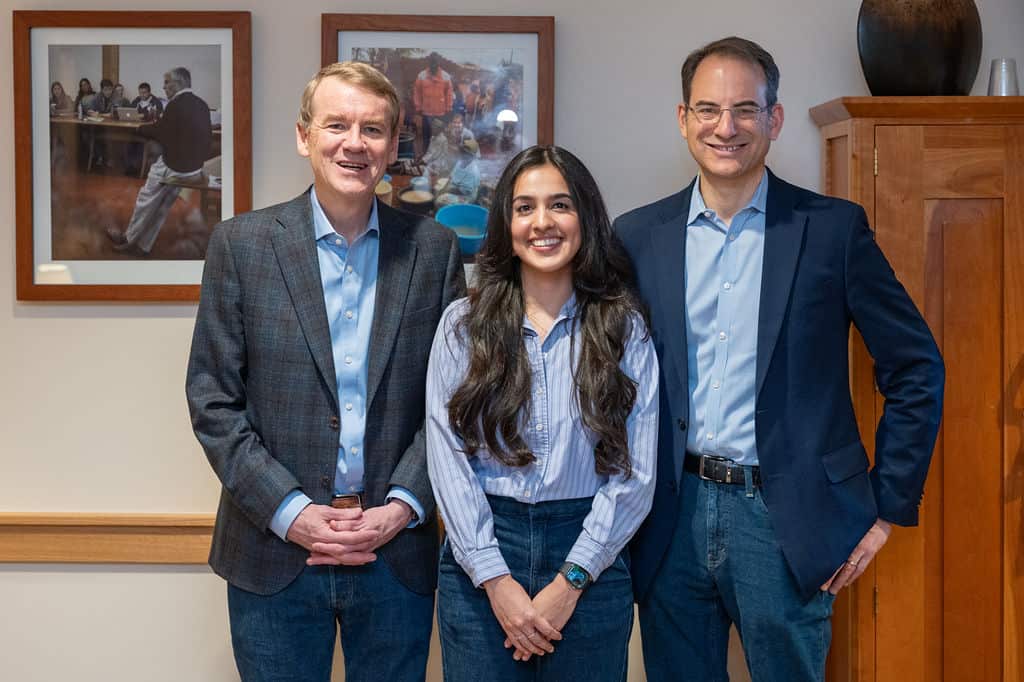
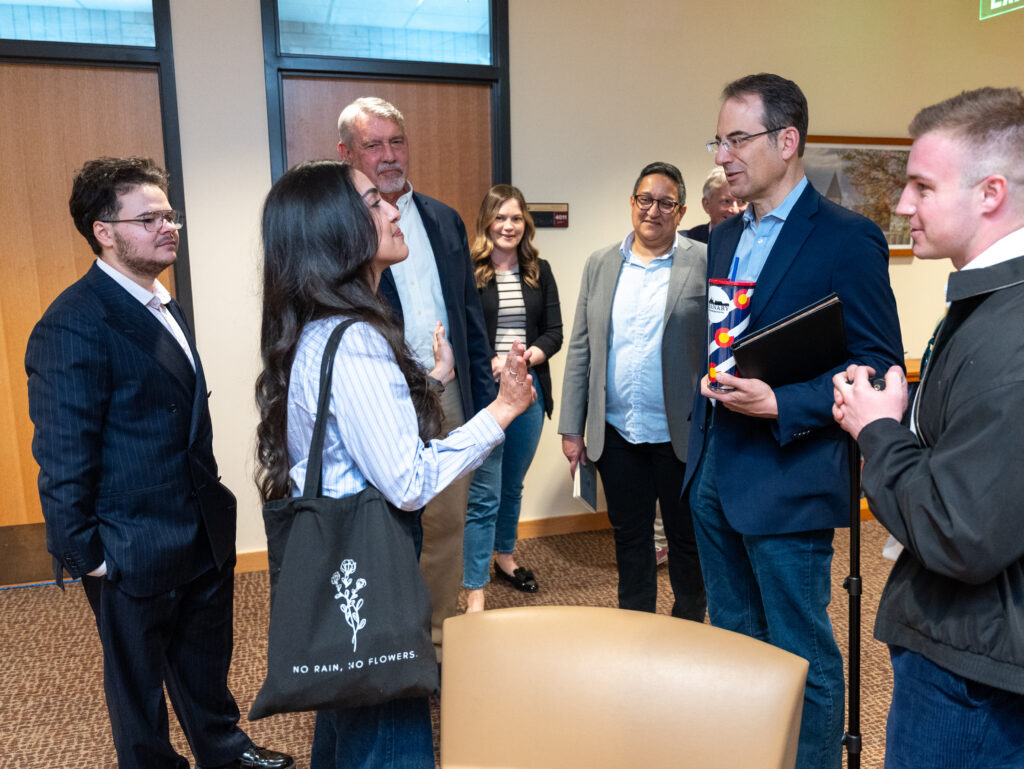
On March 1, 2026, I had the honor of meeting U.S. Senator Michael Bennet and Colorado Attorney General Phil Weiser at the Governing Colorado: Policy Challenges and Priorities event, hosted by the Scrivner Institute of Public Policy. This event provided a unique opportunity for the public to engage directly with two of Colorado’s most prominent leaders, and current gubernatorial candidates, on some of the state’s most pressing policy challenges.
What set this event apart was its educational approach and non-debate format. As Scrivner Institute Director and moderator Naazneen Barma described, it was “a deep dive dialogue on major policy issues that are facing the state in a non-partisan educational space.” The civil discourse felt significant, offering our community both insight into Colorado’s future leadership and a chance to come together around the gravity of issues ranging from affordability and housing to healthcare, natural resources, and more. The dialogue allowed students and community members to learn about potential solutions from state leaders, appreciate new perspectives, and develop a deeper understanding of the challenges Coloradans across the state are facing. The event embodied what it means to be at the heart of meaningful, community-focused education and civic discourse. On a personal note, I truly appreciated the chance to briefly meet both speakers and engage in informal conversations about my own and my classmates’ interests in public policy.
Affordability emerged as a recurring theme, particularly against the backdrop of current economic challenges. The panel discussed the potential effects of the Kroger and Albertsons merger, which could have led to the closure of grocery stores in rural Colorado. This scenario raised important concerns about the possibility of food deserts, making it even harder for vulnerable populations, especially the elderly, to access affordable groceries. Town halls became crucial forums for both workers and consumers to express their concerns and highlight how issues of affordability touch everyone in the community. The discussion on affordability naturally extended to housing, with widespread anxiety over so many Coloradans spending more than 30% of their income on a place to live. The central takeaway was the need to build an economy where everyone can thrive, an idea both candidates addressed by sharing different approaches they would take to achieve this goal.
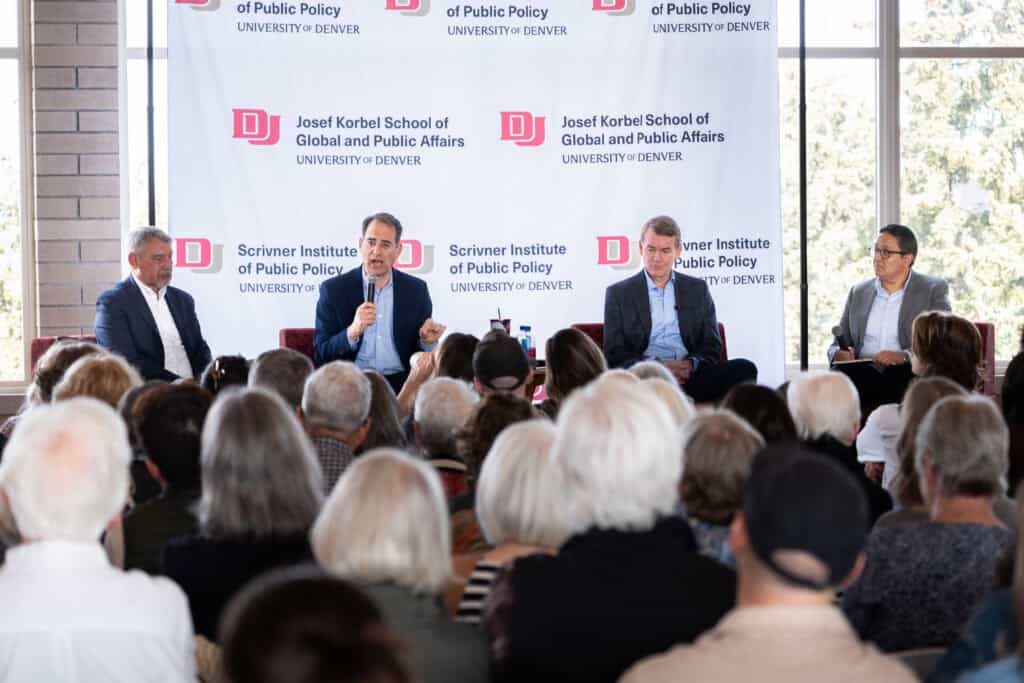
Healthcare was another significant topic, particularly the question of how and when the state should step in to address gaps left by the federal government. The conversation focused on the risks of rural hospitals closing and the broader issue of retaining essential healthcare professionals across Colorado. There was a strong emphasis on the need to ensure primary care for all at lower costs, with the understanding that fair compensation is crucial not only in healthcare but also in education and other vital professions. The message was clear: Colorado cannot afford to wait for federal action and must pursue innovative state-level solutions.
Both speakers underscored the importance of the entire state coming together, pooling resources, and moving beyond political differences to protect all Coloradans. The conversation also explored the complex relationship between state and federal governments, focusing on the importance of secure democratic practices and the rule of law. For example, the prosecution of Tina Peters was discussed not as a political issue, but as an affirmation of legal integrity. Throughout, the need for Colorado to advocate for its own rights and remain resilient in defending democratic values was a recurring theme.
Immigration emerged as a deeply personal theme for both speakers, shaped by their family histories. There was broad agreement on the need for Colorado’s next governor to support mixed-status families and prevent unnecessary separations, as well as a shared recognition of the vital role the immigrant community plays in the state. Both speakers highlighted the continued need for immigration reform and emphasized the importance of creating a culture that values and appreciates immigrant neighbors and first-generation Americans. For me, it was particularly refreshing and meaningful to ask a question about immigration enforcement and receive responses rooted in personal experience. Hearing such thoughtful, nuanced answers, focused on community preservation rather than political posturing, was a reminder of the power of honest, empathetic dialogue in a policy setting.
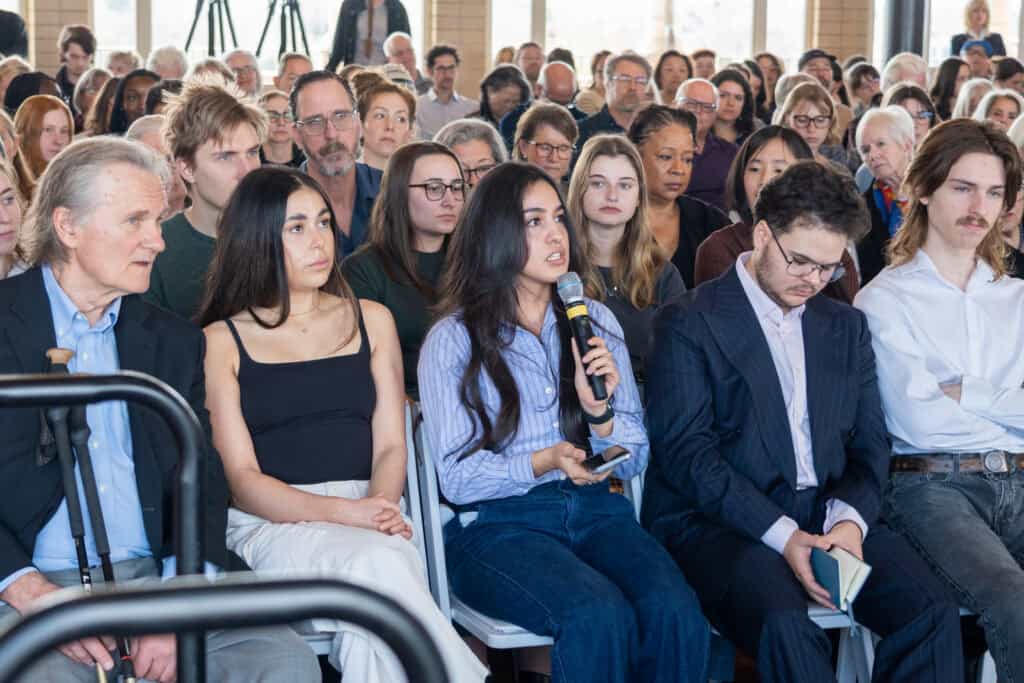
Natural resources and conservation also featured prominently in the dialogue, with Colorado’s identity deeply tied to its beauty and wildlife. The most pressing issue discussed was the ongoing 25-year drought and the challenges it poses for water resources. Ensuring safe drinking water, particularly in southeastern Colorado, remains an ongoing struggle, despite efforts to address it. The panel underscored the need for state-first approaches to water management, prioritizing the rights of Coloradans in water treaties while also recognizing the needs of those downstream. There was a strong call to build coalitions that address these environmental challenges, including targeted efforts to mitigate wildfire risk in areas like Meeker and the Southern Slope. The conversation highlighted real opportunities for Colorado to lead on climate and resource policy, but progress will require concrete action and collective accountability.
Throughout the dialogue, both speakers exemplified a unique sense of Colorado pride. Even when they disagreed on specific policy solutions, there was an ever-present consensus on the need to protect Coloradans and put the state’s people first. The event went beyond just covering the topics, it dove into the political complexities behind them. As community members, we walked away not only with more knowledge but also with a deeper understanding of the challenges ahead and a sense of responsibility to become more aware and innovative. This especially resonated with me as a student preparing to enter the policy field.
Watch the recording of the discussion here.
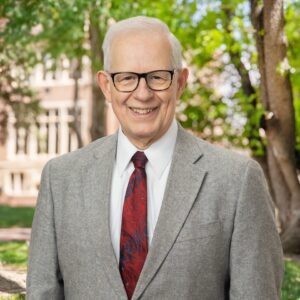
When did you join the faculty here at Korbel, and what drew you to the Korbel School?
I started here in September 1987. At the time, Korbel, then known as the Graduate School of International Studies, had a strong emphasis on international technology policy. My scholarly interests are in science, technology, and environmental policies, so this was a good fit. Also, I directed the international technology policy concentration and realized I could move it in whatever direction I wished. Within a few years I added a course in global environmental governance and taught it for many years.
What are your research interests and areas of expertise? What courses do you teach?
I have three main research interests. 1. Energy policy, especially renewable energy policy. 2. Science policy, which encompasses both government funding for science and the government’s use of science for developing policies, such as environmental regulations. 3. Environmental policy, especially related to climate change.
I have taught numerous courses during my time at Korbel, most recently Global Environmental Governance (grad), Sustainable Energy Policy (grad and undergrad), and the Policy Making Process (grad). Earlier in my time at Korbel I taught courses on international technology policy and several other courses at the undergraduate and graduate levels.
You’ve been a Scrivner faculty affiliate since the institute’s inception. How has the MPP program evolved since then, and what institutional or academic progress during that period are you most proud to have been a part of?
The MPP program has grown in the last several years in both the breadth of its offerings and the quality and rigor of the courses. The improvements have led to a growth in enrollments and a growing scholarly reputation. My greatest source of pride in that progress has been serving on the search committee that brought Naaz Barma to Korbel to direct the Scrivner Institute and the MPP.
Over the course of your tenure, how have you seen the field of environmental policy evolve, and in what ways have you had to adapt to those changes as a professor and researcher?
The biggest change to environmental policy in the last 39 years has been the rise of climate change as both a domestic and international issue. Other topics are still important. For example, water issues are now high profile and, as it happens, linked to climate change. Climate change links closely to energy policy and that has been an important avenue for me to explore. I have adapted to these issues, both in my teaching and research, by bringing two different theoretical lenses to the issue, historical institutional analysis and critical policy studies, an approach that emphasizes framing and narratives in policy making.
As you prepare for your next chapter after Korbel, what has been the most meaningful aspect of your time here? Do you have a favorite memory or moment that stands out?
This is a tough question because there are so many possible answers. One accumulates quite a few memories in 39 years. I could list some of the big events that have occurred at Korbel over the years. But in some ways, the things that stick with me the most are smaller ones, such as just popping into a colleague’s office for a chat or going for coffee or lunch. The other things that stand out are when former students have told me that something in my classes or our discussions in office hours led them in new directions in their lives. We don’t often get that feedback 10 or 20 years later, but occasionally we do and it really sticks with me. It’s the most gratifying part of my work as a faculty member.
What counsel would you offer to current and prospective students as they embark on their studies, particularly in policy?
Some pieces of advice are old but still relevant. Work on writing clearly and compellingly. Develop a sharp and critical analysis of all the approaches to policy, including the one you favor. Cultivate an ethic of humility; you won’t always get it right.
Other advice pertains to our current time. Jobs are scarce, so look widely for opportunities at every level and in every sector. However grim things seem, there could be opportunities for our practical idealists, which is what I hope our graduates are, to do important and rewarding work in the coming years. Policy making institutions, from those that create policies to those that implement them, will need quite a bit of rebuilding in the next decade or so.
What are you looking forward to the most as you approach this next chapter? What will you miss the most about your time at Korbel?
I look forward to being able to structure my own time and to write without concern about peer reviewers or the academic standing of the outlet, hopefully reaching wider audiences than I have in the past. What I would miss most is what I hope to be able to maintain, connections with my friends here and with the intellectual life at Korbel.
Any additional fun facts you would like to share with us?
Sometimes intellectual pursuits come from personal experiences. I bought my first car while in college using money I had saved from summer jobs. It was a 5-year-old Pontiac Bonneville, a huge boat of a car that got, maybe, 10 miles per gallon. Three months later, the 1973 oil embargo by the Arabic members of OPEC caused the price of gasoline to quadruple almost overnight, and on many days one could not buy gasoline at all. I felt that I had just purchased my first piece of the American Dream and it had been yanked away from me. How could this happen? I’ve been interested in energy policy ever since.
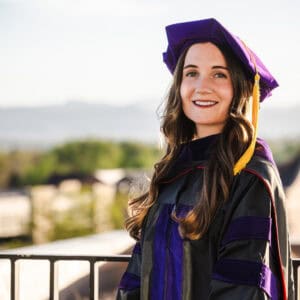
Tell us about your background prior to starting your graduate studies.
I was born and raised in Jefferson City, Missouri, and went to the University of Kansas for undergrad, where I majored in political science and sociology and minored in Spanish. After I graduated in 2019, I joined Teach for America and taught middle school science at a public charter school in Kansas City, Missouri. I taught at my placement school for a third year after my two-year TFA commitment, and I was also a policy fellow with the Urban Leaders Fellowship the summer between my second and third year teaching.
What motivated you to pursue both a JD and an MPP?
I was motivated to go to graduate school because I felt like I was having a difficult time making meaningful change in my role as a teacher, and I wanted to take a different approach to addressing the issues that mattered to me and that I saw affecting my students. I wasn’t sure, though, whether I wanted to focus my career on practicing law, doing policy work, or some combination of both. I knew some people end up doing policy work with only a J.D., but I wanted to make sure my graduate studies included an intentional focus on developing both sets of skills, and I thought a joint JD/MPP program was the best way to do that.
What has been your favorite class, and why?
Two of my favorite classes at Korbel were Professor Tamra d’Estree’s Negotiating Environmental Conflict and Policy class and the Negotiation Workshop. Because of scheduling conflicts and limited availability, I didn’t get the chance to take any negotiation or alternate dispute resolution classes through the law school, so it was great to be able to work on those skills—which are skills that I think are essential for both policy work and for the practice of law—at Korbel. These courses included elements of both theory and real-world application through negotiation simulations, and I thought that made them both especially effective and meaningful.
Join the Scrivner Institute of Public Policy for a reception to celebrate the end of the academic year! Graduating MPP students will also be presenting their capstone projects in a poster session. You're welcome to drop by at any point during the reception. Please register below to receive more details. We look forward to seeing you!
MPP student posters will feature diverse projects including:
Join us for the next Scrivner Policy Roundtable, an event series designed to build a collaborative research and learning network among local policy actors and the campus community. This roundtable is co-sponsored by the DU Center for Ethical Artificial Intelligence and coordinated in partnership with the Program on Law and Emerging Technologies. It will explore Colorado’s evolving approach to AI regulation, with a focus on the tensions shaping these policy efforts.
Presenters will provide an overview of AI‑related themes emerging from the current legislative session and discuss the considerations and challenges influencing AI regulation in the state. Topics will include balancing ethical AI guidelines and consumer protection priorities with industry competitiveness and innovation, questions of regulatory capacity and political feasibility, sweeping versus incremental policy approaches, legal tensions among various stakeholders, and the complex dynamic between state interventions and federal pushback.
Learn more about Colorado's AI policy landscape from experts with a pulse on legislative, industry, and legal perspectives, and take part in discussions on the many complex considerations at play.
Presenters include:
Join the Scrivner Institute of Public Policy at the Korbel School for a policy dialogue with the two leading Democratic candidates for the next Governor of Colorado, diving into key state policy issues, including affordability, federal-state relations, and rural economic development.
After the dialogue, stay, socialize, and discuss the issues with other attendees and our guest speakers. Pizza and drinks will be provided. Registration is required.
This event is open to the Scrivner Institute, Korbel School, and DU communities. We kindly request that you do not circulate this registration to others.
Agenda
Please note that the event is open seating and if the room reaches capacity, guests will be directed to an overflow room with a closed-circuit, live stream of the dialogue.
Join the Scrivner Institute of Public Policy for the next Scrivner Policy Roundtable. This edition will feature The Colorado Project, a program convened by the Korbel School that brings together a politically and geographically diverse group of civic, political, and private‑sector leaders to address Colorado’s most pressing policy challenges.
At this roundtable, you’ll learn about Colorado Project 2.0: Rural Renaissance, which focuses on elevating the experiences and perspectives of rural communities in shaping policy opportunities for economic thriving. A 2025 Rural Learning Tour, which included site visits to the Northeast Plains, the San Luis Valley, and the Yampa Valley, allowed the project team to engage with local leaders and understand the challenges and innovations unique to these rural communities.
You’ll hear directly from participants about their insights from the site visits and take part in dynamic discussions on policy priorities for an inclusive and sustainable state economy.
Light breakfast will be provided. Please RSVP for more details.
Copyright ©2026 University of Denver | All rights reserved | The University of Denver is an equal opportunity institution