
Join us for Virtual Open House on December 4, 2026. Register now.

Menu

Menu
Join us for Virtual Open House on December 4, 2026. Register now.
Young Professionals Perspective: Cameron Beach (MA International Human Rights ‘24)
In this series, recent graduates share what their first years after Korbel really look like: the surprises, the pivots, and what keeps them going. Cameron Beach (MA in International Human Rights ‘24) planned for a long career in the Foreign Service. Then the plan changed. Today she supports human rights defenders at The Carter Center.
My undergrad advisor and mentor went to Korbel, so it was always on my radar. I also received the Donald M. Payne Fellowship with USAID, and Korbel was a partner institution. The curriculum and professors’ interests were right up my alley, and the degree wasn’t overly prescriptive, so I could choose the courses that made sense for me. I’d also never been to Colorado, so living and learning in a new part of the U.S. was exciting. In our field, we’re so interested in other countries that we sometimes forget the diversity within our own.
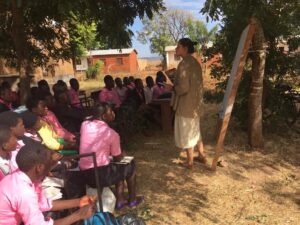
I took my first international development class junior year and knew immediately it was what I wanted to do. I flew to Malawi less than two weeks after graduating and taught English at a rural public high school. It was challenging, humbling, and rewarding, and it shaped who I am. I still use what I learned about gender and power dynamics and cultural considerations, along with my flexibility and openness to new experiences.
Probably five or six classes. In Debates on Democracy with Professor Rachel Sigman, we studied the organizations that measure democracy and their tools. Now when colleagues cite those metrics, I don’t need an explanation. I can just join the conversation. I was also involved in Students for Africa both years, helping put on a student-led conference. Today, a large part of my job is organizing convenings. I had no idea in grad school how useful that would be.
The Payne Fellowship is a pipeline into the Foreign Service, so I was preparing to be a democracy and governance officer. I started at USAID in July 2024, and my rotation was on the Human Rights Team and I also supported the Countering Trafficking in Persons team. My Korbel coursework gave me a strong foundation. Then USAID was dismantled, and what was supposed to be a 20-plus-year career disappeared, along with opportunities across the sector. It was tough in many ways.
Korbel’s career office hosted alumni office hours and panels, which gave us a space to connect with others going through the same thing and talk through ways to pivot. I was incredibly lucky to land a role in the Human Rights Program at The Carter Center, where I started in September 2025. My human rights degree led me to the human rights office at USAID, and that experience prepared me for this job.
I work with human rights defenders. This is a very difficult space to be in right now, but I get to support them. In May, we hosted a large international convening for human rights defenders. Hearing their stories and seeing what support means to them is motivating. They’re doing the hardest work every day, so I can set my own challenges aside at the door.
Don’t give up and keep knocking on doors. Step into opportunities that might not seem like the perfect fit, even if it’s only a few hours a week. Cast a wide net rather than fixating on one organization, because you never know which connection leads to the next opportunity. And if the unexpected happens, which I’ve been through twice, with my Peace Corps service ending early due to COVID-19 and then USAID, give yourself time to breathe and take in what’s happened. Then, once you can, put your head back down and ask, “What’s next?"
Copyright ©2026 University of Denver | All rights reserved | The University of Denver is an equal opportunity institution