

Menu

Menu
By: Wara Irfan
“We are living in a period of two crises,” said Jonathan Moyer, Director of the Frederick S. Pardee Institute for International Futures. While the climate crisis receives widespread attention, he noted, a second crisis often gets “less coverage”. That is the human development crisis. “There are 700 million people in the world living in abject poverty.”
Moyer made these remarks while introducing the new report, Charged for Change: The Case for Renewable Energy in Climate Action, published by the United Nations Development Programme (UNDP) in partnership with the Pardee Institute and Octopus Energy. He was joined by former Colorado Governor Bill Ritter (2007–2011), whose distinctive record of building a “New Energy Economy” framework, which links climate, jobs, utility policy, public health, and economic development, sets him apart from both his predecessors and many of his contemporaries. The report’s lead author, Chibulu Luo, Ph.D., joined Dr. Moyer and the Hon. Bill Ritter for a discussion on how renewable energy can simultaneously advance climate action and human development. “What this report does is help chart a path forward for achieving both,” Moyer emphasized.
Deva Sahadevan, Senior Research Associate at the Pardee Institute, presented the report’s key findings, followed by a panel discussion moderated by Moyer and an audience Q&A. Using the Pardee Institute’s International Futures (IFs) model, researchers examined three scenarios: (1) a Base Case in which the world remains on a warming trajectory under current trends of development, (2) a Renewable Acceleration (RA) scenario where there is accelerated global investment in renewables, and (3) an RA+SDG scenario where these renewable investments are paired with targeted investments in health, education, governance, and infrastructure. 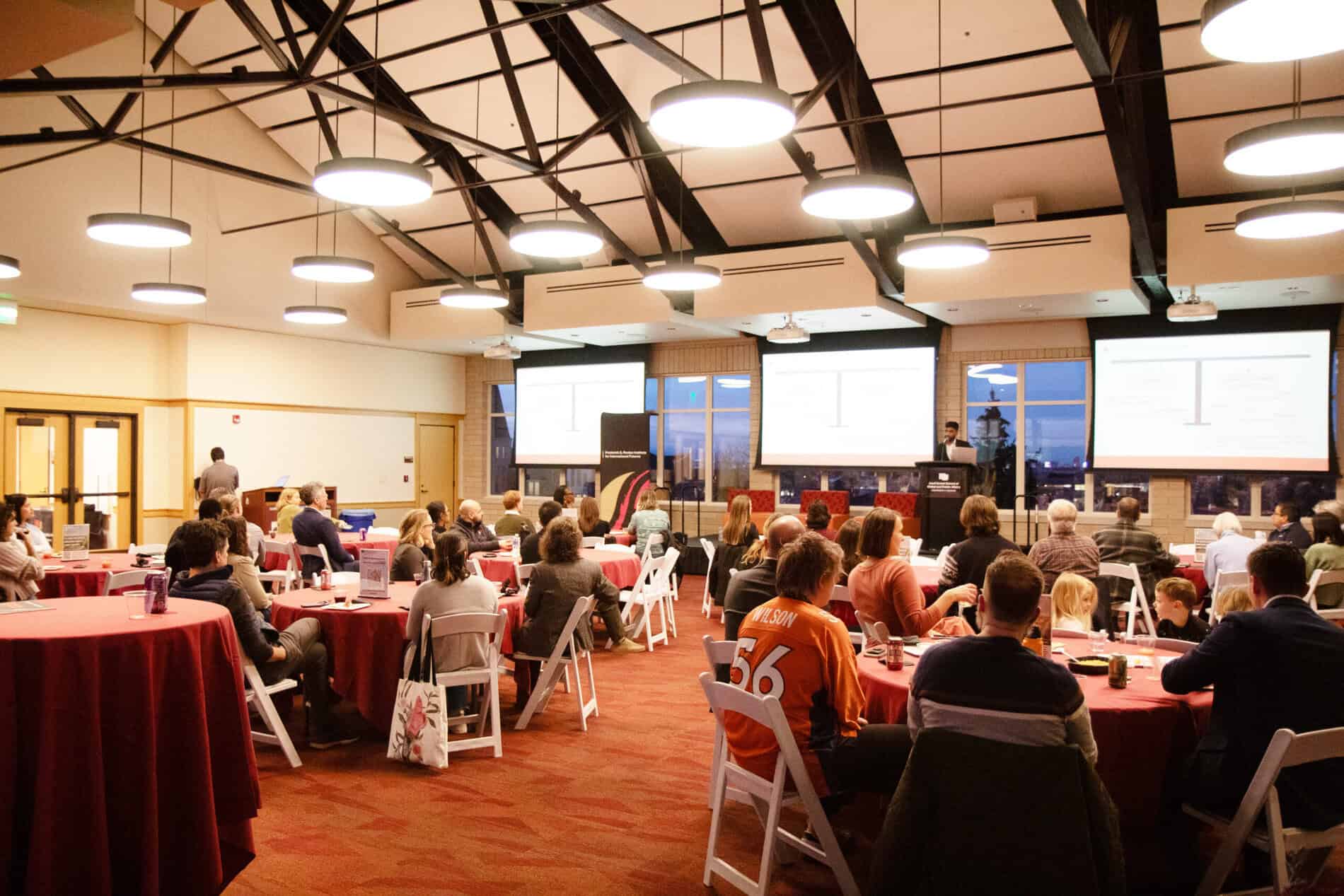
Deva Sahadevan presents an overview of the report. Photograph taken by Megan Livengood.
The study found that RA+ SDG can significantly advance human development while also improving climate outcomes in the long run. Compared to the Base Case, this pathway could lift an additional 193 million people out of extreme poverty, reduce malnutrition for 142 million people, and expand access to clean water and sanitation to 550 million more people by 2060 - all within a 1.5°C-aligned future. In contrast, the RA scenario showed only modest improvements to human development, suggesting that climate action alone is insufficient to balance the dual imperatives of addressing climate change and improving human well-being.
Although the RA + SDG pathway requires substantial upfront investment, the long-term payoff is considerable. By 2060, cumulative savings could reach approximately $20.4 trillion by 2060, driven by energy efficiency gains, declining renewable costs, and a shift in capital from fossil fuels to clean energy, while keeping global warming closer to internationally agreed targets.
Speakers grounded these modeling results in real-world practice. Dr. Luo described how UNDP uses country-level evidence to show how energy policy decisions intersect with priorities in finance, health , and gender, helping government ministries see climate action as integral to development planning. She highlighted examples such as electrified irrigation and solar-powered health facilities in Zambia, alongside a strong policy focus on clean cooking. “It is a smart economic choice for countries to invest in renewables,” she said, noting that the report provides governments with “real numbers” demonstrating the development benefits of a renewable energy transition as they shape climate and development strategies.
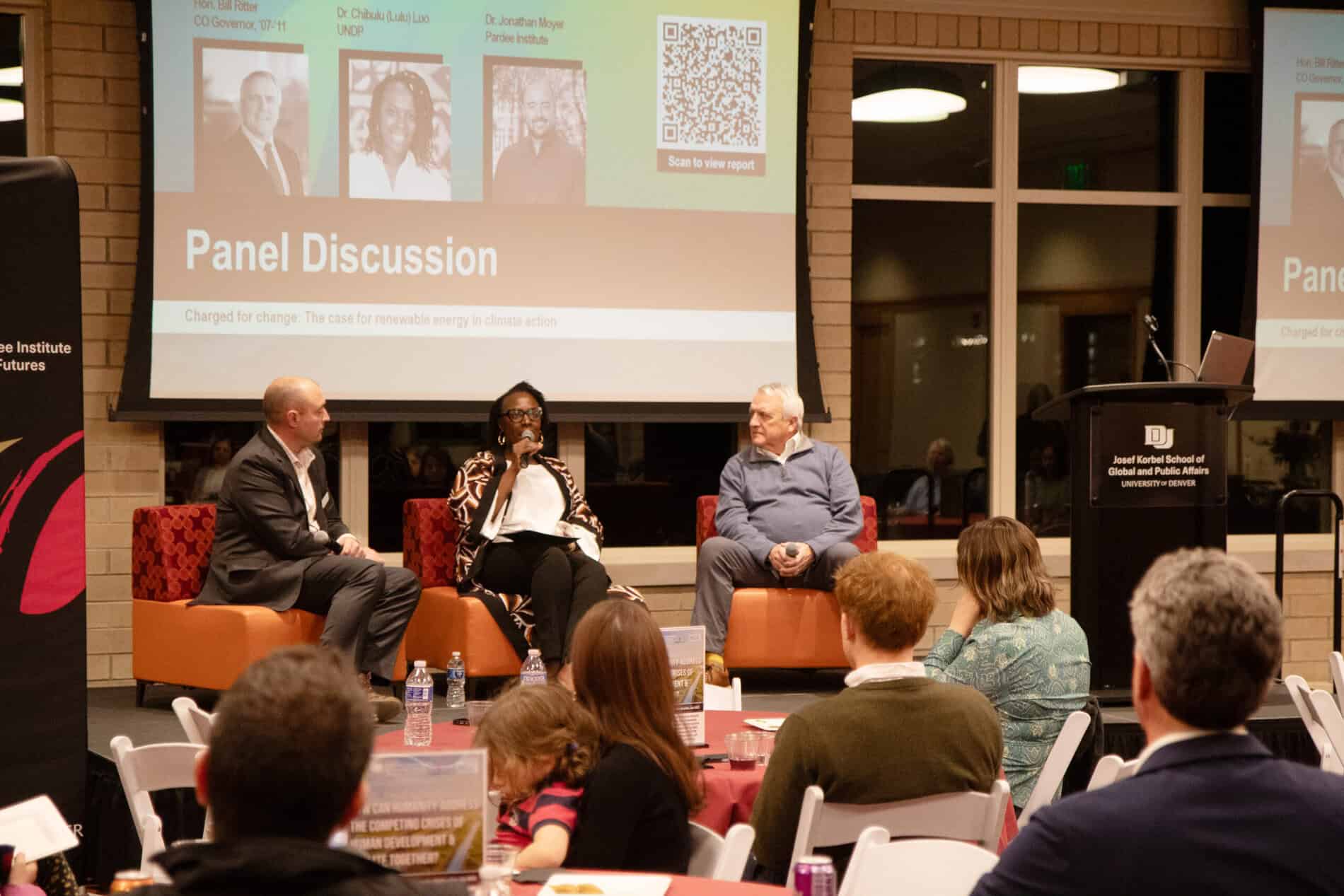 Dr. Chibulu Luo addresses the audience. Photograph taken by Megan Livengood.
Former Governor Ritter shared lessons from Colorado on scaling renewable energy, supporting workforce transitions, and building financing mechanisms that make clean energy both feasible and equitable. Reflecting on his time in office, he remarked, “Colorado is a fascinating little Petri dish” where “development and climate action are not mutually exclusive,” according to him. He stressed that these goals are not opposing values but can be pursued together. The former governor also warned that if the United States retreats from global engagement on climate, human development, and sustainable energy, it risks missing a critical opportunity to lead and make a meaningful impact.
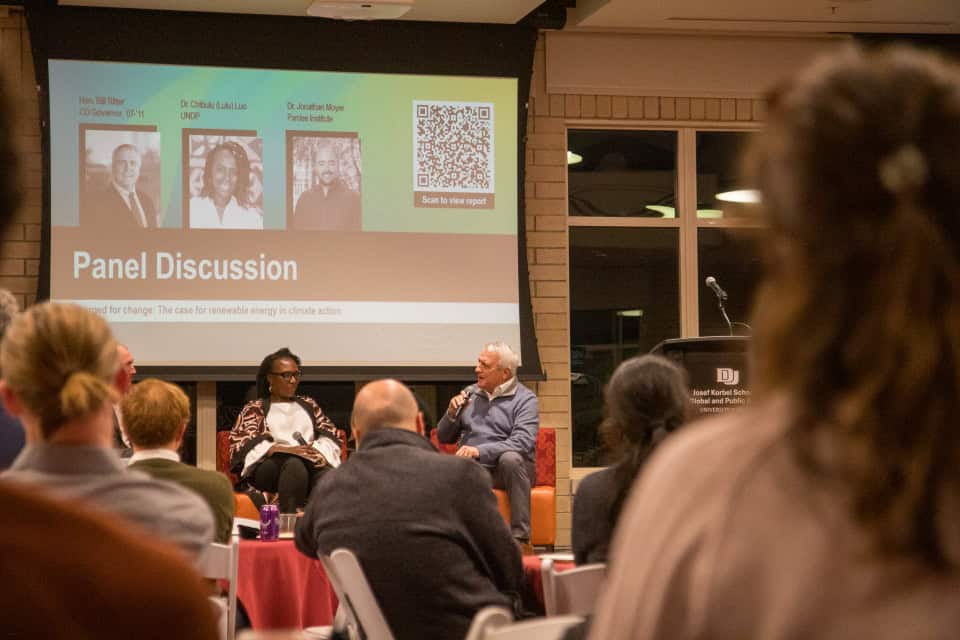 Former Colorado governor Bill Ritter shares his insights. Photograph taken by Megan Livengood.
Dr. Luo added that what gives her hope is the evidence showing that a renewable energy transition can deliver substantial benefits for both people and the planet, benefits that are often even greater in developing countries.
Furthermore, the event drew practitioners, entrepreneurs, researchers, policymakers, and students. The audience's Q&A ranged widely, from clean-cooking and carbon markets to bio and nuclear energy, land use, and the big question of growth versus sustainability. A former off-grid entrepreneur raised the recent KOKO Network cass in which a bioethanol cookstove provider lost access to carbon-credit approval in Kenya, leaving millions of customers at risk; in response, Dr. Luo described how national carbon-market regulations, multilateral guarantees, and blended or concessional finance all matter for managing investor risk and protecting access to clean-cooking solutions, noting Kenya is also exploring electric-cooking options.
Another audience member inquired about bioenergy’s role in future energy mixes and lessons from past biofuel investments. The former Governor answered that bioenergy, carbon capture, and related technologies deserve further development, and that policy tools (tax credits, public investment) and learning about real costs will shape their viability. Sahadevan also addressed broader concerns about growth and equity, noting the report’s framing: modeled pathways highlight a tension between urgently reducing emissions and enabling the growth many low-income countries still need, so solutions will require careful mixes of investment, redistribution, and locally appropriate policies.
The discussion concluded with a reminder that climate action and human development need not compete. “The choices we make today will have long-term implications,” Moyer said. The session underscored the importance of a data-driven foresight in shaping country-level dialogue, financing strategies, social investments, and governance reforms, key elements for achieving a just and sustainable energy transition.
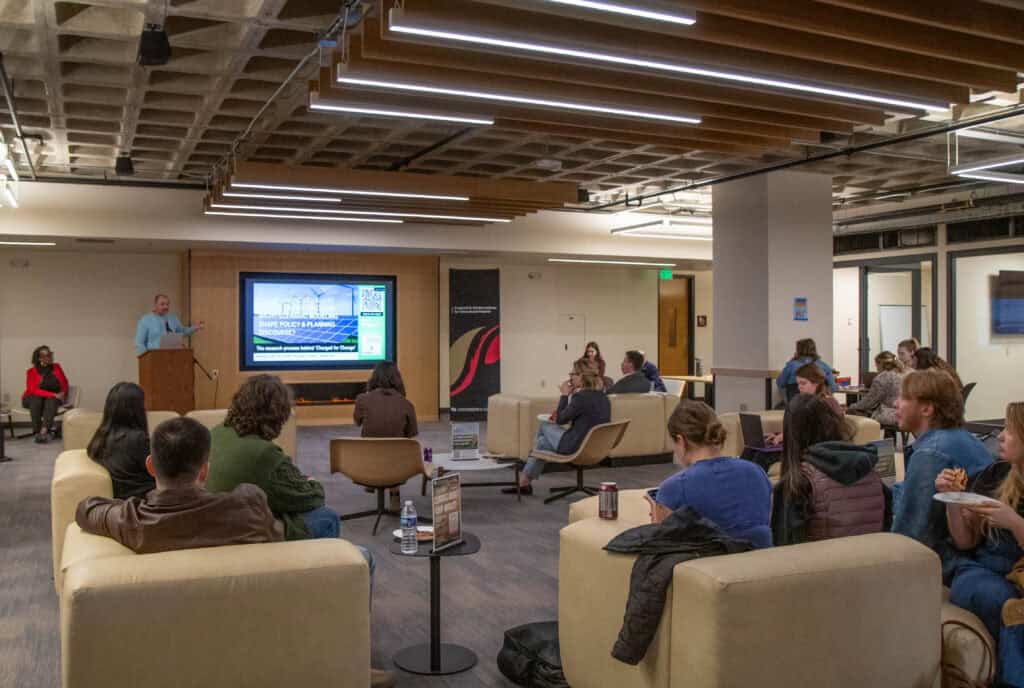
Attendees at the Charged for Change Lunch & Learn event. Photograph taken by Pam Hoberman.
How do we model a just energy transition? How might scenario modeling shape policy & planning discourse? These were the key questions explored at the Pardee Institute’s Lunch and Learn series, following the Charged for Change: The case for renewable energy in climate action launch event on February 4th.
Charged for Change emerged from a collaboration between the United Nations Development Programme (UNDP) Sustainable Energy hub, Octopus Energy, and the Pardee Institute. The report links renewable energy, climate commitments, and human development outcomes.
At the Lunch and Learn event, the presenters focused on different aspects of the research process, including an in-depth look at integrated energy modeling using IFs, contextualizing UNDP’s role in supporting sustainable energy and inclusive development efforts, and reflecting on real-world applications through a case study highlighting Nigeria.
Following opening remarks from Pardee Director Dr. Jonathan Moyer, the report’s lead author, Dr. Chibulu Luo of UNDP, outlined the organization’s role in advancing sustainable energy and inclusive development. A key facet of that work revolves around UNDP’s Climate Promise initiative, which supports developing countries in implementing and strengthening their climate commitments.
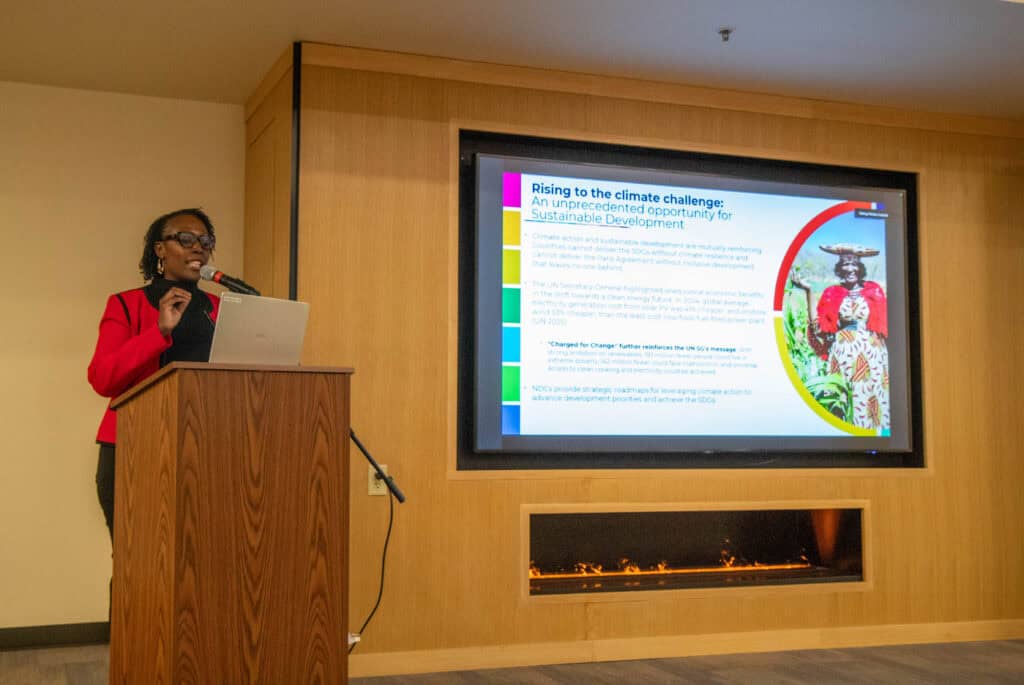
Dr. Chibulu Luo of UNDP addresses the audience. Photograph taken by Pam Hoberman.
Deva Sahadevan, Senior Research Associate at Pardee and co-author of the report, then unpacked the key research questions and assumptions behind Charged for Change. With help from Pardee researchers and fellows, the Pardee Institute conducted an extensive literature review and synthesized more than one hundred fifty data tables to structure three long-term scenarios:
Pardee Senior Scientist Dr. Mohammod Irfan, further elaborated on the IFs model and discussed the conceptual underpinnings of modeling energy systems in IFs. Dr. Irfan mentioned how the IFs platform has a unique ability to map energy and economic models in tandem. By exploring multiple indicators at once, IFs forecasts help policymakers and others better understand intertwined dynamics within and across global systems.
Dr. Irfan also touched on the overall model structure, methodology, and enhancements made to address the key research questions in this study. For instance, the IFs model originally analyzed six energy types (coal, oil, gas, nuclear, hydro, and an aggregated category of ‘other renewables’) and featured older cost structures for renewables. To address these limitations, IFs expanded its energy model to nine energy types and updated the cost structures.
Following presentations on the study’s research approach and motivations, the event pivoted to a case study in Nigeria to highlight the real world applications of the work. Dr. Geoffrey Omedo, a technical expert who provided comprehensive feedback on the report’s case study, reflected on Nigeria’s dual identity as both an energy access and energy-transition country. Dr. Omedo’s comments underscored the importance of using a balanced approach towards global energy policy, backed by country government support.
Following the panelists’ presentations, the floor opened to an audience Q&A. The audience raised questions spanning the global implications of the Renewable Acceleration + SDGs scenario and the domestic realities on the ground while Nigeria navigates the evolving renewable energy landscape.
Charged for Change was written by Luo, C., Sahadevan, D., Irfan, M.T., Moyer, J.D., Mason, C., & Beynon, E.
To access the full Charged for Change report, click here.
How do leaders shape, and how are they shaped, by international relations? What drives a leader to travel from one country to another or to any other place in the world? What can we learn about travel, trade, conflict, diplomacy, democracy, and other interconnected systems by researching the travel patterns of country and organization leaders? These central questions drive the Pardee Institute’s decade-long COLT (Country and Organization Leader Travel) project, which the U.S. Government sponsors.
The Pardee Institute explored these and related research questions for an audience of faculty, students, and staff from the University of Denver’s Josef Korbel School of Global and Public Affairs (the Korbel School) during its first-ever Lunch and Learn seminar.

Following an introduction of the COLT dataset and Lunch and Learn series by Pardee Institute Director Jonathan Moyer, Pardee Institute COLT Program Manager Kylie McKee, and Director of Analysis Collin Meisel took turns presenting on different facets of the COLT project.
The COLT project captures data on Heads of Government and State (HOGS) travel from 1990 through the present day for 212 countries and territories. This scale of data collection requires large-scale infrastructure and staff, from coders to vetters to team leads (all positions held by students), until ultimately the data reaches McKee and Meisel.
This dataset tracks over 43 variables and 70 biographical variables for each leader, creating an extensive dataset that requires countless hours to track and ensure accuracy, McKee described. McKee went on to detail her team’s research protocol: monthly updates to the data, as well as annual public reports, made possible by weekly tracking of HOGS travel, reviews of data for errors and/or gaps, and extensive final reviews. This work is divided into four groups of RAs who research HOGS from specific regions of the world.
In Meisel’s words, the COLT dataset is not trying to prove cause and effect; it is trying to see “what moves together.” Meisel, McKee, and their team of student researchers have found the frequency and destination of world leader visits correlate strongly with material interests (such as trade, arms deals, and foreign aid), institutional co-membership (like NATO or the EU), and patterns of conflict. This research matters because diplomatic travel provides a high-frequency, actionable indicator of shifting geopolitical affinities and power dynamics.
Another question that the COLT project is attempting to tackle is the puzzle of leader travel. With all the modern advances in technology —from phone calls to video conferencing —along with the time and potential dangers involved in traveling, what are the benefits of leaders traveling abroad to meet with other leaders in person? The literature suggests that travel plays a significant role in shaping leader opinions, as seen in trade and relationships between HOGS, Meisel explained. However, most of this literature is focused on one country or a region of the world. The COLT project addresses a major missing piece of the puzzle – its scope is global, making it truly unique and a flagship project for this sort of data collection.
Because the data is so exhaustive, it can be challenging to know for sure how much of it is captured by the researchers—is it simply the tip of the iceberg, with much concealed beneath the surface, or is most of it visible to these teams? To address these demands, McKee answered that the teams on Pardee’s COLT project are always innovating their methods and processes so that the data can be better used as a resource and source of lessons for future data gathering. For example, McKee shared that Pardee will soon use AI to streamline its data by gathering qualitative information in a systematic format for analysis.
The event ended with a question-and-answer portion, filled with questions ranging from the use of the data set as a diagnostic tool to which regions have the most tracked travel to if the project had any student position openings. Other questions addressed the uses of AI, how the COLT data is utilized, and where it is sourced.
To learn more about the COLT Project, access the COLT data, or read the COLT analysis published in International Studies Quarterly, click here.
This inaugural Lunch and Learn event is part of a new series of Pardee-hosted lunchtime seminars designed to inform the broader Korbel School community about the research approach and applications of the Pardee Institute's work.
By: Wara Irfan
Africa faces its own unique development challenges, aspirations, and constraints, said Senior Researcher Alize le Roux of the Institute of Security Studies’ African Futures & Innovation (AFI) program during a conversation hosted by the Frederick S. Pardee Institute on September 9, 2025. The event, moderated by Awa Sanneh, President of Students for Africa at Joseph Korbel School of Global and Public Affairs, included a lively discussion and audience Q&A.
Joined by fellow ISS AFI Senior Researcher and economist Blessing Chipanda, le Roux emphasized that the African Union’s Agenda 2063 serves as a “blueprint” for the continent, aligning individual national development plans with a broader vision encompassing all 54 African countries. Agenda 2063 is Africa’s 50-year plan to become prosperous, integrated, and peaceful through seven aspirations and successive Ten-Year Plans.
The ISS is a leading Pan-African think tank dedicated to research and policy engagement on issues of human security. For nearly 15 years, ISS has partnered with the Pardee Institute to use the International Futures (IFs) model. Together, they build knowledge about Africa’s development pathways and create alternative scenarios to help policymakers shape strategies for improved outcomes. ISS and Pardee also collaborate with the AU and its Development Agency (AUDA-NEPAD) to inform key aspects of Agenda 2063.
Le Roux and Chipanda began by walking the audience through two of the more than 4,000 interactive graphs available on the African Futures website, which employs IFs, to show how long-term forecasting and scenario planning can inform Africa’s development trajectory and support Agenda 2063.
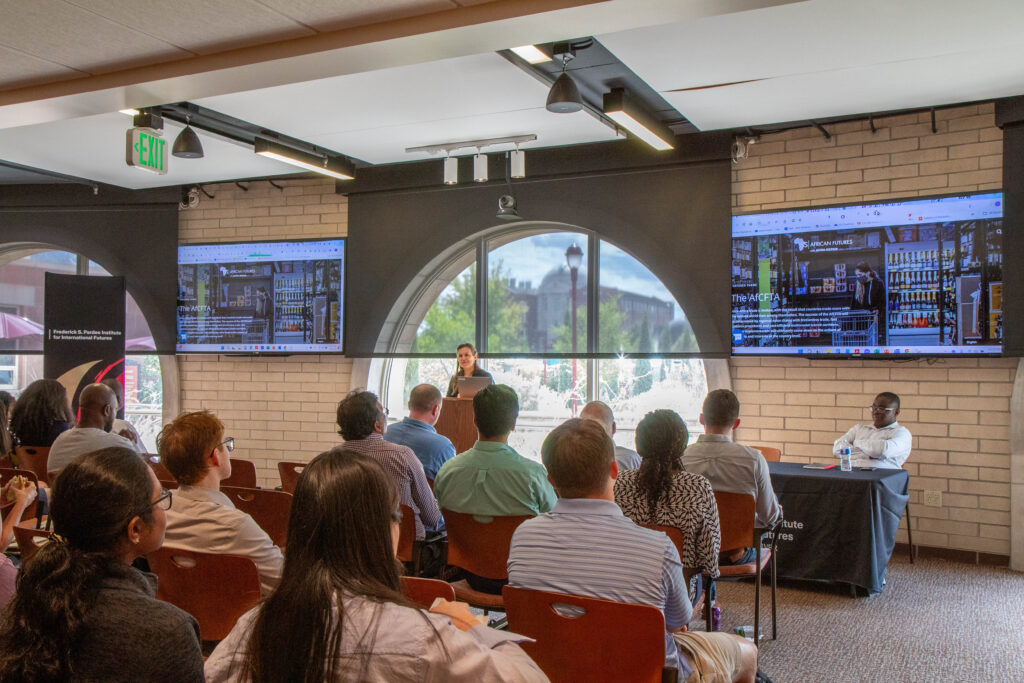 Alize le Roux addresses the audience. Photograph taken by Pam Hoberman.
The first graph explored GDP per capita in Africa relative to the rest of the world from 1960 to 2023. While Africa’s GDP per capita has been “growing since 1960 to 2023, [...] it's growing very slowly in relation to that of the rest of the world,” le Roux said, noting that the gap has widened, from roughly $2,700 in 1960 to just under $15,000 in 2023, and is projected to exceed $21,000 by 2043.
The takeaway, she underscored, is that there is wealth generation on the continent, but it is “very unequally distributed” and “not translating into real poverty reduction”.
The second graph focused on poverty trends. While the UN Sustainable Development Goal is to reduce poverty to below 3% by 2030, AFI projections show that Africa’s poverty could remain around 26% in 2030 without significant intervention.
“This is really the foundation of our work,” she said. They AFI considers Africa’s current development trajectory, or the Current Path, and explore how policies and scenarios can accelerate development and reduce poverty more rapidly.
Chipanda then introduced AFI’s scenario analysis approach, which explores how targeted policy interventions might alter these trends. AFI has developed eight sectoral scenarios, covering governance, demographics and health, agriculture, education, manufacturing, the African Continental Free Trade Agreement (AfCFTA), large Infrastructure and leapfrogging, and financial flows, and then combines them into a “Combined Scenario” that estimates the overall impact on development outcomes.
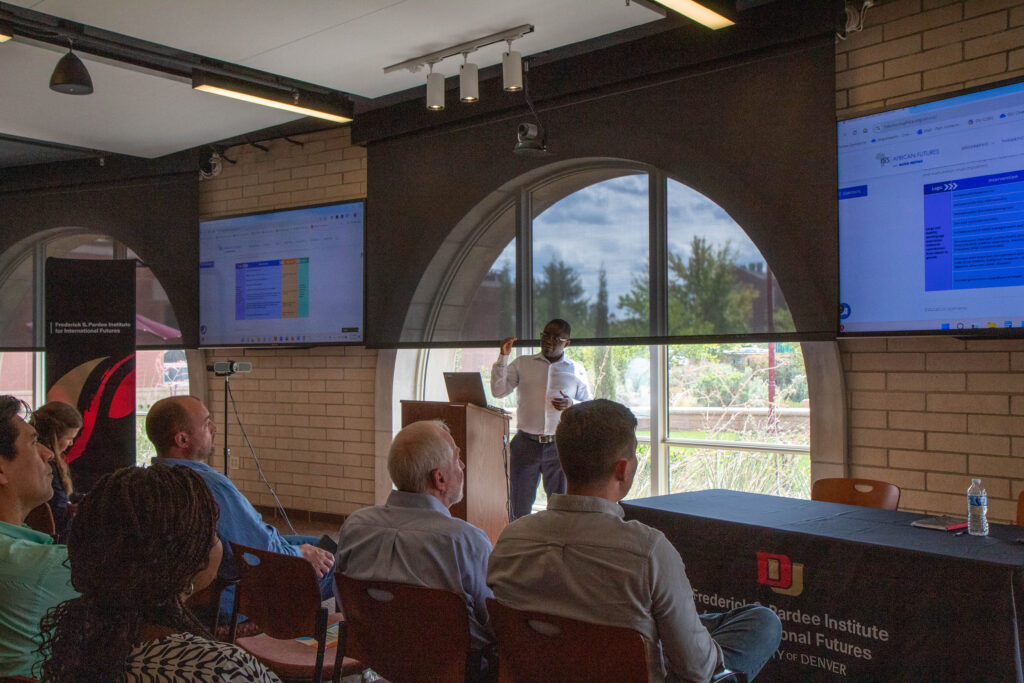 Blessing Chipanda gives an overview of the African Futures website. Photograph taken by Pam Hoberman.
“Our analyses are done at the country level. Then we form what is called a Combined Scenario,” Chipanda explained. He highlighted results showing that agriculture, infrastructure, and manufacturing have the greatest impact on GDP per capita across different country income groups. For extreme poverty, the Combined Scenario showed a decline from 385 million people, forecasted by the Current Path, to 168 million by 2043.
Both speakers emphasized the importance of open access to these data and scenarios. Everything they produce is publicly accessible, Chipanda said, encouraging students and researchers to explore interactive graphs on their website and country reports online.
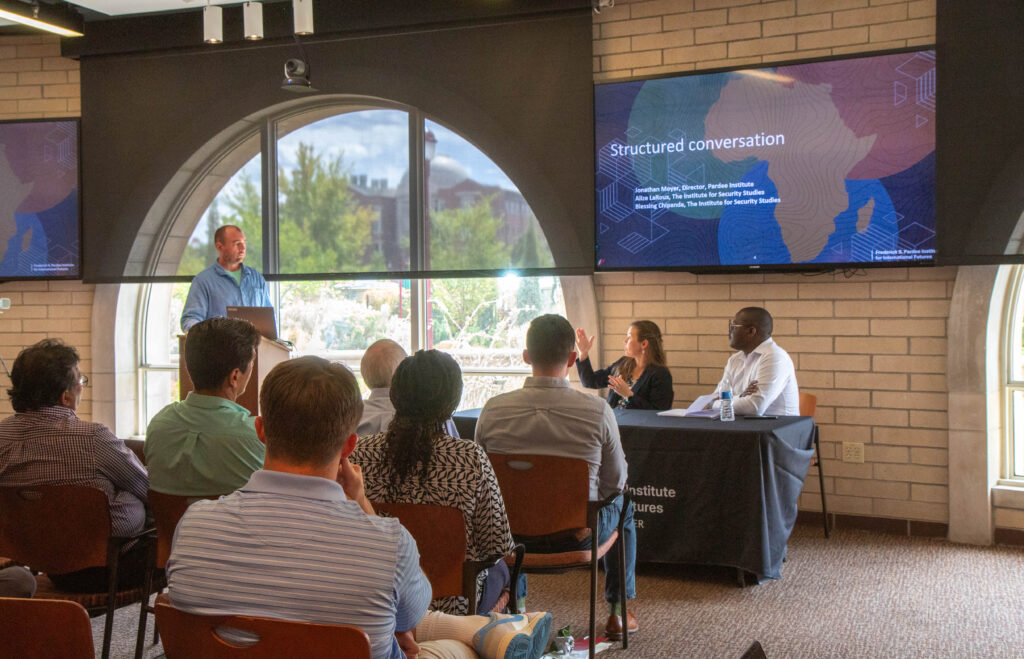 Jonathan D. Moyer leads a structured conversation with le Roux and Chipanda. Photograph taken by Pam Hoberman.
Following the presentation, Pardee Institute Director Jonathan D. Moyer led the conversation with le Roux and Chipanda on career pathways and lessons learned in development work.
Le Roux reflected on her 14 years working in research and development before joining AFI. “Good research does not automatically speak for itself,” she said. One can produce excellent tools and findings, but if they are not effectively communicated to decision-makers, they will not drive change. She also stressed the importance of networks, and as a student, it is important to build relationships as they will matter later in your career.
Chipanda shared how his background in economics led him to scenario building and modeling, highlighting the collaborative nature of AFI’s work with policymakers across Africa.
The event concluded with an open Q&A, moderated by Sanneh, with students asking about the challenges of aligning national development plans with continental goals, the role of governance reforms, and the future updates to AFI’s scenarios.
The session highlighted the power of data-driven foresight in shaping policy and offered students and researchers a practical view of how models like IFs can address some of Africa’s most pressing development challenges.
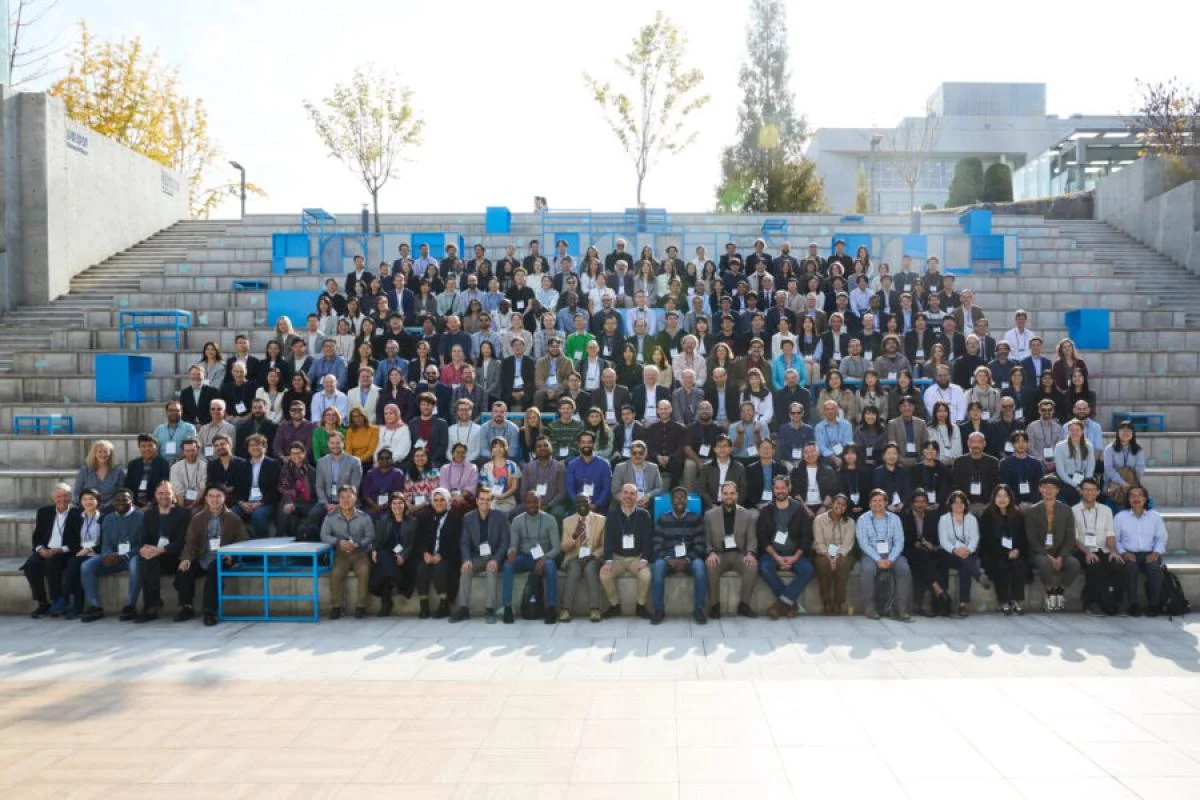
Jonathan Moyer, the director of the Pardee Institute, recently traveled to Seoul, South Korea, to present a paper at the Integrated Assessment Modeling Consortium (IAMC) conference. The paper, titled “Quantifying the roads ahead broadly: forecasts of the SSPs across demographics, conflict, economics, education, health, infrastructure, and governance for 188 countries to 2200,” introduces new Shared Socioeconomic Pathway (SSP) scenarios developed using the International Futures (IFs) model.
The IAMC is an international consortium of research institutions developing and using integrated assessment models to study global environmental change and socioeconomic development. Its annual meeting is a major forum for exchanging ideas and research on integrated assessment modeling.
The SSPs are a scenario framework used in various sustainability-related research efforts, including as inputs into the Intergovernmental Panel on Climate Change (IPCC) assessment. The scenarios show five standard pathways of human and social development in the absence of climate policy or climate change impacts to frame worlds with different challenges to climate mitigation and adaptation.
This new SSP series introduced by Moyer and colleagues at the Pardee Institute represents a broader set of issue areas than the current SSP framework, including dynamically interconnected forecasts of economics, demographics, education, health, infrastructure, and governance. This series is also projected to reach 2150, allowing climate models to forecast granular change in development further into the future compared with existing SSPs that end in 2100.
"The new SSP elements provide a more comprehensive and integrated view of the future," said Moyer. "This will be valuable for researchers studying the impacts of climate change and other global challenges." Future plans include submitting this work for peer review and publication and making the new scenario results available via the IIASA website.
Coordination, the right systems, and partnerships are all needed to propel Africa’s development agenda, offered Florence Chidamahiya Nazare, head of knowledge capitalization & management for the African Union Development Agency-NEPAD. Nazare shared these insights during a panel discussion hosted by the Frederick S. Pardee Institute for International Futures at the Josef Korbel School of Global and Public Affairs, University of Denver.
This event was part of a series planned of activities for a delegation of AUDA-NEPAD senior representatives visiting the Pardee Institute that week. The Pardee Institute has maintained a long-standing partnership with AUDA-NEPAD to assist the organization in creating a comprehensive growth and development strategy for countries within the African Union (AU).
During their visit, the delegation participated in training sessions to use the Pardee Institute’s signature tool, the International Futures model (IFs), to inform their work and enhance engagement among AU member states in various development initiatives and their implementation.
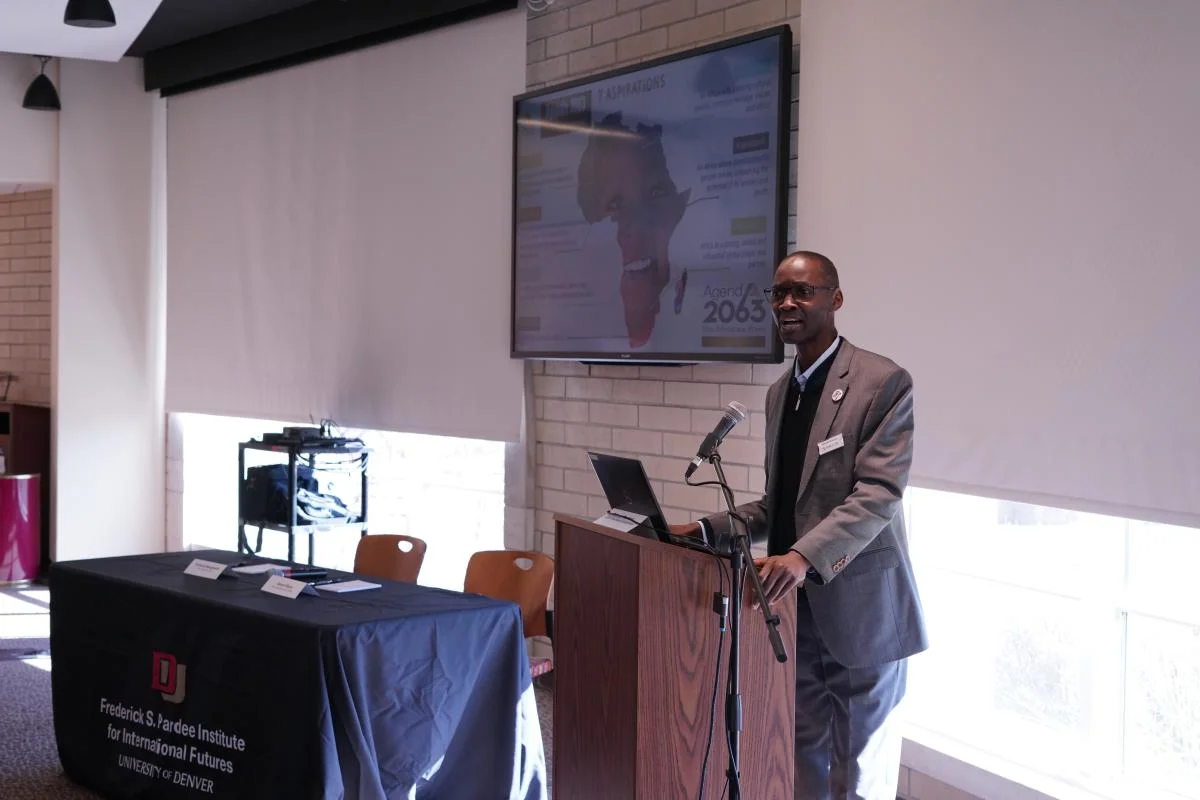
The panelists highlighted AU progress and challenges in achieving its long-term vision of inclusive growth, sustainable development, and regional integration. To kick off the panel discussion, Simon Kisira, the head of monitoring and evaluation, presented the transformative goals outlined in Agenda 2063, which includes seven broad aspirations and twenty goals designed to position Africa as a prosperous, integrated, and peaceful continent.
The agenda is operationalized through five Ten-Year Implementation Plans. The first plan covers the years 2014 to 2023 and the second spans 2024 to 2033. This second Ten-Year Plan emphasizes “acceleration of implementation, building on the first that primarily focused on convergence.” According to Kisira, the first plan faced challenges, including insufficient awareness and limited implementation at the national level. The second decade marks a period of speed and scale and is structured by “ambitions beyond the ordinary.”
The AUDA-NEPAD panelists highlighted how the model is the only one with features that are essential to the second Ten-Year Plan’s success, citing IFs ability to both “domesticate” the second Ten-Year Plan down to national and regional levels using a systems-wide approach and to aid evaluators with retrospective monitoring. “The beauty of IFs model looks at targets in an integrated manner. We need a system that looks not just at education but also health and everything it touches,” observed Gideon Nimako, one of the panelists.
However, challenges remain. Nazare underscored the difficulty of harmonizing national plans with regional and continental goals while addressing specific country needs. “We need African solutions for African problems,” she stressed, adding that sustainable livelihoods and more robust domestic private sectors are key to success.
During his closing remarks, Jonathan Moyer, the director of the Pardee Institute, reiterated the importance of knowledge transfer, noting that it is a two-way street. Moyer commended the representatives from AUDA-NEPAD for their continuous collaboration with the Pardee Institute and offered that the Institute continues to apply learnings from its ongoing work with AUDA-NEPAD in ways that strengthen the reach and impact of this tool and the research it informs.
The event underscored the vital role partnerships like AUDA-NEPAD and the Pardee Institute play in advancing Africa’s development agenda, integrating cutting-edge tools like the IFs model with localized knowledge and innovative thinking.
The event also provided a platform for engagement between students and faculty from the Josef Korbel School of Global and Public Affairs, along with staff from the Pardee Institute. Attendees had the opportunity to listen to and interact with representatives from AUDA-NEPAD, enhancing their understanding of key issues regarding the African development agenda and fostering meaningful dialogues on the topic.
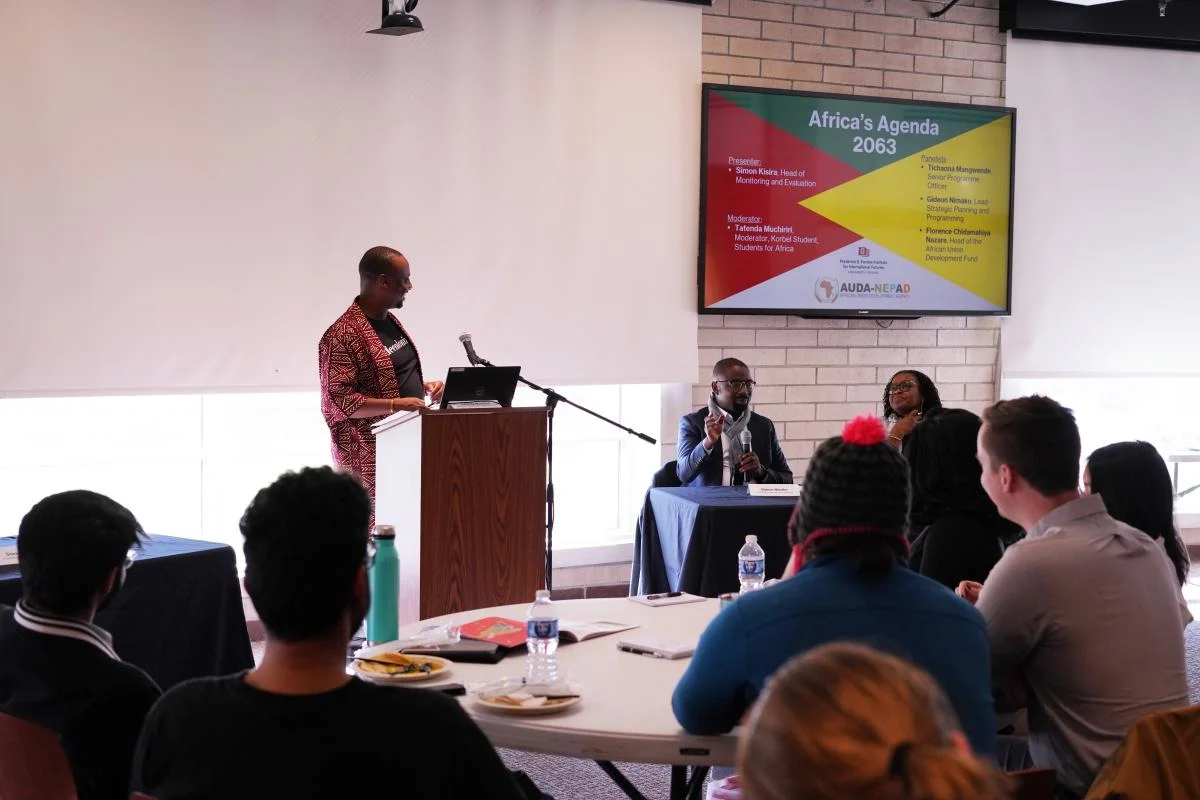
AUDA-NEPAD representatives answer questions and discuss "Agenda 2063."
Mohammod Irfan, a senior scientist at the Pardee Institute, presented at the 2024 annual conference of the Human Development and Capability Association, an international network of scholars and practitioners focused on human development and the capability approach with an emphasis on policy. Held in Kolkata, India, from September 24th to 26th, the conference featured Irfan’s presentation on long-term projections of multidimensional poverty.
Irfan also traveled to Dhaka, Bangladesh, where he presented the International Futures (IFs) model at the Export Promotion Bureau (EPB) of the Government of Bangladesh (GoB). Anwar Hossain, an alumnus of Korbel and Pardee and now chief executive officer of EPB, convened high-level officials from the GoB and Bangladesh Bank, who expressed strong interest in using the model for policy analysis, especially for trade policy.
While abroad, Irfan also visited the BRAC Center in Dhaka, where policy planners discussed the potential application of IFs or similar models for macroeconomic analysis in their development projects. The BRAC Center is an international development organization founded in Bangladesh that strives to create opportunities for the economically disenfranchised to prosper. During this visit, Irfan presented his research on multidimensional poverty, a comprehensive measure that extends beyond income or consumption to capture broader aspects of deprivation.
This series of presentations and conversations speak to broadening interest in the International Futures (Ifs) tool and its wide-reaching applications, including future trade and economic policies, environmental policy, and climate action.
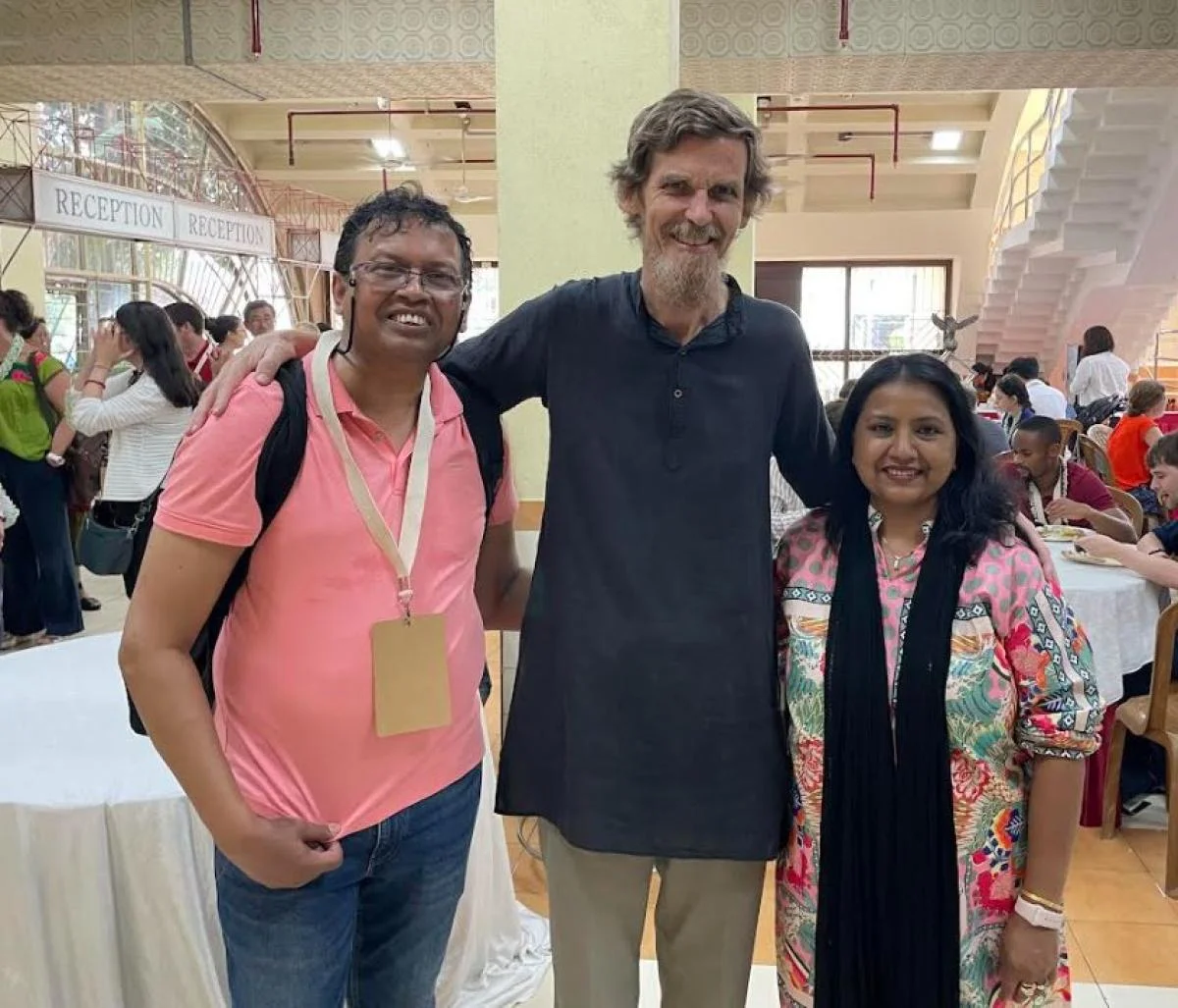
Pardee Institute's Senior Scientist, Dr. Mohammod Irfan (left), Jean Drèze, welfare economist, social scientist and activist (middle) and Maksuda Irin Mukul, spouse of Mohammod (right), attending the 2024 annual conference of the Human Development and Capability Association in Kolkata, India.
The Pardee Institute (formerly Pardee Center) celebrated its recent name change to the “Frederick S. Pardee Institute for International Futures” following its designation as a DU Research Institute in October 2023. The Pardee Institute is honored to be one of just six organized research units across the University of Denver formally designated as a DU Research Institute distinction. This designation affirms Pardee's place at DU as a serious contributor to the Institution's body of research and impact on its community and constituents.
The event kicked off with opening remarks from a series of key Pardee constituents and supporters internal to DU.
Speaking at the event, Corinne S. Lengsfeld, Senior Vice Provost, Research and Graduate Education at the University of Denver, commended the Pardee Institute for affecting meaningful change through its research. “I stood on the stage to celebrate what they did for the Yemen civil war, and their report was used as the basis for a ceasefire. Which is really cool, and its impact is undeniable,” Lengsfeld noted.
According to Lengsfeld, the research Institute designation on the University of Denver campus celebrates the impact and performance from which the university has relied on and built its own reputation from. “That is what the Pardee Institute is,” she said.
In his remarks, Barry Hughes, the Pardee Institute Founding Director, recognized the Institute's progression from a Center to an Institute as a “collective enterprise.” He paid tribute to the Pardee Institute’s longtime benefactor, Frederick S. Pardee, for his friendship and shared interest in the Institute's work through funding support. Barry further celebrated all employees at the Institute for their collective effort in expanding research and scholarship.
Joining in the celebration, Professor and Associate Dean for Faculty and the Director of the Scrivner Institute of Public Policy at the Josef Korbel School of Global and Public Affairs, Naazneem Barma, noted that the Pardee Institute has been an integral component of the Korbel School. “The Pardee Institute generates some vibrant agendas and a huge number of publications on the core concerns that the Korbel school grapples with: democracy, peace and conflict, sustainability, and diplomacy - all using the IFs model,” Professor Barma noted.
Following the remarks, guests were encouraged to learn more about recent and ongoing research projects and works. Numerous information tables filled the room, with each dedicated table featuring a different research project and staffed by students and staff who work on them. From groundbreaking geopolitical research, such as the Perceived Mass Atrocities Dataset (PMAD), to recent sustainable development work in Yemen, guests had the opportunity to interact with Pardee’s team of researchers and explore its body of work.
Over 40 years ago, Barry Hughes began developing the model International Futures (IFs) computer simulation as an educational tool to help people think about long-term global futures. The Pardee Institute was established in 2006 with support from Frederick S. Pardee. Since its inception, the Institute has received generous gifts from Frederick S. Pardee and his estate that provided resources to establish the Institute within the Josef Korbel School for International Studies, allowed further development and use of IFs, and expanded the breadth, depth, and impact of the Pardee Institute’s body of work.
Jonathan Moyer, the Director of the Frederick S. Pardee Institute of International Futures, presented his forthcoming paper, “Green Transition and International Conflicts,” at the 120th Annual Meeting & Exhibition of the American Political Science Association (APSA) in Philadelphia.
The paper, co-authored by Collin Meisel and Caleb Petry, both of the Pardee Institute, explores the potential impact of a green transition on patterns of international trade by reducing the trade in fossil fuels. Using a probabilistic model, which predicts the potential occurrence of future outcomes, the paper evaluates the implications for future conflict patterns. These findings are based on established drivers in the literature and an integrated assessment model.
Moyer's presentation not only highlights the Pardee Institute's commitment to addressing critical global challenges but also positions the research at the forefront of discussions on sustainable development and international relations as nations grapple with the realities of climate change and energy transitions.
As part of the conference, Jonathan participated in a panel discussion that focused on how climatic conditions and events shape conflictual and cooperative behavior, how feedback effects from conflict increase climate vulnerability, and how transitions to a more sustainable future may affect conflict risk.
The theme for this year’s meeting, “Democracy: Retrenchment, Renovation, & Reimagination,” aligns closely with the work of the Pardee Institute, with areas of our research centered upon the analysis of global trends and challenges as they relate to the downfall, survival, and rise of democracy around the world. The Pardee Institute’s International Futures (IFs) tool powers our understanding of the status of democracy worldwide, identifies areas for improvement, and provides potential solutions.
Copyright ©2026 University of Denver | All rights reserved | The University of Denver is an equal opportunity institution