

Menu

Menu
Rigorous Hope: Lessons from the East Africa Summer Institute
This reflection was written by Leticia (Lety) Madrigal-Tapia (MA International Human Rights, ’27)
This summer, I had the privilege of serving as a human and civil rights intern with the Katutu Center for Civil Rights. The Katutu Center, directed by Farida B. Nabourema, partnered with the Institute for Global Leadership Initiative (IGLI) to co-host this year's East Africa Summer Institute. During my internship, I served on the institute's steering committee, supporting logistical preparations for the convening and attending the program's seventh iteration in Nairobi, Kenya.
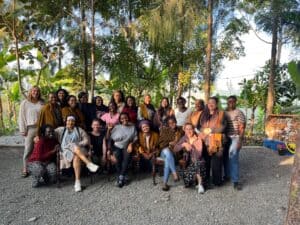
The Nairobi convening brought together 26 feminist activists, organizers, and scholars from Kenya, Rwanda, Ethiopia, Uganda, Sudan, South Sudan, Togo, Madagascar, and the United States. These participants lead social movements in diverse fields, including environmental sustainability, pro-democracy initiatives, gender-based violence prevention, and human rights advocacy. Throughout the institute, we examined social movement strategies, feminist approaches to movement care, and the concept of rigorous hope, reaffirming our collective vision for a better future. The environment fostered radical hope and joy, which felt especially vital amid rising authoritarianism and backlash against social movements worldwide.
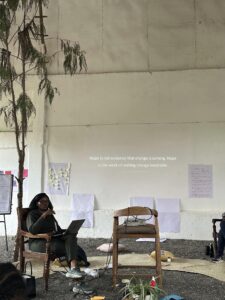 One of the most constructive moments for me during the institute was during Farida’s workshop session on resisting authoritarianism. As a prominent pro-democracy activist in Togo and accomplished writer, she led a session on resisting authoritarian governments in the context of new technologies. During the workshop, she shared a passage from her diary, written at the height of her on-the-ground activism. Her words conveyed a feeling I had felt time and again: a profound sense of uncertainty and hopelessness in a world that is ever-changing and growing more complex by the day. However, within that sentiment of loss, grief, and desperation, she incorporated what feels even more important: “Hope is not evidence that change is coming. Hope is the work of making change inevitable.” This depiction of the work profoundly informs my own commitments to protecting human rights at both national and international levels. It shows how to hold dual truths at the same time. One truth being that we are living in a period marked by rapid environmental decline, escalating armed conflict, and persistent threats to democracy, all of which cost human lives and strip many of their rights and futures. At the same time, we are surrounded by activists who deeply understand the urgent problems at hand and continue to show up daily in their struggles, showing remarkable courage while working under extremely oppressive and dangerous circumstances. It emphasized how crucial it truly is to maintain a clear, unwavering vision for a more just world even in the face of such realities.
As a graduate student dedicated to creating such a world and transforming systems of power through my education, advocacy, and future professional roles, I believe that we must all play an active role and take responsibility for confronting injustices. Connecting my academic work, the projects I am part of that aim to understand and/or address key social issues, and my time at IGLI has helped me develop a more robust skill set. Reflecting on IGLI, I deeply value being in solidarity with women who lead with rigorous hope, compassion, and care, which has given me renewed clarity in my own advocacy work. Rigorous hope, to me, is essential to any of my ongoing efforts to create a world where safety, security, and human rights are fully realized.
As part of my degree curriculum, I completed several of Professor Berry’s courses, including Foundations of Global Justice and Gender Security and Human Rights. These courses fundamentally shaped my academic perspective and prepared me for participation in the institute. They gave me a critical, holistic understanding of how gender shapes our collective understanding of security and how to comprehensively address it within our struggle for global human rights. It also highlighted how imperative it is to address systems that disregard global justice if we aim to live in a more just and secure world. At the end of both classes, Professor Berry left us with the task of thinking rigorously and creatively about the world we envision and the actions and systems it would take to get there. That same teaching was evident within the institute in how participants addressed direct violations of human rights within their own countries and communities. This experience not only affirmed my commitment to advocacy but also equipped me with strategies and perspectives I will carry into my future career.
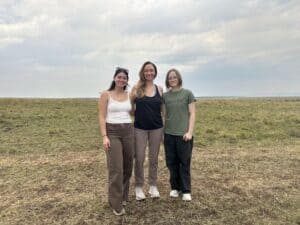
Beyond the meaningful lessons and knowledge I gained, strengthening my relationship with Professor Berry was especially impactful. The opportunity to engage personally with such an influential, insightful, and deeply passionate professor was invaluable, both personally and professionally. Professor Berry's mentorship is among the most important aspects of my experience, both in Nairobi and throughout my time at Korbel. She has shared her knowledge, insights, and a network of professionals in international human rights. Additionally, through this connection, I was also awarded the role of graduate research assistant for IGLI, where I will help gather stories of rigorous hope from the institute's participants for a series of books featuring narratives from women across the globe.
I am deeply grateful to the Katutu Center for Civil Rights, Farida B. Nabourema, Korbel Career Services, and the funding sources that made this transformational experience possible. I am also thankful to Professor Marie, Carly Paul, and Julia Zulver for their ongoing support and mentorship.
Copyright ©2026 University of Denver | All rights reserved | The University of Denver is an equal opportunity institution