

Menu

Menu
Colorado – From October 8–10, 2025, a diverse group of leaders from across Colorado will convene in Northwest Colorado’s Yampa Valley as part of the Colorado Project’s Rural Learning Tour. The Colorado Project is a statewide initiative designed to advance shared prosperity and inclusive, sustainable growth in all regions of Colorado. It is convened by the Josef Korbel School of Global and Public Affairs and the Scrivner Institute of Public Policy at the University of Denver.
Now in its second iteration, the Colorado Project is focusing on the distinctive challenges rural communities face and the innovative, locally driven solutions they are generating. The Learning Tour seeks to elevate this ingenuity, highlighting creative interventions in sustainability, economic mobility, and entrepreneurship.
The Yampa Valley convening will spotlight local leadership in climate action, housing affordability, workforce development, and economic diversification, with site visits across Craig, Hayden, and Steamboat Springs. Participants will learn about the Hayden Geothermal Industrial Park, explore collaborative land-use and downtown revitalization efforts, and engage with community-driven initiatives like Steamboat Creates, the Yampa Valley Food Marketplace, and the Yampa Valley Housing Authority.
Tammie Delaney, co-host in Hayden and community leader, emphasized the unique nature of the Valley: “The Yampa Valley is at the crossroads of tradition and transition. From ranching to renewables, we are learning how to preserve what makes this place special while preparing for the future. The Colorado Project gives us a chance to connect these efforts to a broader statewide conversation.”
Tim Wohlgenant, co-host and President and CEO of the Yampa Valley Community Foundation, highlights the importance of the Learning Tour coming to the Valley: “This tour is about elevating local voices and making sure rural Colorado is not left behind. By bringing people together across sectors, from housing and healthcare to energy and the arts, we’re building the partnerships that will shape a resilient future.”
Participants will also engage in panels on economic development and workforce, explore mental and behavioral health systems collaboration, and discuss collaborative solutions to address the Valley’s rising cost of living. The convening will close with a session dedicated to actionable next steps and commitments to align local solutions with statewide strategies.
The Yampa Valley is the final visit in the 2025 Colorado Project Learning Tour. It follows successful convenings in Northeast Colorado (June) and the San Luis Valley (August). Although this Learning Tour is drawing to a close, the project will continue to highlight success stories that lead to actionable policy solutions for the state.
50% Graduate Tuition Discount
Denver, CO — The Josef Korbel School of Global and Public Affairs is proud to support those who serve by offering a 50% tuition scholarship and waived application fees to AmeriCorps alumni. This initiative honors the commitment and impact of individuals who have dedicated themselves to community-focused service through AmeriCorps and are now ready to take the next step in their public service journey.
Whether you’re continuing your service in the nonprofit sector, entering government, or expanding your impact in a new direction, Korbel provides the academic foundation and professional network to support your growth. Our programs in international affairs, public policy, development, and security equip students with the skills and perspectives needed to lead in a rapidly changing world. With this scholarship, we aim to make a world-class education more accessible to those who have already demonstrated their commitment to serving others.
About the Josef Korbel School of Global and Public Affairs
The Korbel School at the University of Denver is the 12th-ranked program in the world to earn a master’s program in International Relations and the 20th-best place to pursue an undergraduate in International Studies by Foreign Policy. Located in Denver, Colorado, the Korbel School offers practical undergraduate and graduate degrees and certificate programs, allowing students to build skills to solve real-world challenges. Studying in Denver offers a unique blend of global engagement and fresh perspective—where a thriving, forward-thinking city meets unparalleled access to the outdoors, providing the space to think beyond the beltway and approach complex challenges with clarity and vision.
Colorado – From August 13–15, 2025, a diverse group of leaders from across Colorado will convene in the San Luis Valley as part of the Colorado Project’s Rural Learning Tour. The Colorado Project is a statewide initiative designed to advance shared prosperity and inclusive, sustainable growth in all regions of Colorado. It is convened by the Josef Korbel School of Global and Public Affairs and the Scrivner Institute of Public Policy at the University of Denver.
Now in its second iteration, the Colorado Project is focusing on the distinctive challenges rural communities face and the innovative, locally driven solutions they are generating. The Rural Learning Tour seeks to elevate this ingenuity, highlighting creative interventions in cost of living, sustainability, economic mobility, and entrepreneurship.
The San Luis Valley convening will spotlight organizations and initiatives in rural healthcare, food systems, affordable housing, and environmental stewardship, among others. There will also be a special focus on youth engagement and workforce readiness. Aaron Miltenberger, one of the co-hosts of this convening and President & CEO of the Boys & Girls Clubs of the San Luis Valley, emphasizes the importance of youth engagement in efforts like this: “Investing in our kids isn’t just the right thing to do—it’s how we build a stronger rural economy. When young people in the San Luis Valley get real skills, strong mentors, and the confidence to lead, they come back as nurses in Alamosa, teachers in Antonito, and business owners in Monte Vista. That’s how we grow—by investing in our own.”
Participants will visit Alamosa, Center, Monte Vista, and Mosca over the three days to tour a food distribution hub, learn about the revitalization of Main Street in Alamosa, meet with agricultural producers leveraging tech solutions for more sustainable production, and hear directly from community leaders from institutions like Adams State University, San Luis Valley Health, and the Boys and Girls Clubs of the San Luis Valley. Colorado Project participant Kurt Walker, a Korbel School alum and Ranch Manager at Pine Canyon Ranch, remarks “The San Luis Valley is proof that when we center equity and innovation, rural places can lead Colorado’s future.”
The San Luis Valley visit follows a successful convening in Sterling in June to better understand the context of northeastern Colorado. Following Alamosa, the Learning Tour will travel to Steamboat Springs and the Yampa Valley (October 8–10), where the conversation will turn to recreation-based economies and conservation finance. Each stop reveals distinct regional strengths, but the tour’s goal is unified: uncovering shared solutions for both rural and statewide prosperity across Colorado.
Colorado – On June 17–18, 2025, a diverse group of civic, political, and private sector leaders from across Colorado will gather in Sterling as part of the Colorado Project’s Rural Learning Tour. The Colorado Project is a unique statewide effort to advance shared prosperity and sustainable and inclusive growth in every corner of the state. The initiative is convened by the Josef Korbel School of Global and Public Affairs and the Scrivner Institute of Public Policy at the University of Denver, in collaboration with partners across the state.
In its second iteration, the Colorado Project will explore the substantive policy challenges that rural communities face, as well as the creative solutions they are developing in response. Dean of the Korbel School, Fritz Mayer, explains, “The Colorado Project is about bridging Colorado’s urban-rural divide with evidence‑based policy solutions. Sterling is where that conversation begins this year.” The Rural Learning Tour aims to capture local innovations that align with the Colorado Project’s four cornerstones: Colorado’s Promise (access to prosperity in all Colorado communities), sustainability and resilience, economic mobility and workforce, and cost of living. These cornerstones emerged from the first iteration of the Colorado Project, which culminated in a report detailing a strategy for inclusive statewide growth.
The Sterling gathering will spotlight rural housing innovations, career‑connected learning, renewable energy stewardship, and small businesses. Participants will tour a wind‑energy site in Crook, meet with Northeast Colorado Boards of Cooperative Educational Services (BOCES) and Northeastern Junior College leaders, and network with local entrepreneurs at community events on Main Street. "We're thrilled to welcome the Colorado Project's first Rural Renaissance convening to Sterling. Our community is eager to share how we are innovating and discuss stronger partnership opportunities across all northeast Colorado" shares Trae Miller, Executive Director of the Logan County Economic Development Corporation. The convening will also benefit the Colorado Project participants, who represent other communities across the state. Participant Heidi Williams, President and CEO of Civic Results and Executive Director of the Metro Mayors Caucus reiterates this point: “Colorado’s small towns have long been laboratories of innovation. By listening to Sterling’s local ingenuity we can scale ideas that benefit every corner of the state.”
After Sterling, the Rural Learning Tour will visit Alamosa (August 14–15) and the San Luis Valley, followed by a visit to Steamboat Springs (October 9–10) and the Yampa Valley. Each region’s challenges are distinct, but the tour seeks to surface cross‑cutting solutions that advance inclusive growth for all of rural Colorado.
To learn more about the Colorado Project, visit the website or contact [email protected].
DENVER, CO — The Josef Korbel School of Global and Public Affairs at the University of Denver is proud to announce that Carol Spahn, former Director of the Peace Corps, will join its faculty in fall 2025 as the Rice Family Professor of the Practice of International and Public Affairs.
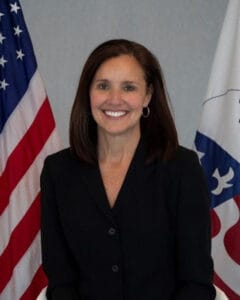
Spahn was appointed as Acting Director of the Peace Corps by President Joseph R. Biden on his first day of office and unanimously confirmed by the U.S. Senate thereafter. During her tenure, she guided the agency through a historic global relaunch following the COVID-19 pandemic, where more than 3,000 volunteers returned to service across 61 countries. She led transformational efforts to modernize operations, strengthen volunteer safety and trauma-informed care, and launched new country programs in Vietnam, Sri Lanka, El Salvador, and Palau. She also successfully secured the Peace Corps’ first budget increase in seven years.
In addition to her recent government service, Spahn has more than 25 years of international development experience, including leadership roles at Women for Women International, Accordia Global Health Foundation, and in multiple Peace Corps posts as both Country Director and Volunteer.
“Carol Spahn embodies a lifelong commitment to public service and international engagement,” said Fritz Mayer, Dean of the Josef Korbel School of Global and Public Affairs. “Her experience and insight will be invaluable to our students and our broader community.”
The appointment of Spahn as the Rice Family Professor of Practice reflects Korbel’s deep and ongoing connection and commitment to Returned Peace Corps Volunteers (RPCVs). During the COVID-19 pandemic, Korbel launched dedicated scholarships for evacuated volunteers, resulting in a surge in RPCV enrollment. Korbel remains steadfast in its support for those called to service. In fact, the University of Denver and the Korbel School have consistently been recognized as one of the top volunteer-producing universities by the Peace Corps.
For media inquiries or more information, please contact:
Stephanie Worden | Assistant Dean for Enrollment, Marketing and Communications
[email protected]
Denver, CO— The Josef Korbel School of Global and Public Affairs is proud to support those who serve by offering a 50% tuition scholarship and waived application fees to individuals entering or transitioning out of federal service, government contracting, or government affiliated programs. This initiative recognizes the expertise and dedication of public service professionals and their vital role in shaping policy and global affairs.
Whether you are entering government service or returning to the private sector, we are committed to helping you take the next step in your career. The Josef Korbel School provides rigorous training in international affairs, public policy, security, and development. Our programs equip professionals with the skills, networks, and expertise needed to lead and make an impact in a rapidly changing world. With this scholarship, we aim to make a world-class education more accessible to those dedicated to public service.
“At the Josef Korbel School of Global and Public Affairs, we believe that service is essential to building a better world. Those who dedicate their careers to federal service play a vital role in shaping policy, advancing diplomacy, and strengthening our communities. This scholarship is our way of recognizing their contributions and ensuring they have access to the education and resources needed to lead effectively—whether they are stepping into federal service or transitioning to new opportunities. We are proud to support them on their journey” – Dean Frederick “Fritz” Mayer
About the Josef Korbel School of Global and Public Affairs
The Korbel School at the University of Denver is the 12th-ranked program in the world to earn a master’s program in International Relations and the 20th-best place to pursue an undergraduate in International Studies by Foreign Policy. Located in Denver, Colorado, the Korbel School offers flexible undergraduate and graduate degrees and certificate programs, allowing students to build skills to solve real-world challenges. Studying in Denver offers a unique blend of global engagement and fresh perspective—where a thriving, forward-thinking city meets unparalleled access to the outdoors, providing the space to think beyond the beltway and approach complex challenges with clarity and vision.
Dean Mayer and Dean Karim El Aynaoui formally signed a student exchange agreement during a ceremony held at UM6P’s Rabat campus, coinciding with events from the Atlantic Dialogues.
The Josef Korbel School of Global and Public Affairs at the University of Denver is excited to announce a new Student Exchange Agreement with the Faculty of Governance, Economics and Social Sciences (FGSES) of the Mohammed VI Polytechnic University (UM6P) in Morocco. The agreement, finalized on December 13, 2024, establishes a robust partnership enabling graduate students to participate in academic exchanges between the two institutions beginning in the 2025/26 academic year.
Dean Frederick “Fritz” Mayer of the Korbel School and Dr. Karim El Aynaoui, Dean of FGSES, formally signed the agreement during a ceremony held at UM6P’s Rabat campus, coinciding with the events of the Atlantic Dialogues conference. The agreement aims to foster academic collaboration, broaden students’ international experiences, and strengthen ties between the U.S. and Morocco.
Korbel students will have the opportunity to study in UM6P’s renowned graduate programs in political science, global affairs, and economics. Similarly, FGSES students will have access to Korbel’s diverse academic offerings, including its Master’s programs in Global Economic Affairs, Global Environmental Sustainability, International Development, International Human Rights, International Security, International Studies, and Public Policy.
“This partnership underscores our commitment to preparing students to navigate an increasingly interconnected world,” said Dean Mayer. “We look forward to the enriching academic and cultural exchanges this collaboration will bring.”
The signing event included presentations on UM6P’s programs, a campus tour, and engaging discussions with students and faculty. Both institutions also pledged to explore future opportunities for broader cooperation in teaching, research, and professional development.
For more information about the exchange program, please contact Dr. Kevin Archer at [email protected].
The Josef Korbel School of Global and Public Affairs is now partnering with the William D. Clarke, Sr. Diplomatic Security Fellowship (Clark DS) to complete graduate degrees at Korbel. The Clarke DS Fellowship, funded by the US Department of State and administered by The Washington Center for Internships and Academic Seminars (TWC), aims to recruit underrepresented minorities and women into the Diplomatic Security Service (DSS). Clarke DS Fellows receive two years of funding to pursue graduate degrees that enable careers with the DSS. The Korbel School joins the Department of State by offering additional benefits to Clarke DS fellows:
“The Korbel School has a long history of connecting our students with careers in government agencies like the US Department of State. I am thrilled to join them in diversifying government work with the Clarke DS Fellowship. The Korbel School has always worked hard to remove barriers for talented leaders and scholars to pursue careers in International Affairs.” – Dean Fritz Mayer
Through the Clarke DS Fellowship, eligible graduate students can embark on a career path that takes them around the world, where they work to protect US personnel, facilities, and information, all while supporting diplomacy. By partnering with the US Department of State to further ease the financial burden of a graduate degree, the Korbel School continues its commitment to training the next generation of diverse, talented leaders in International Affairs.
“The Clarke DS Fellowship aims to attract qualified candidates to the Diplomatic Security Service who represent the diversity of the United States,” says Shannan Spisak, Executive Director of Federal Initiatives for The Washington Center. “The generous scholarships offered by the Korbel School provide Clarke DS Fellows the opportunity to enroll in a master’s degree program they otherwise may not have been able to afford.”
The Korbel School will enable Clarke DS Fellows to earn a master’s degree in any one of the following programs:
The MA and MPP programs at the Korbel School require 60 credits and two academic years of full-time enrollment. To apply to our programs, follow this link.
About The Washington Center for Internships and Academic Seminars
The Washington Center creates flexible, immersive pathways to enhance the pipeline of diverse talent that build more equitable, inclusive workplaces and communities. Since our founding, we’ve helped more than 60,000 young people translate their college majors into career paths. We use our scale and expertise to customize each learner’s experience to be truly transformative.
About the Josef Korbel School of Global and Public Affairs
The Korbel School at the University of Denver is the 12th-ranked program in the world to earn a master’s program in International Relations and the 20th-best place to pursue an undergraduate in International Studies by Foreign Policy. The Korbel School offers flexible undergraduate and graduate degrees and certificate programs, allowing students to build skills to solve real-world challenges.
COVID-19 has created a human development crisis in Africa but is an opportunity to accelerate infrastructure investment and economic reform to boost the continent’s prospects when the pandemic subsides.
Crowded informal urban settlements have made physical distancing difficult and may make Africa particularly susceptible to COVID-19. This is exacerbated by limited access to safe water, undernourishment, poorly funded health systems and underlying health conditions like tuberculosis (TB) and HIV/AIDS.
Forecasts of infections and deaths vary widely, but the social and economic impact of the pandemic is already being felt and may trigger a series of debt crises, says a new report by the Institute for Security Studies (ISS), Gordon Institute of Business Science (GIBS) and Frederick S Pardee Center for International Futures. The research was funded by Humanity United and the Hanns Seidel Foundation (HSF).
‘The study comes at a very important time and is the first comprehensive long-term forecast of the health and economic impact of the pandemic on Africa up to 2030,’ said Markus Ferber, Member of the European Parliament and HSF Chairman. ‘Africa will be extremely hard hit, but the crisis also offers an opportunity for a sustainable economic transformation. These insights are valuable for the EU-Africa summit in October. It is in Europe's own interest to support Africa in its crisis management.’
The study uses the International Monetary Fund’s April 2020 growth forecast, combined with mortality data from Imperial College in London to model three scenarios on the likely impact of COVID-19 on Africa’s economic growth, per capita income, poverty and Sustainable Development Goal (SDG) targets.
Mortality rates are to date significantly lower than other regions of the world, probably due to Africa’s younger population, but community transmission is accelerating. Considering forecasted rates of infection, COVID-19 is expected to have a relatively low mortality. Between 350 000 and 1 450 000 additional deaths may be due to COVID-19 in 2020, but likely much less thereafter.
The study concludes that direct and indirect COVID-19-related mortality would result in between 1.8 and 5.3 million additional deaths in Africa by 2030. Currently about 700 000 Africans die from AIDS, and slightly fewer from malaria every year.
Indirect mortality generally results from lower government revenues and reduced health spending. With Ebola in Guinea, Liberia and Sierra Leone from 2014 to 2016, resources diverted from basic health care prompted increases in malaria, HIV/AIDS, TB and maternal mortality. If the same happens with COVID-19, then HIV, TB and malaria deaths may increase by up to 36% in Africa over five years.
Government revenues in Africa are estimated to drop in 2020 by US$45 billion from the pre-COVID forecast, and the report calculates that public and private health expenditure will decline by US$3.7 billion. Economic recovery is likely to be gradual after lockdowns in Africa are fully lifted, worsened by an expected collapse in tax revenues and falls in employment and household income.
Economic contraction is compounded by many African countries’ high levels of debt. Costs of servicing debt have increased to roughly US$40 billion annually, driven higher by depreciation of many African currencies in 2020. COVID-19 is thus likely to trigger a debt crisis and potentially a default by some countries.
On average, debt is expected to increase by about 4.4 percentage points of GDP in 2020. Debt suspension or cancellation would be a powerful tool to supplement African countries’ efforts to deal with the pandemic and help their economies towards recovery, the report says.
The contraction in African economies will likely see a rise in foreign aid’s contribution to GDP. Africa will for several years become more dependent on aid, and faces the conundrum of having to spur domestic investment while constraining public expenditure.
The impact of COVID-19 on extreme poverty is particularly severe. Prior to COVID-19 about 570 million Africans were expected to be living in extreme poverty by 2030, but the COVID-19 pandemic could push that figure to upwards of 631 million.
The proportion of Africa’s undernourished population is set to increase, and infant mortality will by 2030 be three times higher than the UN’s 2030 target in the SDGs.
Beyond emergency policies to fight the pandemic, there is a need to build resilience and improve long-term growth prospects by spending more effectively on health, investing in basic infrastructure and driving economic transformation.
Urbanisation has seen the rapid growth of informal settlements without the basic infrastructure to cope with a large influx of people on top of natural population growth. Africa’s urban population is forecast to more than double by 2050, adding more than 800 million people to its cities. The pandemic presents an opportunity for African countries to make provision of water and sanitation a focus of their economic recovery stimulus, and improve a range of development indicators in the process.
COVID-19 may accelerate a digital transition and facilitate technology leapfrogging to a more sustainable economy fueled by renewable energy. Modern technology can help to overcome much of Africa’s basic infrastructure gap. This is through a combination of smart metering, big data, geolocation and the internet of things to establish smart grids and solar home systems, map sanitation facilities and water points, mitigate peak traffic and manage waste.
COVID-19 also underscores the importance of accelerating structural transformation towards labour-absorptive growth of formal sectors, and economic diversification away from reliance on commodities.
Read the full report: Exploring the impact of COVID-19 in Africa: a scenario analysis to 2030.
For more information and interviews contact:
Jonathan D Moyer, Director, Frederick S. Pardee Center for International Futures
(215) 872-4927
The National Intelligence Council released Global Trends 2030: Alternative Worlds, the latest report in its quadrennial series on major worldwide trends. The Frederick S. Pardee Center contributed greatly to the report, providing International Futures forecasts and charts on patterns ranging from growing middle-class consumption to shifting global power dynamics to state fragility. According to the authors’ acknowledgements, the International Futures model, “with support from Professor Barry Hughes and Dr. Jonathan Moyer, provided an overall framework that enabled [them] to explore possible futures across a wide range of domains, from geopolitics to health and education.” The Global Trends report attracted media attention worldwide and will serve as a tool for President Obama as he determines the nation’s international strategy during his upcoming term. A PDF of the report may be accessed directly through the National Intelligence Council’s website.
Copyright ©2026 University of Denver | All rights reserved | The University of Denver is an equal opportunity institution