
Join us for Open House on November 13, 2026. Register now.

Menu

Menu
Join us for Open House on November 13, 2026. Register now.
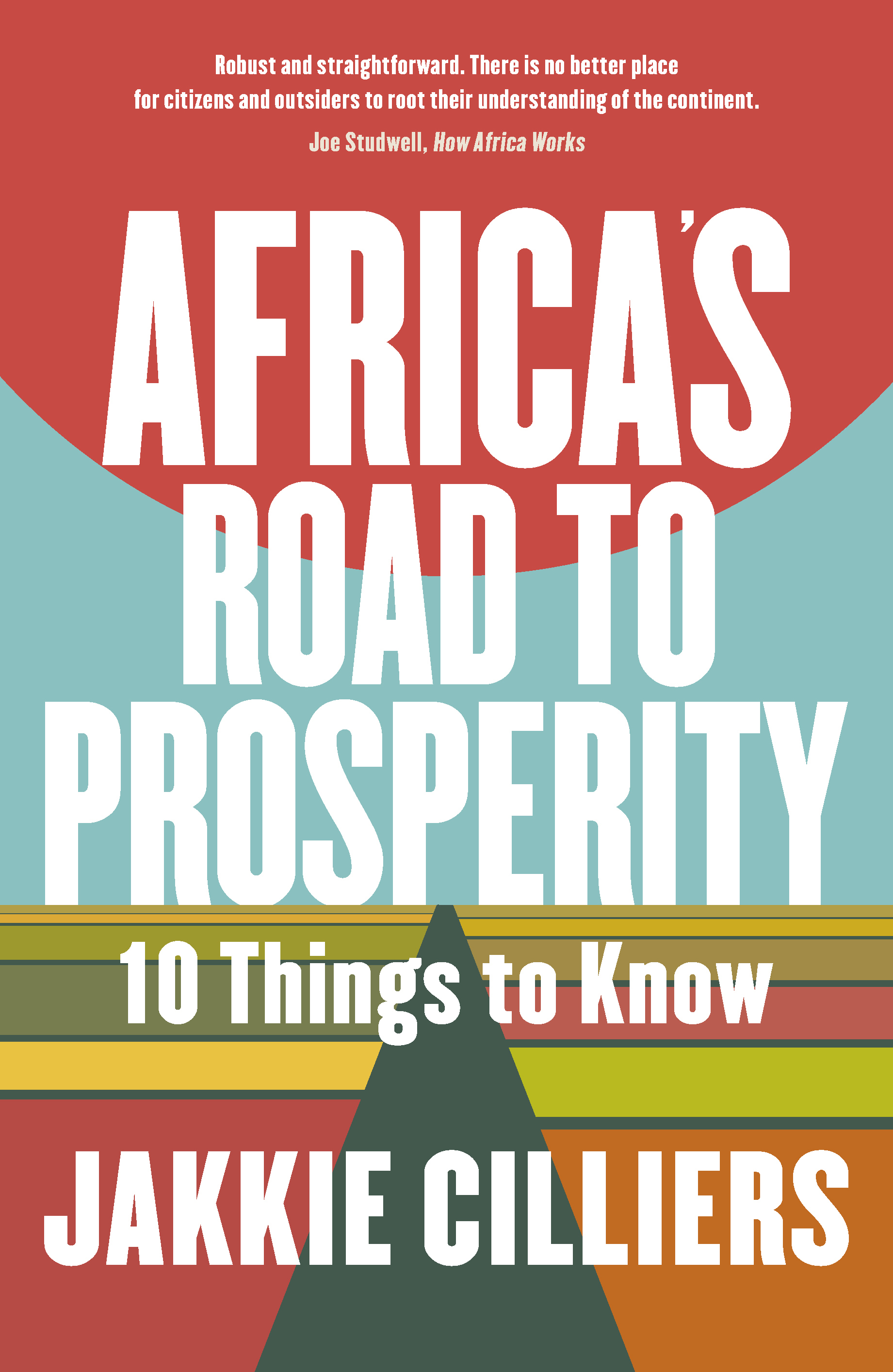
Jakkie Cilliers's new book, Africa's Road to Prosperity: 10 Things to Know, draws on data and scenario modeling from International Futures (IFs), the Pardee Institute's open-source, integrated forecasting platform, to ask which choices could most improve development outcomes across the continent.
Cilliers is the founder and former executive director of the Institute for Security Studies (ISS). He chairs the ISS Board of Trustees and heads its African Futures and Innovation Programme in Pretoria, South Africa. Cilliers and ISS are longtime partners of the Pardee Institute.
Ten priorities, examined over the long term
The book identifies 10 priorities for Africa’s development, including infrastructure, energy, regional trade, employment, land management, and income convergence with wealthier regions, and examines the forces that shape them.
These priorities interact. Expanding electricity access can raise productivity and support new jobs, while a faster-growing workforce needs education and job opportunities to translate demographic change into higher incomes. Using International Futures (IFs), Pardee’s open-source forecasting platform, Cilliers examines how these relationships unfold over time and how different policy choices could strengthen or constrain Africa’s prospects for prosperity.
By: Wara Irfan
“We are living in a period of two crises,” said Jonathan Moyer, Director of the Frederick S. Pardee Institute for International Futures. While the climate crisis receives widespread attention, he noted, a second crisis often gets “less coverage”. That is the human development crisis. “There are 700 million people in the world living in abject poverty.”
Moyer made these remarks while introducing the new report, Charged for Change: The Case for Renewable Energy in Climate Action, published by the United Nations Development Programme (UNDP) in partnership with the Pardee Institute and Octopus Energy. He was joined by former Colorado Governor Bill Ritter (2007–2011), whose distinctive record of building a “New Energy Economy” framework, which links climate, jobs, utility policy, public health, and economic development, sets him apart from both his predecessors and many of his contemporaries. The report’s lead author, Chibulu Luo, Ph.D., joined Dr. Moyer and the Hon. Bill Ritter for a discussion on how renewable energy can simultaneously advance climate action and human development. “What this report does is help chart a path forward for achieving both,” Moyer emphasized.
Deva Sahadevan, Senior Research Associate at the Pardee Institute, presented the report’s key findings, followed by a panel discussion moderated by Moyer and an audience Q&A. Using the Pardee Institute’s International Futures (IFs) model, researchers examined three scenarios: (1) a Base Case in which the world remains on a warming trajectory under current trends of development, (2) a Renewable Acceleration (RA) scenario where there is accelerated global investment in renewables, and (3) an RA+SDG scenario where these renewable investments are paired with targeted investments in health, education, governance, and infrastructure. 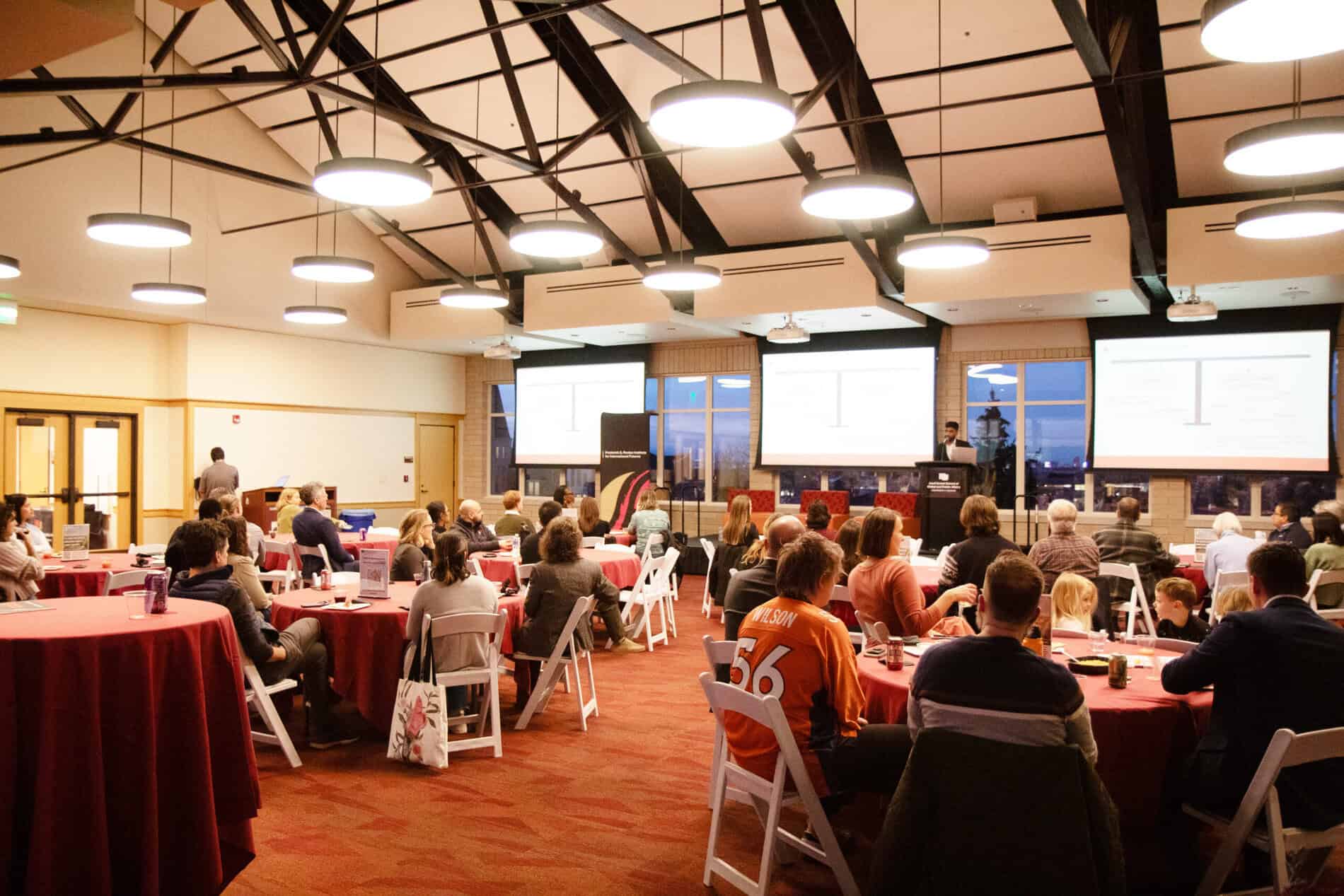
Deva Sahadevan presents an overview of the report. Photograph taken by Megan Livengood.
The study found that RA+ SDG can significantly advance human development while also improving climate outcomes in the long run. Compared to the Base Case, this pathway could lift an additional 193 million people out of extreme poverty, reduce malnutrition for 142 million people, and expand access to clean water and sanitation to 550 million more people by 2060 - all within a 1.5°C-aligned future. In contrast, the RA scenario showed only modest improvements to human development, suggesting that climate action alone is insufficient to balance the dual imperatives of addressing climate change and improving human well-being.
Although the RA + SDG pathway requires substantial upfront investment, the long-term payoff is considerable. By 2060, cumulative savings could reach approximately $20.4 trillion by 2060, driven by energy efficiency gains, declining renewable costs, and a shift in capital from fossil fuels to clean energy, while keeping global warming closer to internationally agreed targets.
Speakers grounded these modeling results in real-world practice. Dr. Luo described how UNDP uses country-level evidence to show how energy policy decisions intersect with priorities in finance, health , and gender, helping government ministries see climate action as integral to development planning. She highlighted examples such as electrified irrigation and solar-powered health facilities in Zambia, alongside a strong policy focus on clean cooking. “It is a smart economic choice for countries to invest in renewables,” she said, noting that the report provides governments with “real numbers” demonstrating the development benefits of a renewable energy transition as they shape climate and development strategies.
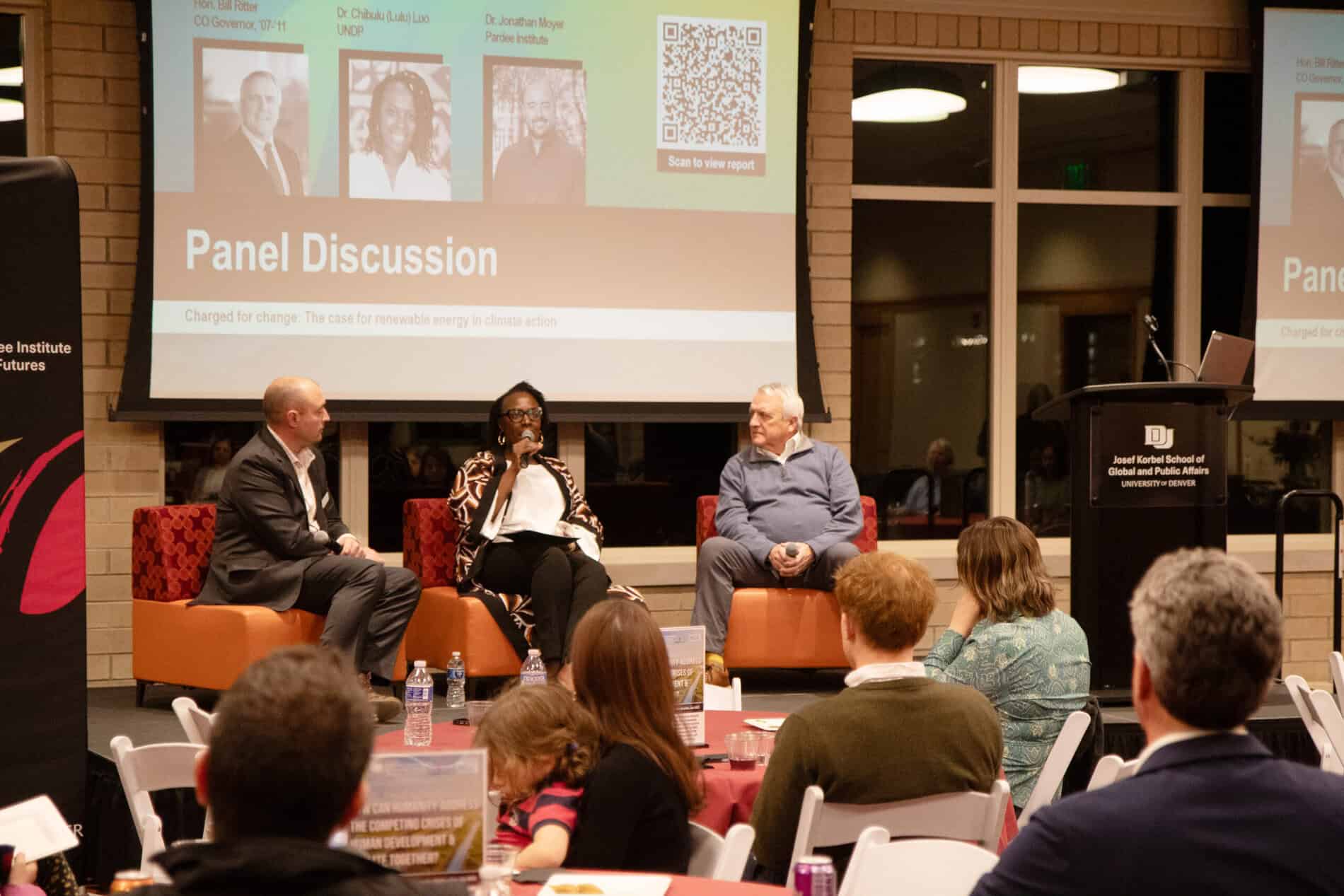 Dr. Chibulu Luo addresses the audience. Photograph taken by Megan Livengood.
Former Governor Ritter shared lessons from Colorado on scaling renewable energy, supporting workforce transitions, and building financing mechanisms that make clean energy both feasible and equitable. Reflecting on his time in office, he remarked, “Colorado is a fascinating little Petri dish” where “development and climate action are not mutually exclusive,” according to him. He stressed that these goals are not opposing values but can be pursued together. The former governor also warned that if the United States retreats from global engagement on climate, human development, and sustainable energy, it risks missing a critical opportunity to lead and make a meaningful impact.
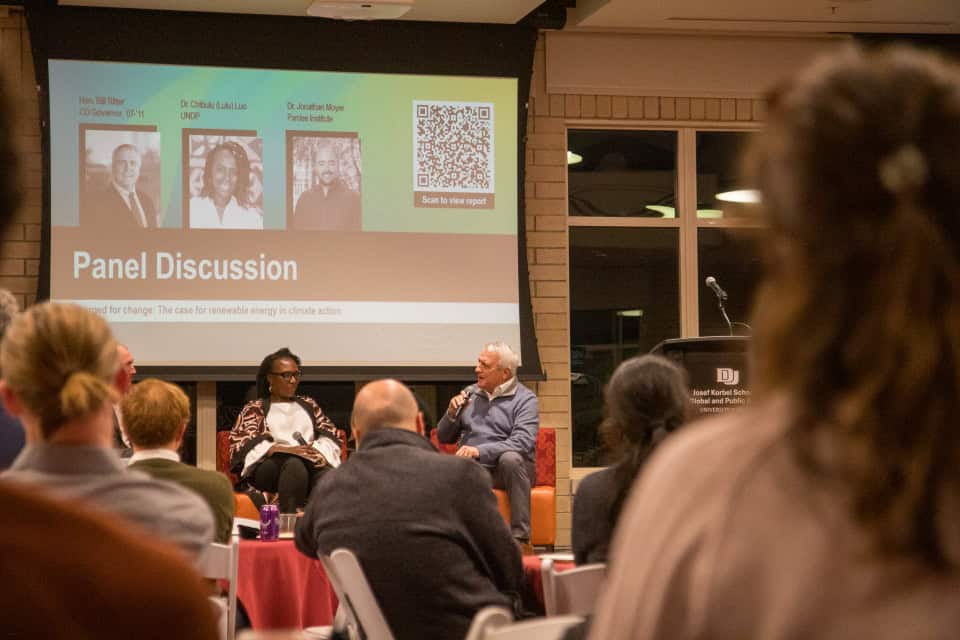 Former Colorado governor Bill Ritter shares his insights. Photograph taken by Megan Livengood.
Dr. Luo added that what gives her hope is the evidence showing that a renewable energy transition can deliver substantial benefits for both people and the planet, benefits that are often even greater in developing countries.
Furthermore, the event drew practitioners, entrepreneurs, researchers, policymakers, and students. The audience's Q&A ranged widely, from clean-cooking and carbon markets to bio and nuclear energy, land use, and the big question of growth versus sustainability. A former off-grid entrepreneur raised the recent KOKO Network cass in which a bioethanol cookstove provider lost access to carbon-credit approval in Kenya, leaving millions of customers at risk; in response, Dr. Luo described how national carbon-market regulations, multilateral guarantees, and blended or concessional finance all matter for managing investor risk and protecting access to clean-cooking solutions, noting Kenya is also exploring electric-cooking options.
Another audience member inquired about bioenergy’s role in future energy mixes and lessons from past biofuel investments. The former Governor answered that bioenergy, carbon capture, and related technologies deserve further development, and that policy tools (tax credits, public investment) and learning about real costs will shape their viability. Sahadevan also addressed broader concerns about growth and equity, noting the report’s framing: modeled pathways highlight a tension between urgently reducing emissions and enabling the growth many low-income countries still need, so solutions will require careful mixes of investment, redistribution, and locally appropriate policies.
The discussion concluded with a reminder that climate action and human development need not compete. “The choices we make today will have long-term implications,” Moyer said. The session underscored the importance of a data-driven foresight in shaping country-level dialogue, financing strategies, social investments, and governance reforms, key elements for achieving a just and sustainable energy transition.
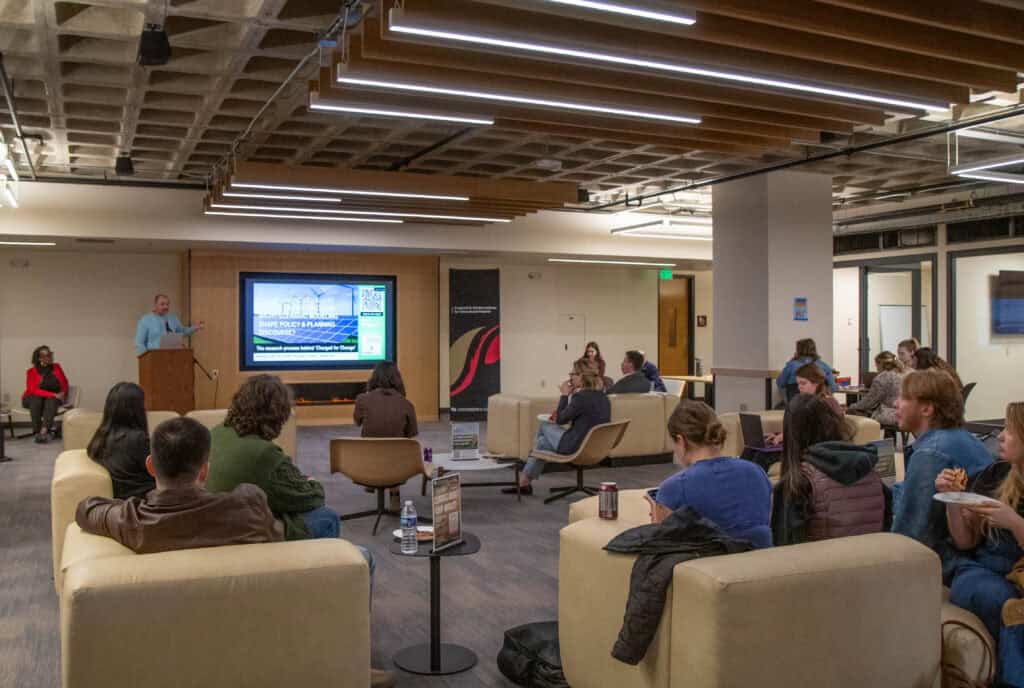
Attendees at the Charged for Change Lunch & Learn event. Photograph taken by Pam Hoberman.
How do we model a just energy transition? How might scenario modeling shape policy & planning discourse? These were the key questions explored at the Pardee Institute’s Lunch and Learn series, following the Charged for Change: The case for renewable energy in climate action launch event on February 4th.
Charged for Change emerged from a collaboration between the United Nations Development Programme (UNDP) Sustainable Energy hub, Octopus Energy, and the Pardee Institute. The report links renewable energy, climate commitments, and human development outcomes.
At the Lunch and Learn event, the presenters focused on different aspects of the research process, including an in-depth look at integrated energy modeling using IFs, contextualizing UNDP’s role in supporting sustainable energy and inclusive development efforts, and reflecting on real-world applications through a case study highlighting Nigeria.
Following opening remarks from Pardee Director Dr. Jonathan Moyer, the report’s lead author, Dr. Chibulu Luo of UNDP, outlined the organization’s role in advancing sustainable energy and inclusive development. A key facet of that work revolves around UNDP’s Climate Promise initiative, which supports developing countries in implementing and strengthening their climate commitments.
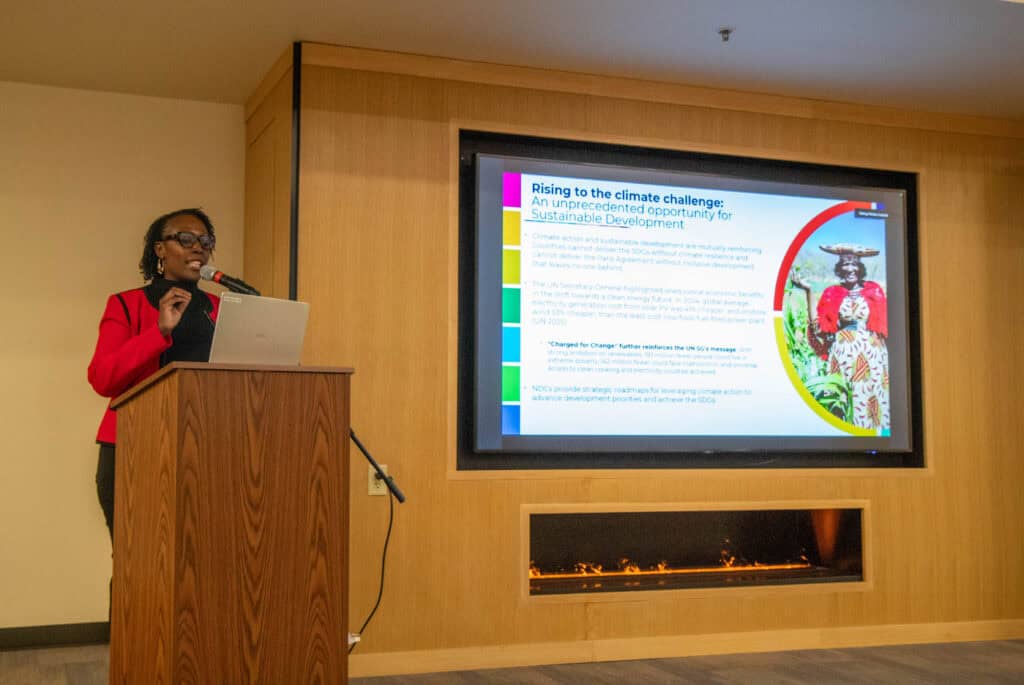
Dr. Chibulu Luo of UNDP addresses the audience. Photograph taken by Pam Hoberman.
Deva Sahadevan, Senior Research Associate at Pardee and co-author of the report, then unpacked the key research questions and assumptions behind Charged for Change. With help from Pardee researchers and fellows, the Pardee Institute conducted an extensive literature review and synthesized more than one hundred fifty data tables to structure three long-term scenarios:
Pardee Senior Scientist Dr. Mohammod Irfan, further elaborated on the IFs model and discussed the conceptual underpinnings of modeling energy systems in IFs. Dr. Irfan mentioned how the IFs platform has a unique ability to map energy and economic models in tandem. By exploring multiple indicators at once, IFs forecasts help policymakers and others better understand intertwined dynamics within and across global systems.
Dr. Irfan also touched on the overall model structure, methodology, and enhancements made to address the key research questions in this study. For instance, the IFs model originally analyzed six energy types (coal, oil, gas, nuclear, hydro, and an aggregated category of ‘other renewables’) and featured older cost structures for renewables. To address these limitations, IFs expanded its energy model to nine energy types and updated the cost structures.
Following presentations on the study’s research approach and motivations, the event pivoted to a case study in Nigeria to highlight the real world applications of the work. Dr. Geoffrey Omedo, a technical expert who provided comprehensive feedback on the report’s case study, reflected on Nigeria’s dual identity as both an energy access and energy-transition country. Dr. Omedo’s comments underscored the importance of using a balanced approach towards global energy policy, backed by country government support.
Following the panelists’ presentations, the floor opened to an audience Q&A. The audience raised questions spanning the global implications of the Renewable Acceleration + SDGs scenario and the domestic realities on the ground while Nigeria navigates the evolving renewable energy landscape.
Charged for Change was written by Luo, C., Sahadevan, D., Irfan, M.T., Moyer, J.D., Mason, C., & Beynon, E.
To access the full Charged for Change report, click here.
By: Megan Livengood
Developed at the University of Denver, the Pardee Institute's International Futures (IFs) model is now helping to shape how the world's leading industrial agency plans for decades ahead. Faster industrialization can be compatible with lower emissions when it is aligned with clean energy and equity goals, according to the United Nations Industrial Development Organization (UNIDO) flagship, Industrial Development Report 2026 (IDR 2026), released on November 26, 2025, during the Global Industry Summit 2025. In this report, UNIDO looks beyond the immediate future to explore how decisions around industrialization and development today can have transformative effects for the next generation.
For the IDR 2026, UNIDO, working with the Pardee Institute, used IFs, to understand how transformative megatrends, like demographic shifts and energy transitions, are likely to shape the future of industrialization and development. The analysis, led by Taylor Hanna and Abdelrahman Ibrahim and supported by Collin J. Meisel, José Solórzano, Yutang Xiong, and Pardee Fellows, Solikha Makhmatova, and Victoria Pepera, evaluates future scenarios for leveraging industrial development for growth in developing countries. The projections capture both the opportunities for inclusive and sustainable growth and the risks that industrial inequality will deepen if capabilities and investment remain concentrated.
The findings underscore what's at stake. Under the current path scenario, where existing policies and trends largely continue, IFs projections for 2050 estimate around 3.15 billion people living below the poverty line1, 303 million people facing undernourishment, and a global temperature rise by roughly 2.3°C.
Using IFs, UNIDO then models two alternative futures for 2050: an industrialization push scenario and a clean energy and just industrialization push scenario. In the industrialization push scenario, 403 million fewer people are projected to live in poverty, and 33 million fewer people face undernourishment, but CO2 emissions rise by over 2% globally. In the clean energy and just industrialization push scenario, 525 million fewer people live in poverty, 52 million fewer people face undernourishment, and global CO2 emissions fall by 6%.
The launch of IDR 2026 and the adoption of Vision 2050 mark a critical turning point because UNIDO is grounding long-term industrial strategy in an integrated systems-based modeling approach rather than short-term analysis. Understanding how industrial growth interacts with energy systems, emissions, demographics, and human development over decades requires analytical tools capable of capturing feedbacks, trade-offs, and uncertainty.
Built on the International Futures (IFs) model, Pardee's empirical model enables policymakers to explore other development pathways, rather than a single trajectory. IFs enables analysis of how different development strategies may shape inequality, sustainability, and resilience over the long term.
The collaboration reinforces a core insight: building a sustainable and inclusive global industrial future will require not only technological and financial transformation, but also the analytical tools to understand where the world is headed and what alternative paths are possible.
1. World Bank defined upper-middle-income poverty line of $8.30 per person per day
Hughes, B. B., Solórzano, J., & Rothman, D. S., Irfan, R. I., Sahadevan, D. (2025, November 11). IFs energy model documentation. Pardee Center for International Futures, Josef Korbel School of Global and Public Affairs, University of Denver. https://pardeewiki.du.edu/index.php?title=Energy
By: Sylvia Morna Freitas
The Frederick S. Pardee Institute for International Futures, in partnership with Octopus Energy and the United Nations Development Programme (UNDP), shaped the analytical foundation of the report Charged for Change: The case for renewable energy in climate action, which presents a vision for how renewable energy can simultaneously drive climate action and sustainable development. “Universal electricity and clean cooking access”, a global GDP boost of $48 trillion USD, and the end of extreme poverty for 193 million people are all achievable within a 1.5°C-aligned future, the report finds in its Renewable Acceleration and Sustainable Development Goals (RA+SDG) scenario.
For the report, the Pardee Institute used its International Futures (IFs) model to quantify the impacts of three future scenarios of renewable climate action, or inaction, to provide an evidence-based foundation for revising and implementing Nationally Determined Contributions (NDCs) from the Paris Agreement for over 120 countries. These countries are supported by the UNDP’s Climate Promise: Pledge to Impact Programme, which is a commitment by the UNDP to help countries reach their NDCs by implementing needed programs.
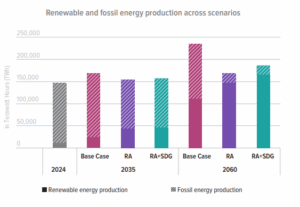
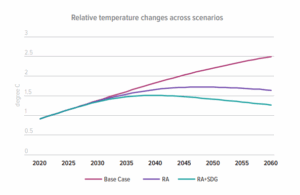
Graphs showing snapshot of scenario findings, including alignment with outcomes of the first global stocktake from report. Source: Charged for change: The case for renewable energy in climate action
The Institute’s International Futures (IFs) model was used to compare the Base Case, Renewable Acceleration (RA), and Renewable Acceleration + SDGs (RA+SDG) scenarios. In the report, the Base Case forecasts our trajectory under current policies while the Renewable Acceleration pathway simulates a world with ambitious, integrated renewable energy policy. The RA+SDG scenario simulates a world with similar integrated renewable energy policy and the advancement of the UN Sustainable Development Goals (SDGs).
Under current policy trajectories (the Base Case scenario), global temperatures are projected to rise by 2.6°C by 2060, leaving 400 million people without electricity, 700 million without clean cooking access, and 380 million in extreme poverty. The RA scenario, on the other hand, envisions a world where renewable energy transition is accelerated in line with the decision at the first global stocktake which calls on countries to triple renewable energy, double energy efficiency and phase out fossil fuels. This pathway would put the world on track to limiting global average temperature rise to below 2°C.
In stark contrast, the RA+SDG scenario envisions universal access to electricity and clean cooking, lifting 193 million people out of extreme poverty and reducing undernutrition for 142 million. It also brings safe water and sanitation to 550 million more people and boosts agricultural productivity by up to 40% in low- and middle-income economies. Such a transition contributes an additional $48 trillion USD to global GDP by 2060, increases per capita income by $6,000, and saves $20.4 trillion through improved energy efficiency and lower renewable energy costs.
These findings suggest that a just, 1.5°C-aligned energy future with economic gains is possible. They also help bridge the gap between climate ambition and real-world development outcomes, particularly in emerging economies. Countries like Nigeria, Indonesia, Ecuador, and Türkiye could reach 80–94% renewable energy shares by 2060, lifting millions out of poverty and bringing SDG targets within reach.
Importantly, these findings challenge the false dichotomy that pits climate action against sustainable development and provides pathways where both aims are mutually beneficial, and within reach. In a world grappling with climate instability and widening inequality, this kind of evidence-based foresight is essential—and urgently needed.
Sahadevan, D., Irfan, M. T., Luo, C., Moyer, J. D., Mason, C., & Beynon, E. (2025). Charged for change: The case for renewable energy in climate action. UNDP; Pardee Institute for International Futures; Octopus Energy.
Carbon bargain: The energy transition will be much cheaper than you think. (2024, November 16). The Economist.
The Pardee Institute's International Futures (IFs) model was featured in an article by The Economist that examines the costs of transitioning to clean energy. The article, “Carbon bargain: The energy transition will be much cheaper than you think.,” argues that existing cost estimates for “greening the economy” are exaggerated and based on unlikely assumptions and scenarios. The outcome, the article warns, gives climate activists and energy executives alike an unreliable price tag of the energy transition, complicating all stakeholders’ collective ability to plan for climate change.
The article references research by Matthew G. Burgess and others, published in the journal Communications Earth & Environment, which argues that prevailing forecasting methods overestimate key assumptions, namely economic growth. Their research uses two methods to forecast long-term global economic growth.
The first method, a differential-equation model, relies on historical trends, examining past relationships between gross domestic product (GDP) levels and growth rates to project future patterns. The second approach involves IFs, which integrate data on economics, population, and technology using an array of quantitative techniques to create detailed global scenarios. IFs’ systems-wide approach to modeling potential futures offers a holistic view of how various inputs of the energy transition will interact over time.
In their research, Burgess et al. find their differential-equation model and the IFs model better predicted GDP per capita growth rates observed relative to the International Monetary Fund’s near-term forecast predictions. This approach, the article argues, offers more reliable foresight into future pathways. A key takeaway from Burgess et al.’s research is their long-term forecasts for GDP per capita are closer to Shared Socioeconomic Pathway (SSP) 4, “Inequality”, than SSP 2, the “Middle of the Road” scenario often treated by climate researchers as a business-as-usual projection. While an SSP4 world bodes ill for humanity’s ability to adapt to climate change, it also implies a world of lower challenges to climate change mitigation given slower economic growth, slower convergence in GDP per capita between low- and high-income countries, and, consequently, lower demand for fossil fuels than in an SSP2 world.
The citing of the IFs-related work in the Economist article highlights its value as a reliable tool for climate change stakeholders in understanding global challenges and for cost-effective climate planning. Read the entirety of Burgess et al.’s research here.
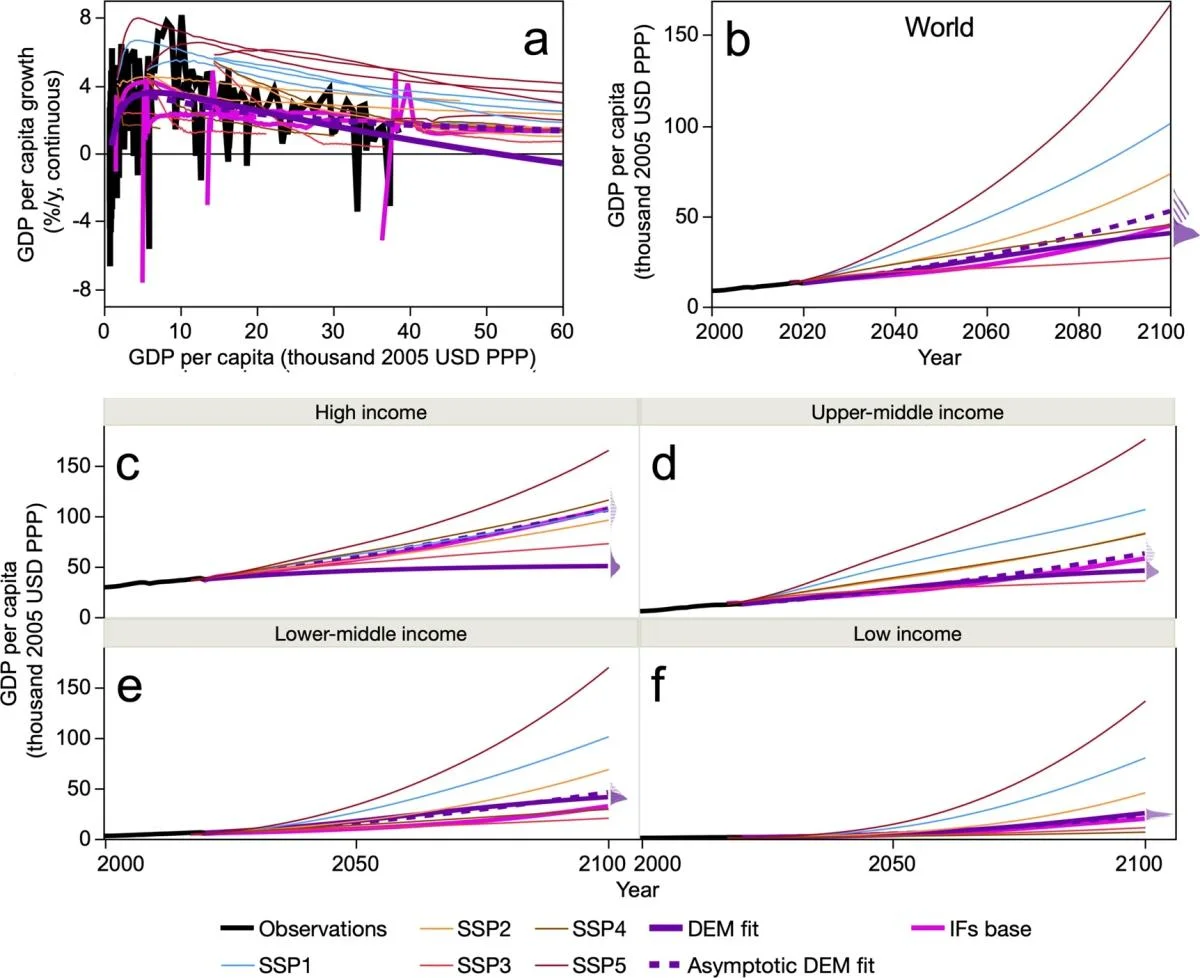
Burgess et al., 2023, Figure 3, Communications Earth & Environment, Nature.com
Abidoye, B., Banda, A., Baumwoll, J., Carman, R., Moz-Christofoletti, M., Orlic, E., Patterson, L. (2024). Advancing the SDG Push with equitable low-carbon pathways. UNDP. https://www.undp.org/publications/advancing-sdg-push-equitable-low-carbon-pathways
The ‘SDG Push x NDC 3.0’ research, a collaboration between UNDP and the Frederick S. Pardee Center, outlines a framework for a fair, low-carbon energy transition that considers the needs of both wealthy and lower-income nations. The report updates the second flagship publication, Leaving No One Behind: Impact of COVID-19 on the Sustainable Development Goals (SDGs), examining an integrated set of policy strategies that accelerates climate actions while promoting human development. By supporting equitable access to energy, green investments, and digital infrastructure, it aims to foster inclusive, sustainable growth and align with the Paris Agreement targets.
The research finds that an additional 60 million people could be lifted from poverty by 2030, and upwards of 175 million people by 2050, through these ambitious, yet feasible policy choices. In addition, nine out of ten low-human development countries could make significant strides towards improving their current development outcomes by 2050 while carbon emissions are reduced by two-thirds by 2050.
Copyright ©2026 University of Denver | All rights reserved | The University of Denver is an equal opportunity institution