


Pardee Institute
The Pardee Institute Delivers a Systems View of a Just Energy Transition in next installment of its Lunch and Learn Series
The Pardee Institute Delivers a Systems View of a Just Energy Transition in next installment of its Lunch and Learn Series
The Pardee Institute Delivers a Systems View of a Just Energy Transition in next installment of its Lunch and Learn Series
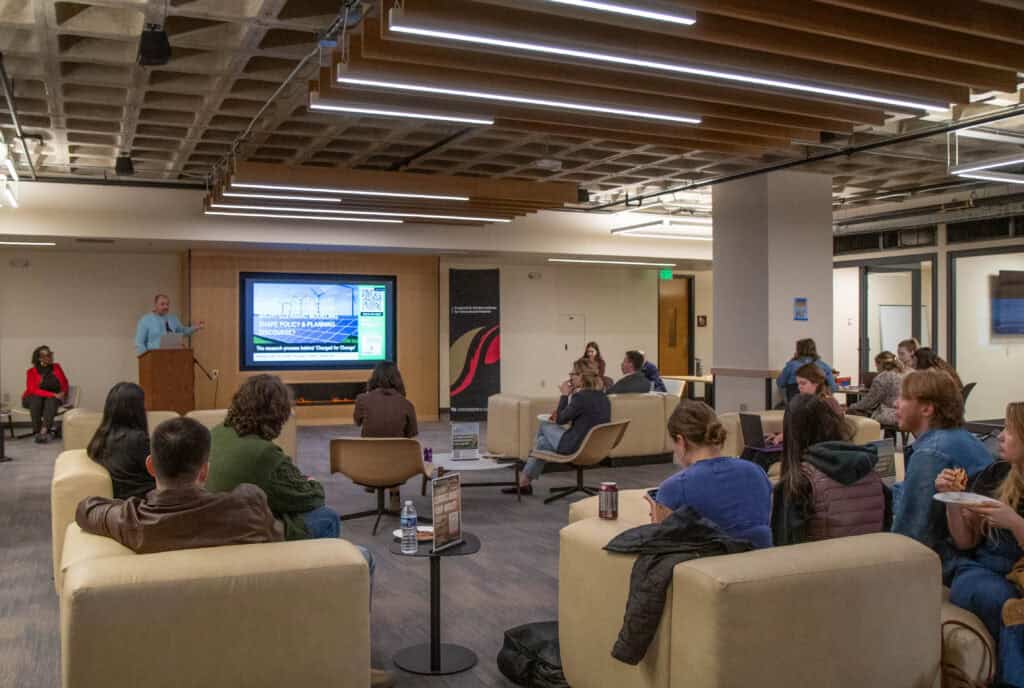
How do we model a just energy transition? How might scenario modeling shape policy & planning discourse? These were the key questions explored at the Pardee Institute’s Lunch and Learn series, following the Charged for Change: The case for renewable energy in climate action launch event on February 4th.
Charged for Change emerged from a collaboration between the United Nations Development Programme (UNDP) Sustainable Energy hub, Octopus Energy, and the Pardee Institute. The report links renewable energy, climate commitments, and human development outcomes.
At the Lunch and Learn event, the presenters focused on different aspects of the research process, including an in-depth look at integrated energy modeling using IFs, contextualizing UNDP’s role in supporting sustainable energy and inclusive development efforts, and reflecting on real-world applications through a case study highlighting Nigeria.
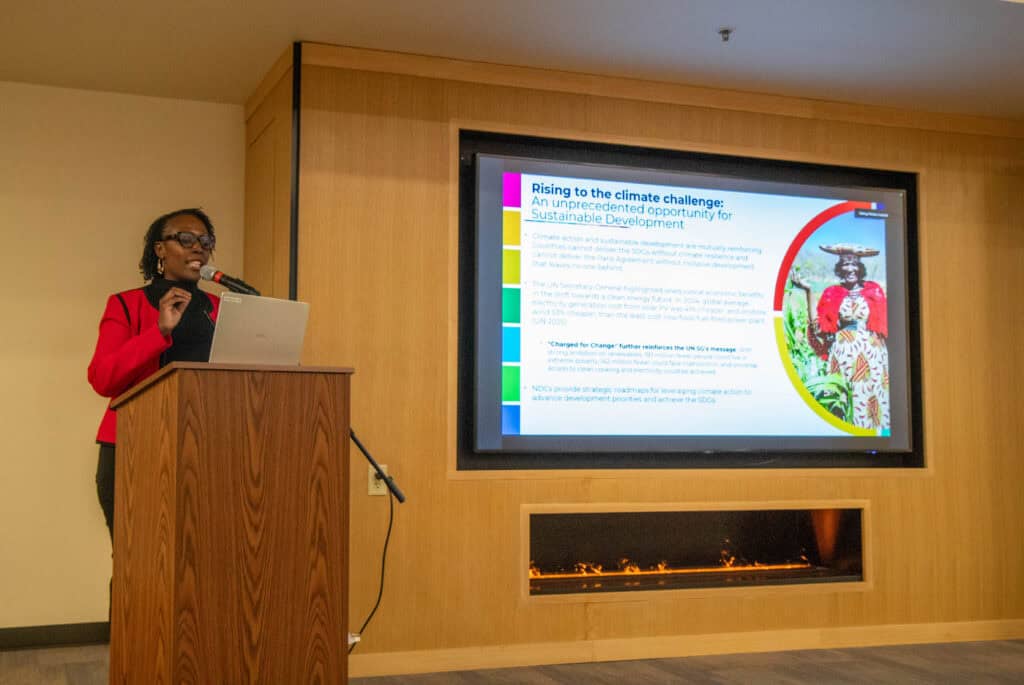
Following opening remarks from Pardee Director Dr. Jonathan Moyer, the report’s lead author, Dr. Chibulu Luo of UNDP, outlined the organization’s role in advancing sustainable energy and inclusive development. A key facet of that work revolves around UNDP’s Climate Promise initiative, which supports developing countries in implementing and strengthening their climate commitments.
Deva Sahadevan, Senior Research Associate at Pardee and co-author of the report, then unpacked the key research questions and assumptions behind Charged for Change. With help from Pardee researchers and fellows, the Pardee Institute conducted an extensive literature review and synthesized more than one hundred fifty data tables to structure three long-term scenarios:
Pardee Senior Scientist Dr. Mohammod Irfan, further elaborated on the IFs model and discussed the conceptual underpinnings of modeling energy systems in IFs. Dr. Irfan mentioned how the IFs platform has a unique ability to map energy and economic models in tandem. By exploring multiple indicators at once, IFs forecasts help policymakers and others better understand intertwined dynamics within and across global systems.
Dr. Irfan also touched on the overall model structure, methodology, and enhancements made to address the key research questions in this study. For instance, the IFs model originally analyzed six energy types (coal, oil, gas, nuclear, hydro, and an aggregated category of ‘other renewables’) and featured older cost structures for renewables. To address these limitations, IFs expanded its energy model to nine energy types and updated the cost structures.
Following presentations on the study’s research approach and motivations, the event pivoted to a case study in Nigeria to highlight the real world applications of the work. Dr. Geoffrey Omedo, a technical expert who provided comprehensive feedback on the report’s case study, reflected on Nigeria’s dual identity as both an energy access and energy-transition country. Dr. Omedo’s comments underscored the importance of using a balanced approach towards global energy policy, backed by country government support.
Following the panelists’ presentations, the floor opened to an audience Q&A. The audience raised questions spanning the global implications of the Renewable Acceleration + SDGs scenario and the domestic realities on the ground while Nigeria navigates the evolving renewable energy landscape.
Charged for Change was written by Luo, C., Sahadevan, D., Irfan, M.T., Moyer, J.D., Mason, C., & Beynon, E.
To access the full Charged for Change report, click here.
Give to Pardee

Follow Pardee research, publications, events, and tools that help people reason more clearly about possible futures.
Subscribe
Contact us

Copyright ©2026 University of Denver | All rights reserved | The University of Denver is an equal opportunity institution