

Request more info

Development Analysis

How can integrated analysis clarify the choices that shape long-term development?

Questions of sustainable and international development cannot be understood in isolation.
Climate change affects migration and food systems. Governance shapes economic opportunity and human development. Energy transitions create both environmental gains and new social and political pressures.

At Pardee, we use integrated, long-term analysis to study how these systems interact over time. Using the International Futures (IFs) modeling platform, we explore how demographic, economic, environmental, governance, and technological changes may shape outcomes across countries and regions. Through scenario-based analysis, we help researchers, governments, international organizations, and others reason over long time horizons, compare trade-offs, test assumptions, and examine how policy choices may unfold across systems.
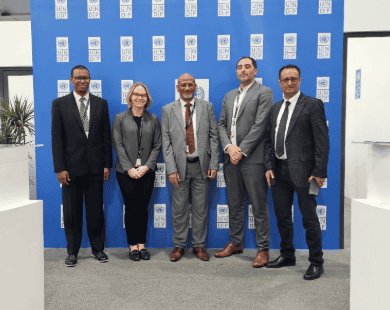
We develop scenario-based analysis that helps researchers and policy communities compare assumptions, trade-offs, and plausible development pathways.

Where research and policy questions meet

Pardee’s development analysis supports both research and decision-making. Our work draws on transparent methods, empirical evidence, reproducible tools, and careful treatment of uncertainty so that findings can be examined, adapted, and applied across academic and policy settings.

International Futures (IFs) gives this work a shared analytical foundation. The open-source platform connects historical data, model structure, and scenario assumptions across human, social, economic, and environmental systems. That integrated structure allows researchers to study relationships across sectors and time, while helping policy partners test how different assumptions about development strategy, climate risk, energy transitions, poverty reduction, or planning horizons may affect future pathways.

The relationship between research and policy runs in both directions. Questions from partners can point to gaps in evidence, methods, or data; academic work can refine the tools and assumptions used in applied analysis. Over time, that exchange produces peer-reviewed publications, methodological advances, and public datasets that others can examine, critique, and use. 

Examples of this intersecting work include:
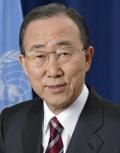
"I was very impressed by the visit to the [Pardee Center] and the demonstration of the forecasting work of the Center. This type of rigorous and long-term analysis of social, economic and political trends is indispensable to the work of the United Nations and I commend this scholarly endeavor."
Ban Ki-Moon
Former United Nations Secretary-General

Policy applications

Our rigorous, analytical foundation supports a wide range of policy-facing work, from national planning to global assessments and issue-specific analysis.

We apply integrated, scenario-based analysis to complex policy questions across national, regional, and global contexts. Through collaborations with governments, intergovernmental organizations, NGOs, and the private sector, we connect quantitative tools and long-term research to practical planning challenges while also contributing to improvements in data, methods, and analytical frameworks.

Our role varies by project. In some cases, we support national planning processes. In others, we contribute to global assessments, regional strategy initiatives, or focused analysis related to, for example, climate, energy transitions, gender equality, green growth, or human development. Across these engagements, the purpose is to explore how structural conditions, policy choices, and cross-sector dynamics may shape long-term social, economic, and environmental trajectories.

What we study and how we work

Behind these activities is a consistent way of working: turning development questions into structured, testable analyses. That may mean defining a baseline, adjusting policy or investment assumptions, selecting relevant countries or regions, and comparing how results change across connected systems.

We translate findings into forecasts, policy scenarios, data visualizations, workshops, model trainings, reports, and decision-support tools. Across all activities we approach our research with:
We examine how human, social, and natural systems interact, rather than treating development issues in isolation.
We compare plausible futures to test assumptions, explore uncertainty and identify trade-offs.
We support analysis at country, regional and global levels, connecting local context to broader structural trends.
International Futures provides the shared structure for much of this work.
For those facing questions about development choices, trade-offs, or plausible pathways, Pardee can help translate broad goals into testable assumptions, comparable evidence, and scenario-based analysis.

Connect with our team

IFs: Our analytical foundation

Much of Pardee’s development analysis is powered by International Futures (IFs), our open-source integrated modeling platform.

IFs helps users examine how change in one domain can shape outcomes in others over time. It brings together historical data, model structure, and scenario assumptions across climate, economics, governance, energy, infrastructure, and human well-being. Its value lies not in predicting a single future, but in supporting transparent, long-term analysis of plausible pathways.

IFs includes:
  • 5,000+ historical series
  • Interconnected, macro-level variables
  • Across human, social, and natural systems
  • 188 countries in one-year time steps
  • From 2022 through 2100 and beyond

Help support a global community working toward a more knowable future

Pardee’s open tools, research, and training resources support students, researchers, policymakers, and practitioners around the world. Your gift helps keep that work accessible and strengthens the public research infrastructure behind it.

Give to Pardee

Stay connected with Pardee

Follow Pardee research, publications, events, and tools that help people reason more clearly about possible futures.

Subscribe

Contact us

Copyright ©2026 University of Denver | All rights reserved | The University of Denver is an equal opportunity institution

Website Accessibility
crossmenuchevron-downarrow-rightcross-circle