




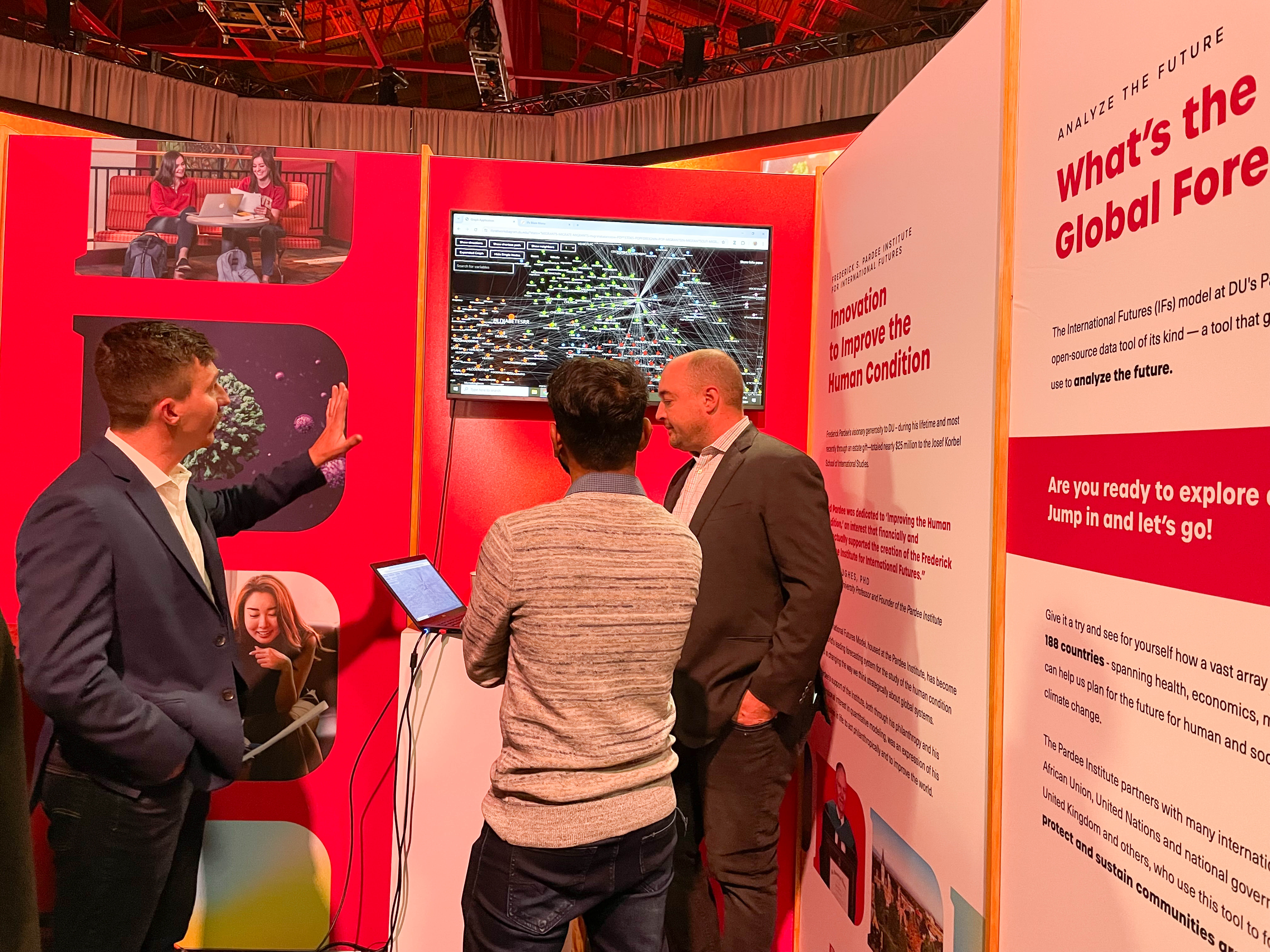
Recently, Mr. Pardee has funded an International Futures installation at the African Leadership Academy in Johannesburg, a secondary education institution that prepares an elite cadre of students from across Africa for future careers of leadership and service. Along with the Frederick S. Pardee Library for the Future of Africa on campus, the school now hosts the Pardee Center for African Futures, which offers interactive, hands-on training in the IFs model to help young scholars think about the future in data-driven, integrated ways.
There's still time to apply! Accepting applications for Fall 2026 with scholarship support available. Apply now!
Pardee Institute
Founding Support