
Join us for Open House on November 13, 2026. Register now.

Menu

Menu
Join us for Open House on November 13, 2026. Register now.
Five Years Later: The First Scrivner Institute-affiliated MPP Cohort
June 2026 marks five years since the first cohort of Korbel School Master of Public Policy (MPP) students graduated in affiliation with the newly launched Scrivner Institute of Public Policy. Their time in the program coincided with a period of transformation for the program—new leadership in Fall 2020 under founding Scrivner Institute Director and MPP degree director Naazneen Barma, the beginning of a revitalized and more interdisciplinary curriculum, and deeper integration within the Korbel School, leading to a unique MPP degree that addressed policy at the local, comparative, and global comparative levels. This cohort learned and graduated under very unique circumstances—including being forced into remote learning during the Covid-19 pandemic—and they have been shaping policy across different sectors and with various perspectives ever since.
Today, these alumni are working across government, research, nonprofit leadership, advocacy, and international policy—with analytical rigor, adaptability, and a commitment to impact. From leading health policy research and advocacy and running for city council, to negotiating international trade agreements, bridging academic research and policy, and expanding access to youth programs, their paths reflect the interdisciplinary promise and excellence of the Korbel MPP experience in partnership with the Scrivner Institute.
Five years after graduating, we asked some alumni from that first cohort to reflect on their path since graduating and how the MPP program shaped and prepared them for their careers. Thank you to cohort member Michelle Popovi for this wonderful feature idea!
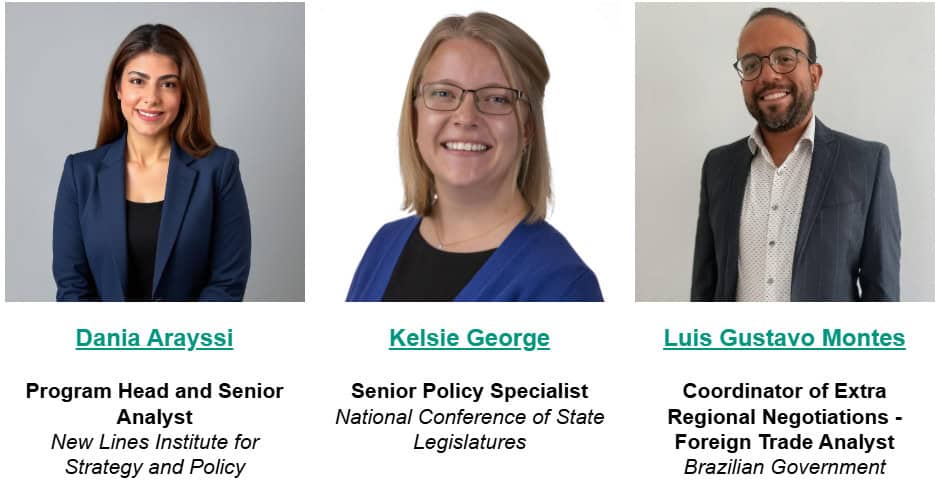
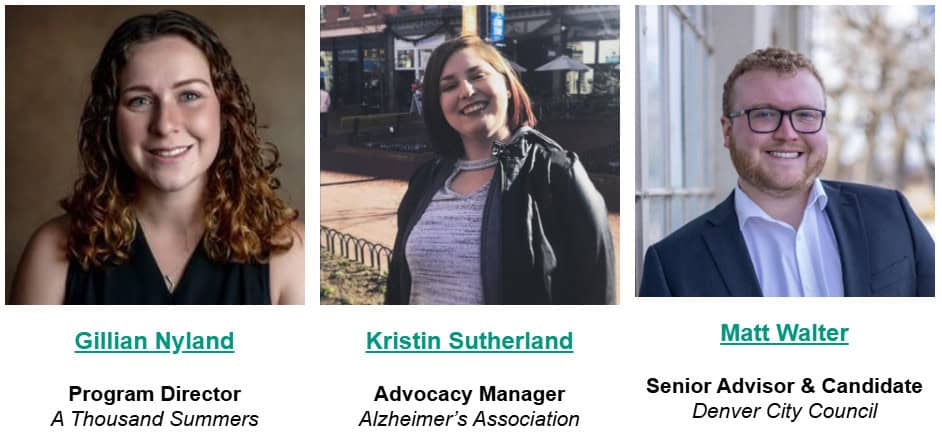
What drew you to the MPP program at Korbel? What was it like being part of the first cohort to graduate under the Scrivner Institute as the program was being revamped?
Dania: What initially drew me to the MPP program at Korbel was its unique combination of rigorous policy analysis, quantitative methods, and its strong focus on international affairs. Coming from Lebanon and being deeply interested in the intersection of politics, economics, and development, I wanted a program that would equip me with both analytical tools and practical policy skills. Being part of the first cohort to graduate under the Scrivner Institute was an exciting experience. The program was evolving and adapting to better prepare students for real-world policy challenges, and there was a strong sense that we were helping shape that transformation. The faculty were highly engaged and receptive to student feedback, which created a collaborative learning environment and made us feel invested in the program's success.
Luis: When I decided to pursue an MPP, I already had about ten years of experience in the Brazilian public service. During that time, I often felt the need for a more technical, analytical, and evidence-based approach to public policy in government. I chose Korbel after carefully researching different programs. What drew me to the MPP was its connection to the U.S. public service experience, combined with its emphasis on research, quantitative methods, and practical policy analysis. For me, it offered the right balance between academic training and real-world application.
Gillian: Attending DU as both an undergraduate and graduate student, I knew that the MPP program was right for me. The courses were immediately of interest and a top tier policy education in a city I already knew and loved made the Scrivner Institute a perfect fit. As a member of the first graduate cohort, I have felt a responsibility to continue to positively impact the Korbel community and offer advice to those still to come. I have seen the program change immensely since graduating, and have been impressed by the ways in which the school is able to meet the moment.
Kristin: I originally sought out admission to DU’s MSW program but decided to also add a dual degree in public policy, as I knew it would better help prepare me for the macro social change work I was interested in.
Matt: I was an undergraduate majoring in public policy, where I spent most of my time focusing on state and local issues for Colorado. Hoping to get an edge up in the job market, I extended my degree into the MPP through the 4+1 program. As the policy program transitioned, I enjoyed taking advantage of electives at Korbel through the international studies program. I got to indulge my love of foreign affairs in classes which used case studies from around the world, while still refining my policy skills and their applications to Colorado.
What has your career path looked like in the five years since graduation? How did the program shape your path?
Dania: Since graduating, my career has centered on bridging academic research and public policy. I have worked with organizations including the World Bank, USAID, Oxfam America, and the U.S. Army War College. Today, I serve as Program Head and Senior Analyst at the New Lines Institute for Strategy and Policy, where I lead research and policy initiatives focused on the Middle East and Central Asia. I also teach as an adjunct professor at Georgetown University and George Washington University. Finally, I finished my PhD in Political Science from the University of Colorado Boulder.
The MPP program played a critical role in shaping this path. It strengthened my ability to translate complex research into actionable policy recommendations and helped me develop the analytical skills necessary to engage policymakers, practitioners, and academic audiences. It also reinforced the importance of evidence-based policymaking, which remains central to my work today.
Kelsie: I started as an intern at the National Conference of State Legislatures while completing my MPP in 2020, and have been there full-time for five years. At NCSL, I analyze state health policy, author publicly-available policy briefs and publications, answer research questions from state legislators and legislative staff and plan meetings and educational sessions throughout the year bringing policymakers together for shared learning. I now lead the organization's health workforce policy research portfolio, including scope of practice policy, recruitment and retention, licensure and certification, graduate medical education and access to care topics, which are constantly evolving across states. The MPP program honed my policy research skills, my ability to summarize and analyze complex state statutes, my understanding of state budgeting processes and my comfort and confidence working alongside policymakers to address the most pressing health care issues across states.
Luis: After graduating, I returned to the Brazilian federal government, working on policies for small enterprises, especially initiatives connected to entrepreneurship and ecotourism. The MPP helped me bring more evidence, structure, and analytical rigor to the design and evaluation of those policies. About two years later, I joined Brazil’s trade negotiation team. Since then, I have worked on Brazil’s trade agreements, particularly the Mercosur-European Union Agreement. The program shaped my path by giving me a broader analytical perspective on policy, economics, and international trade, which continues to be very valuable in my work.
Gillian: Obtaining an MPP set me up for a strong career in the nonprofit industry, which can serve as a testing ground for ideas that can translate into public policy solutions. Since graduating, I have used the policy analysis skills I learned in the MPP to critically evaluate nonprofits and the programs they operate, serving in both the development and community impact sides of the nonprofit industry. Outside of my career path, I have also found a deep passion for volunteerism, a trait that was fostered in me while pursuing the MPP. Today, I am the Program Director for A Thousand Summers, a nonprofit helping connect youth with transformative outdoor experiences. I feel it was only the unique blend of people, classes, and place at Scrivner that helped get me here.
Kristin: Most of my time during the last five years has been spent with the Alzheimer's Association managing their advocacy program in Colorado, Wyoming, and now Utah. I focus on both state and federal grassroots advocacy and lobbying efforts here in CO working on healthcare policy and consumer protections.
Matt: I went straight to work for Congresswoman Diana DeGette in Washington DC after graduating. Due to my elevated skillset, I was given significant research tasks in addition to standard new hire duties. That turned into a series of quick promotions, and I managed a portfolio of policy topics for the office. After three years, I was homesick for Colorado, so I moved back to Denver and started working for Denver City Councilwoman Amanda Sawyer. The MPP program had taught me a wide breadth of knowledge, spanning everything from international to hyper local. My MPP set me well ahead of the curve, so much so that 5 short years later I am confidently running for Denver City Council to continue delivering results for Denverites at the local level
Were there specific classes, experiences, or mentors that were especially formative or impactful?
Dania: Several experiences were particularly formative. The quantitative methods and policy analysis courses challenged me to think more systematically about policy problems and strengthened my confidence in working with data. These courses became especially valuable as I later pursued doctoral research and policy analysis.
I was also fortunate to learn from faculty who encouraged intellectual curiosity while emphasizing practical policy applications. Their mentorship helped me see how rigorous academic research can directly inform policymaking and public debates. The collaborative environment at Korbel also exposed me to classmates from diverse professional and international backgrounds, which broadened my perspective on global policy challenges.
Kelsie: I took a December course with Dr. Salucci where we explored local policy topics across Denver. We covered nearly every topic you can imagine--housing and homelessness, historic preservation, transportation, economic development, education systems, public health and more. We had the opportunity to meet with local leaders, and these discussions stick with me to this day. Alongside the very place-based and locally-focused jobs I held during my time at Korbel at Denver Public Library and Colorado Preservation Inc., this course solidified my love for and commitment to Denver as my home.
Luis: It is difficult for me to point to one specific class as the most formative. Looking back, I think the real value came from the way different classes complemented each other and helped me build a broader policy toolkit. Courses related to public policy analysis, international trade, economic development, quantitative methods, and policy evaluation all contributed to the way I think about public problems today. Rather than one single class, the most impactful part of the program was the combination of tools, perspectives, and experiences.
Kristin: Professors Lapo Salucci and Naazneen Barma were both amazing sources of support and really helped with making the most of the switch to online learning during the height of the pandemic. They were able to continue to make zoom classes engaging and provided great feedback while I was working on my policy memorandum.
Matt: I took multiple budgeting and economics courses while at Korbel. Nearly every aspect of policy making hinges on immediate and future budget impacts. Learning the language of accounting has helped me significantly in my career, as well as when and what kind of tertiary consequences a policy may have. Many of my courses required an experiential component too. I recall sitting in a Colorado Joint Budget Committee Hearing about higher education across the state, taking notes on all the deferred maintenance which institutions wanted the state legislature to fund. Nearly none of them were selected. It was a humbling experience to learn the costs associated with the projects, and the tough decisions legislators made for what got funding and what did not
How do you feel the program prepared you for the public policy challenges you encounter in your field? Which skills or tools from the program have been most valuable in your work?
Dania: The program taught me how to approach complex policy challenges with both analytical rigor and practical awareness. In my current work, I regularly analyze issues ranging from regional security and political economy to energy policy and governance. These issues rarely have straightforward solutions, and the MPP program helped me develop frameworks for evaluating competing priorities, assessing evidence, and communicating findings effectively.
The skills that have been most valuable are policy analysis, quantitative research methods, program evaluation, and policy writing. Equally important was learning how to communicate complex ideas to different audiences—from policymakers and diplomats to students and the broader public. That ability to translate research into clear, actionable insights has become one of the most important parts of my career.
Kelsie: My work at the National Conference of State Legislatures is strictly nonpartisan--As a membership organization for state legislators and legislative staff, we do not take any positions for or against state policy. In Korbel's MPP program, we were regularly challenged to consider a variety of perspectives as we analyzed policy outcomes or researched potential policy recommendations. This provided me with a unique skillset to understand a variety of policy strategies across the political spectrum, and I use that skill in my work daily.
Luis: The program prepared me by exposing me to a different government and policy-making environment. Many classes explored how the U.S. government approaches public policy challenges, and that comparative perspective was very valuable for someone coming from another country. It also helped me better understand the connection between academic research and policy practice. The quantitative methods and policy evaluation tools I learned at Korbel have been especially useful in my work, helping me think more clearly about policy impacts, evidence, and decision-making.
Gillian: Working for a nation-wide serving nonprofit, I have become more intimately aware of not just how policy changes from state to state, but how national policy can impact individuals and families on a large scale. In my field, I work with families who make under 500% of the federal poverty guidelines; families who have generally been left behind by public policy makers. The skills I learned in the MPP helped me see the real-world implications of policy work, and what can happen to individuals when large scale policies either don’t help or can’t help. I have been able to see that policy analysis helps decision makers measure the success of a given policy, and that data only tells part of the story. The rest lies in getting to know people for who they are and meeting them where they are.
Kristin: I feel the program gave me a solid base of knowledge for public policy work so that I had the confidence and skills to pursue many different opportunities in the field of public policy. I originally saw myself focusing on sustainability and/or housing policy work, but have now branched out into the healthcare space. With the tools I gained from the program, I feel I was able to adapt into different policy spaces that I didn’t originally have much experience in.
Matt: Korbel taught me to ask good questions and analyze how trustworthy a source is. Public policy is not apolitical, and there will always be competing interests. It's up to me to ask the right questions and find legitimate sources to support a policy goal. I learned enough about fallacies of logic and how to manipulate statistics, knowledge which has helped me parse through competing narratives to see a picture closer to the truth.
What advice would you give to current students to make the most of their time in the program?
Dania: Take advantage of every opportunity to connect theory with practice. Seek internships, research opportunities, and projects that allow you to apply what you learn in the classroom to real policy challenges. I would also encourage students to build strong relationships with faculty and classmates. Some of the most valuable lessons and opportunities come from those connections. Finally, don't be afraid to explore interdisciplinary interests. Many of today's policy challenges—whether related to security, economic development, migration, or climate—require perspectives from multiple fields.
Kelsie: Ask for what you need! The staff and faculty across DU are incredibly supportive, intentional and committed to making sure you get the absolute most out of your experience. During my time, I was able to take classes in the Sturm College of Law, Daniels College of Business, Morgridge College of Education and the Graduate School of Social Work. Each of these schools and programs provided me with distinct practical and academic skills and knowledge that inform my career today. I also built independent study courses on alternative policy analysis methods and research skills with Dr. Greenfield, which uniquely tailored the program to my skills and interests.
Luis: My advice would be to make the most of your time in the program, because it goes by very quickly. Looking back, I feel it was a privilege to take classes with the professors I had and to be part of that academic environment. I would encourage current students to explore as many of Korbel’s resources as possible, both inside and outside the classroom. Be intentional with your time, ask questions, engage with different perspectives, and take full advantage of the experience while you are there.
Kristin: Take advantage of the opportunity to branch out not only into different areas of public policy but also other areas of focus that the university offered. I pursued dual degrees in public policy and social work, and it really helped shape the kind of work I’ve pursued after graduation.
Matt: You live in the 19th largest city in America, which is the capital of the 20th largest state. Both Denver City Council and the Colorado General Assembly are in your backyard. I highly encourage you to get out there and attend some hearings, listen to committees, and sign up to speak on topics you are passionate about. There is so much activity at the state and local level and you can learn so much about the general legislative and budgetary process just by following along.
What is a favorite story or memorable moment from your time as a student?
Dania: One of my favorite memories was the sense of community among students in the program. Many of us came from different countries, professional backgrounds, and life experiences, yet we were united by a shared commitment to solving complex policy problems. Some of the most meaningful learning happened outside the classroom—through debates, group projects, and conversations that challenged our assumptions and expanded our perspectives.
Another memorable aspect was realizing how much I had grown analytically and professionally by the end of the program. Looking back, I entered Korbel with a passion for public policy, but I left with the tools, confidence, and network needed to build a career at the intersection of research, teaching, and policymaking. That transformation is something I continue to appreciate today.
Gillian: My favorite memory from being a student was getting to walk across the stage at graduation. I received my undergraduate degree during the height of COVID, so it was an important moment for me to be able to celebrate with friends and family. As the first person in my family to receive an undergraduate degree, let alone an advanced degree, it was very important for me to be able to finally celebrate my accomplishment.
Matt: A really memorable moment was during one of my quantitative classes. I am not a math person and was generally running myself pretty ragged back then. I fell asleep in class, face down on the table, prompting Professor Salucci to end class early. I wasn't the only one with a vacant, glassy stare and it was clear no one understood the concept. He spent a lot of time reworking the lesson for our next class, and we all bounced back better because of it. You don't get that kind of attention to the students and personalized approach at a big school. And it's just one example of how incredibly supported I felt through my entire time at Korbel.
Copyright ©2026 University of Denver | All rights reserved | The University of Denver is an equal opportunity institution