

Menu

Menu
By: Wara Irfan
“We are living in a period of two crises,” said Jonathan Moyer, Director of the Frederick S. Pardee Institute for International Futures. While the climate crisis receives widespread attention, he noted, a second crisis often gets “less coverage”. That is the human development crisis. “There are 700 million people in the world living in abject poverty.”
Moyer made these remarks while introducing the new report, Charged for Change: The Case for Renewable Energy in Climate Action, published by the United Nations Development Programme (UNDP) in partnership with the Pardee Institute and Octopus Energy. He was joined by former Colorado Governor Bill Ritter (2007–2011), whose distinctive record of building a “New Energy Economy” framework, which links climate, jobs, utility policy, public health, and economic development, sets him apart from both his predecessors and many of his contemporaries. The report’s lead author, Chibulu Luo, Ph.D., joined Dr. Moyer and the Hon. Bill Ritter for a discussion on how renewable energy can simultaneously advance climate action and human development. “What this report does is help chart a path forward for achieving both,” Moyer emphasized.
Deva Sahadevan, Senior Research Associate at the Pardee Institute, presented the report’s key findings, followed by a panel discussion moderated by Moyer and an audience Q&A. Using the Pardee Institute’s International Futures (IFs) model, researchers examined three scenarios: (1) a Base Case in which the world remains on a warming trajectory under current trends of development, (2) a Renewable Acceleration (RA) scenario where there is accelerated global investment in renewables, and (3) an RA+SDG scenario where these renewable investments are paired with targeted investments in health, education, governance, and infrastructure. 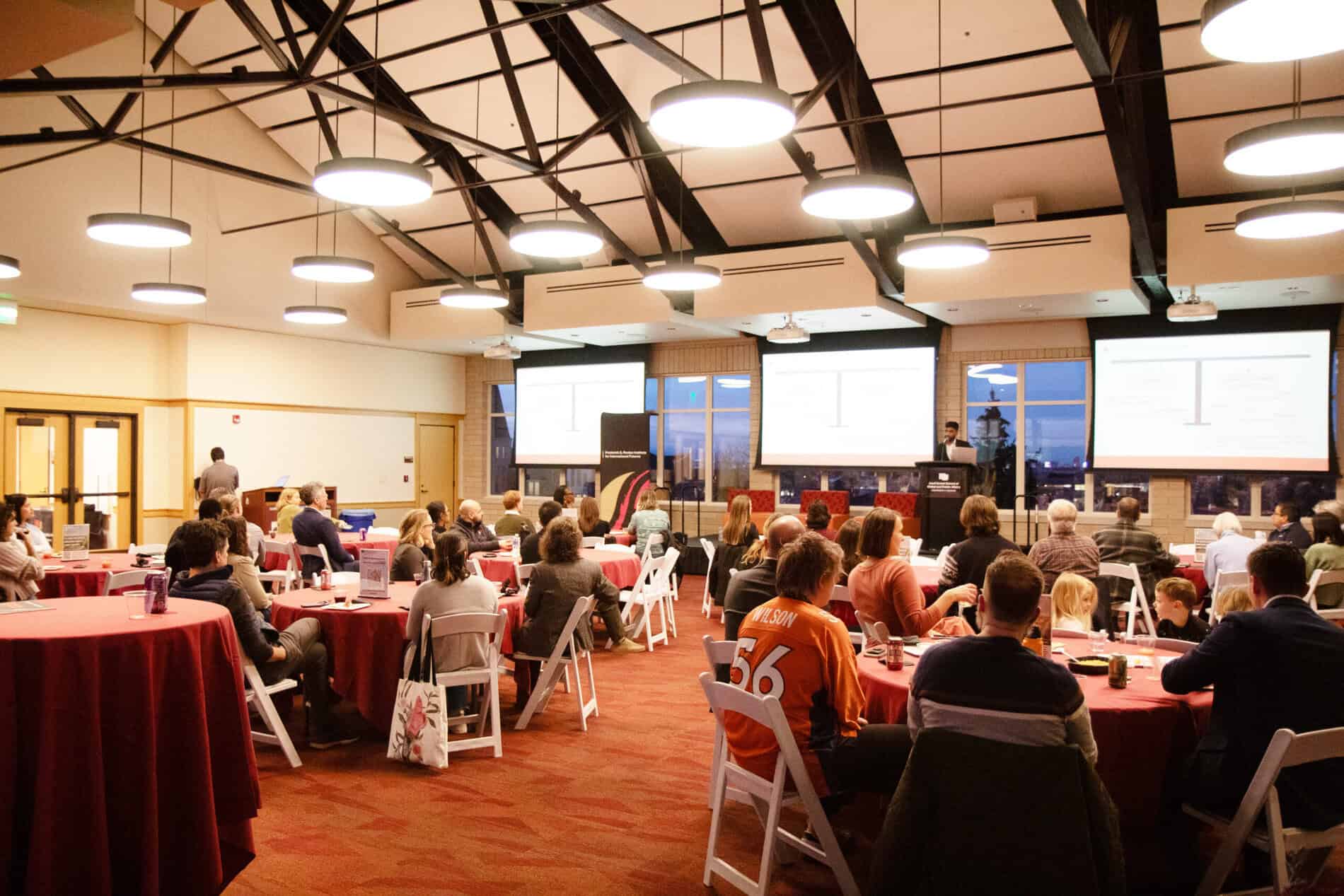
Deva Sahadevan presents an overview of the report. Photograph taken by Megan Livengood.
The study found that RA+ SDG can significantly advance human development while also improving climate outcomes in the long run. Compared to the Base Case, this pathway could lift an additional 193 million people out of extreme poverty, reduce malnutrition for 142 million people, and expand access to clean water and sanitation to 550 million more people by 2060 - all within a 1.5°C-aligned future. In contrast, the RA scenario showed only modest improvements to human development, suggesting that climate action alone is insufficient to balance the dual imperatives of addressing climate change and improving human well-being.
Although the RA + SDG pathway requires substantial upfront investment, the long-term payoff is considerable. By 2060, cumulative savings could reach approximately $20.4 trillion by 2060, driven by energy efficiency gains, declining renewable costs, and a shift in capital from fossil fuels to clean energy, while keeping global warming closer to internationally agreed targets.
Speakers grounded these modeling results in real-world practice. Dr. Luo described how UNDP uses country-level evidence to show how energy policy decisions intersect with priorities in finance, health , and gender, helping government ministries see climate action as integral to development planning. She highlighted examples such as electrified irrigation and solar-powered health facilities in Zambia, alongside a strong policy focus on clean cooking. “It is a smart economic choice for countries to invest in renewables,” she said, noting that the report provides governments with “real numbers” demonstrating the development benefits of a renewable energy transition as they shape climate and development strategies.
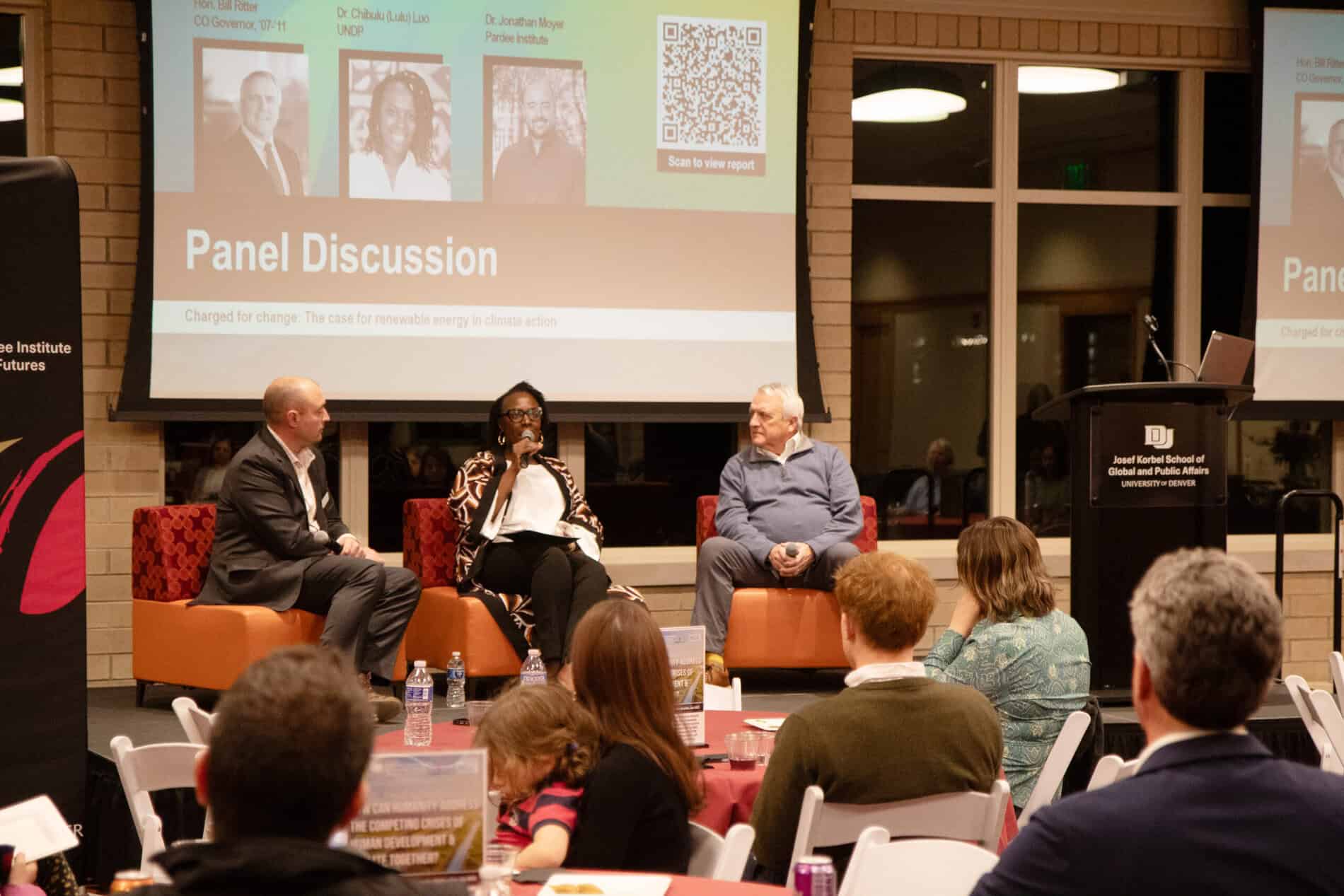 Dr. Chibulu Luo addresses the audience. Photograph taken by Megan Livengood.
Former Governor Ritter shared lessons from Colorado on scaling renewable energy, supporting workforce transitions, and building financing mechanisms that make clean energy both feasible and equitable. Reflecting on his time in office, he remarked, “Colorado is a fascinating little Petri dish” where “development and climate action are not mutually exclusive,” according to him. He stressed that these goals are not opposing values but can be pursued together. The former governor also warned that if the United States retreats from global engagement on climate, human development, and sustainable energy, it risks missing a critical opportunity to lead and make a meaningful impact.
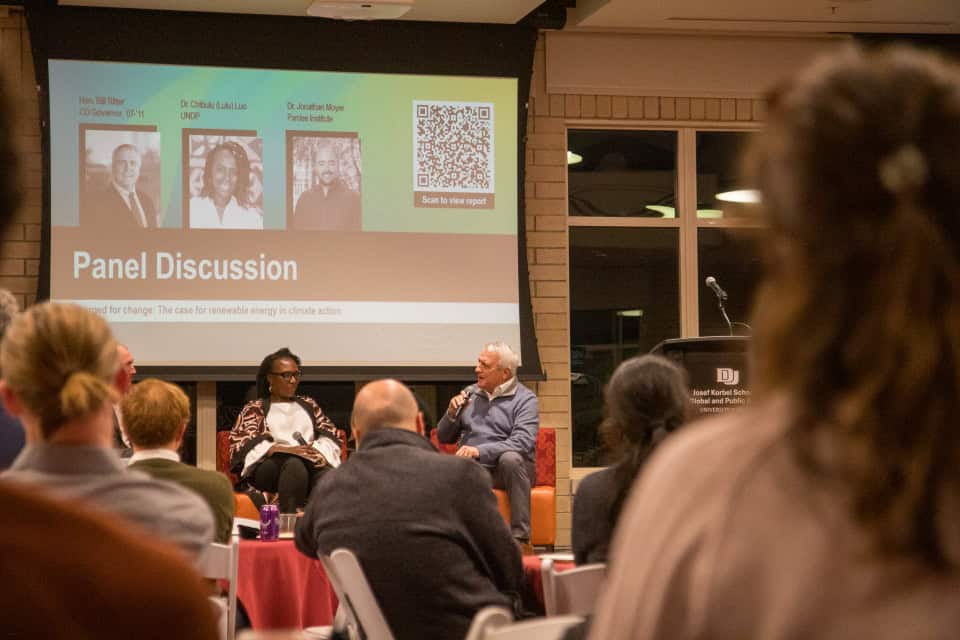 Former Colorado governor Bill Ritter shares his insights. Photograph taken by Megan Livengood.
Dr. Luo added that what gives her hope is the evidence showing that a renewable energy transition can deliver substantial benefits for both people and the planet, benefits that are often even greater in developing countries.
Furthermore, the event drew practitioners, entrepreneurs, researchers, policymakers, and students. The audience's Q&A ranged widely, from clean-cooking and carbon markets to bio and nuclear energy, land use, and the big question of growth versus sustainability. A former off-grid entrepreneur raised the recent KOKO Network cass in which a bioethanol cookstove provider lost access to carbon-credit approval in Kenya, leaving millions of customers at risk; in response, Dr. Luo described how national carbon-market regulations, multilateral guarantees, and blended or concessional finance all matter for managing investor risk and protecting access to clean-cooking solutions, noting Kenya is also exploring electric-cooking options.
Another audience member inquired about bioenergy’s role in future energy mixes and lessons from past biofuel investments. The former Governor answered that bioenergy, carbon capture, and related technologies deserve further development, and that policy tools (tax credits, public investment) and learning about real costs will shape their viability. Sahadevan also addressed broader concerns about growth and equity, noting the report’s framing: modeled pathways highlight a tension between urgently reducing emissions and enabling the growth many low-income countries still need, so solutions will require careful mixes of investment, redistribution, and locally appropriate policies.
The discussion concluded with a reminder that climate action and human development need not compete. “The choices we make today will have long-term implications,” Moyer said. The session underscored the importance of a data-driven foresight in shaping country-level dialogue, financing strategies, social investments, and governance reforms, key elements for achieving a just and sustainable energy transition.
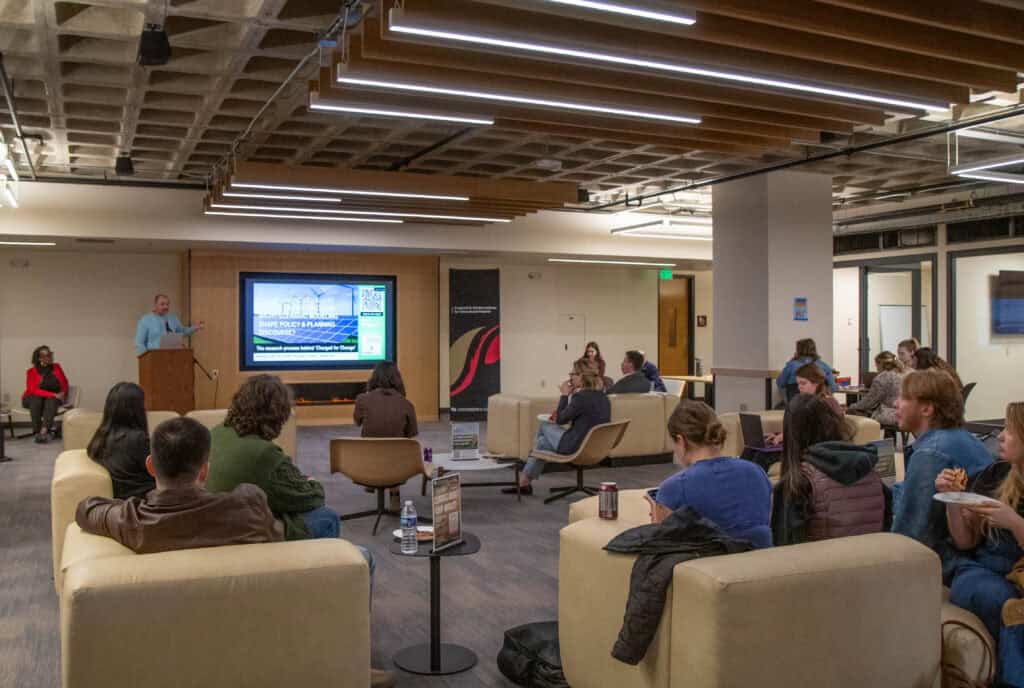
Attendees at the Charged for Change Lunch & Learn event. Photograph taken by Pam Hoberman.
How do we model a just energy transition? How might scenario modeling shape policy & planning discourse? These were the key questions explored at the Pardee Institute’s Lunch and Learn series, following the Charged for Change: The case for renewable energy in climate action launch event on February 4th.
Charged for Change emerged from a collaboration between the United Nations Development Programme (UNDP) Sustainable Energy hub, Octopus Energy, and the Pardee Institute. The report links renewable energy, climate commitments, and human development outcomes.
At the Lunch and Learn event, the presenters focused on different aspects of the research process, including an in-depth look at integrated energy modeling using IFs, contextualizing UNDP’s role in supporting sustainable energy and inclusive development efforts, and reflecting on real-world applications through a case study highlighting Nigeria.
Following opening remarks from Pardee Director Dr. Jonathan Moyer, the report’s lead author, Dr. Chibulu Luo of UNDP, outlined the organization’s role in advancing sustainable energy and inclusive development. A key facet of that work revolves around UNDP’s Climate Promise initiative, which supports developing countries in implementing and strengthening their climate commitments.
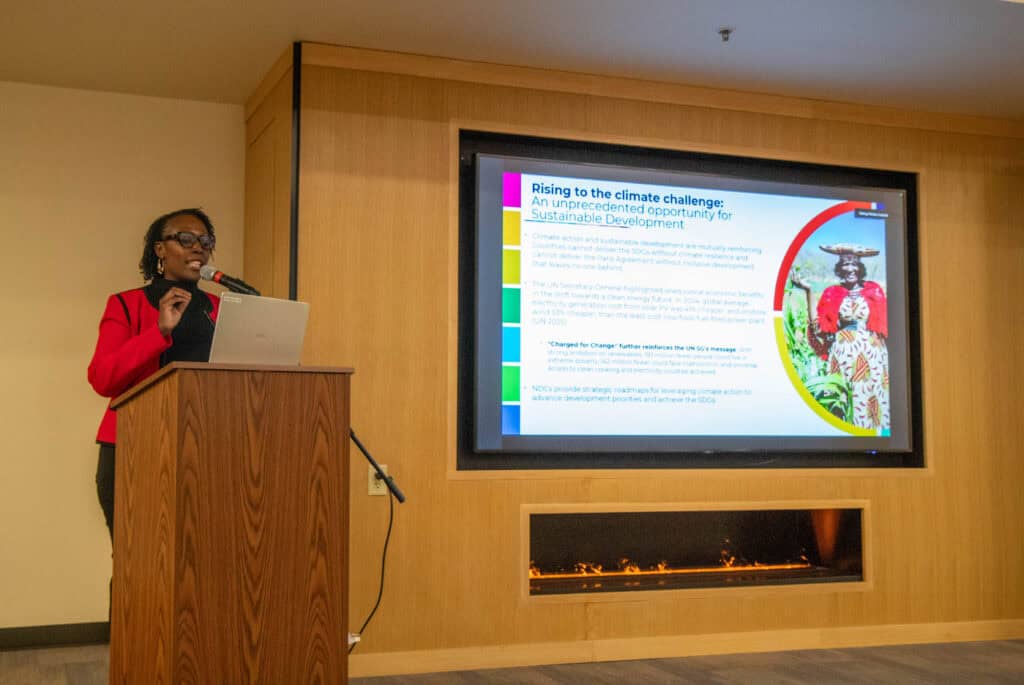
Dr. Chibulu Luo of UNDP addresses the audience. Photograph taken by Pam Hoberman.
Deva Sahadevan, Senior Research Associate at Pardee and co-author of the report, then unpacked the key research questions and assumptions behind Charged for Change. With help from Pardee researchers and fellows, the Pardee Institute conducted an extensive literature review and synthesized more than one hundred fifty data tables to structure three long-term scenarios:
Pardee Senior Scientist Dr. Mohammod Irfan, further elaborated on the IFs model and discussed the conceptual underpinnings of modeling energy systems in IFs. Dr. Irfan mentioned how the IFs platform has a unique ability to map energy and economic models in tandem. By exploring multiple indicators at once, IFs forecasts help policymakers and others better understand intertwined dynamics within and across global systems.
Dr. Irfan also touched on the overall model structure, methodology, and enhancements made to address the key research questions in this study. For instance, the IFs model originally analyzed six energy types (coal, oil, gas, nuclear, hydro, and an aggregated category of ‘other renewables’) and featured older cost structures for renewables. To address these limitations, IFs expanded its energy model to nine energy types and updated the cost structures.
Following presentations on the study’s research approach and motivations, the event pivoted to a case study in Nigeria to highlight the real world applications of the work. Dr. Geoffrey Omedo, a technical expert who provided comprehensive feedback on the report’s case study, reflected on Nigeria’s dual identity as both an energy access and energy-transition country. Dr. Omedo’s comments underscored the importance of using a balanced approach towards global energy policy, backed by country government support.
Following the panelists’ presentations, the floor opened to an audience Q&A. The audience raised questions spanning the global implications of the Renewable Acceleration + SDGs scenario and the domestic realities on the ground while Nigeria navigates the evolving renewable energy landscape.
Charged for Change was written by Luo, C., Sahadevan, D., Irfan, M.T., Moyer, J.D., Mason, C., & Beynon, E.
To access the full Charged for Change report, click here.
By: Megan Livengood
Developed at the University of Denver, the Pardee Institute's International Futures (IFs) model is now helping to shape how the world's leading industrial agency plans for decades ahead. Faster industrialization can be compatible with lower emissions when it is aligned with clean energy and equity goals, according to the United Nations Industrial Development Organization (UNIDO) flagship, Industrial Development Report 2026 (IDR 2026), released on November 26, 2025, during the Global Industry Summit 2025. In this report, UNIDO looks beyond the immediate future to explore how decisions around industrialization and development today can have transformative effects for the next generation.
For the IDR 2026, UNIDO, working with the Pardee Institute, used IFs, to understand how transformative megatrends, like demographic shifts and energy transitions, are likely to shape the future of industrialization and development. The analysis, led by Taylor Hanna and Abdelrahman Ibrahim and supported by Collin J. Meisel, José Solórzano, Yutang Xiong, and Pardee Fellows, Solikha Makhmatova, and Victoria Pepera, evaluates future scenarios for leveraging industrial development for growth in developing countries. The projections capture both the opportunities for inclusive and sustainable growth and the risks that industrial inequality will deepen if capabilities and investment remain concentrated.
The findings underscore what's at stake. Under the current path scenario, where existing policies and trends largely continue, IFs projections for 2050 estimate around 3.15 billion people living below the poverty line1, 303 million people facing undernourishment, and a global temperature rise by roughly 2.3°C.
Using IFs, UNIDO then models two alternative futures for 2050: an industrialization push scenario and a clean energy and just industrialization push scenario. In the industrialization push scenario, 403 million fewer people are projected to live in poverty, and 33 million fewer people face undernourishment, but CO2 emissions rise by over 2% globally. In the clean energy and just industrialization push scenario, 525 million fewer people live in poverty, 52 million fewer people face undernourishment, and global CO2 emissions fall by 6%.
The launch of IDR 2026 and the adoption of Vision 2050 mark a critical turning point because UNIDO is grounding long-term industrial strategy in an integrated systems-based modeling approach rather than short-term analysis. Understanding how industrial growth interacts with energy systems, emissions, demographics, and human development over decades requires analytical tools capable of capturing feedbacks, trade-offs, and uncertainty.
Built on the International Futures (IFs) model, Pardee's empirical model enables policymakers to explore other development pathways, rather than a single trajectory. IFs enables analysis of how different development strategies may shape inequality, sustainability, and resilience over the long term.
The collaboration reinforces a core insight: building a sustainable and inclusive global industrial future will require not only technological and financial transformation, but also the analytical tools to understand where the world is headed and what alternative paths are possible.
1. World Bank defined upper-middle-income poverty line of $8.30 per person per day
As part of DU’s effort to spotlight high-impact research and student experiences, the new “Discover the Difference” feature highlights the Pardee Institute’s distinctive contributions. It presents IFs as a world-leading forecasting platform and underscores Pardee’s long-standing partnerships with global institutions. The piece also emphasizes the Institute’s hands-on engagement of 88 DU students, demonstrating how Pardee links academic training to real policy application. Overall, it positions Pardee as a strategic asset advancing DU’s mission and shaping informed global futures.
“Discover the Difference” is part of a broader institutional effort to elevate research visibility, highlight student-centered impact, and strengthen DU’s public identity as a university producing meaningful, real-world outcomes.
How do leaders shape, and how are they shaped, by international relations? What drives a leader to travel from one country to another or to any other place in the world? What can we learn about travel, trade, conflict, diplomacy, democracy, and other interconnected systems by researching the travel patterns of country and organization leaders? These central questions drive the Pardee Institute’s decade-long COLT (Country and Organization Leader Travel) project, which the U.S. Government sponsors.
The Pardee Institute explored these and related research questions for an audience of faculty, students, and staff from the University of Denver’s Josef Korbel School of Global and Public Affairs (the Korbel School) during its first-ever Lunch and Learn seminar.

Following an introduction of the COLT dataset and Lunch and Learn series by Pardee Institute Director Jonathan Moyer, Pardee Institute COLT Program Manager Kylie McKee, and Director of Analysis Collin Meisel took turns presenting on different facets of the COLT project.
The COLT project captures data on Heads of Government and State (HOGS) travel from 1990 through the present day for 212 countries and territories. This scale of data collection requires large-scale infrastructure and staff, from coders to vetters to team leads (all positions held by students), until ultimately the data reaches McKee and Meisel.
This dataset tracks over 43 variables and 70 biographical variables for each leader, creating an extensive dataset that requires countless hours to track and ensure accuracy, McKee described. McKee went on to detail her team’s research protocol: monthly updates to the data, as well as annual public reports, made possible by weekly tracking of HOGS travel, reviews of data for errors and/or gaps, and extensive final reviews. This work is divided into four groups of RAs who research HOGS from specific regions of the world.
In Meisel’s words, the COLT dataset is not trying to prove cause and effect; it is trying to see “what moves together.” Meisel, McKee, and their team of student researchers have found the frequency and destination of world leader visits correlate strongly with material interests (such as trade, arms deals, and foreign aid), institutional co-membership (like NATO or the EU), and patterns of conflict. This research matters because diplomatic travel provides a high-frequency, actionable indicator of shifting geopolitical affinities and power dynamics.
Another question that the COLT project is attempting to tackle is the puzzle of leader travel. With all the modern advances in technology —from phone calls to video conferencing —along with the time and potential dangers involved in traveling, what are the benefits of leaders traveling abroad to meet with other leaders in person? The literature suggests that travel plays a significant role in shaping leader opinions, as seen in trade and relationships between HOGS, Meisel explained. However, most of this literature is focused on one country or a region of the world. The COLT project addresses a major missing piece of the puzzle – its scope is global, making it truly unique and a flagship project for this sort of data collection.
Because the data is so exhaustive, it can be challenging to know for sure how much of it is captured by the researchers—is it simply the tip of the iceberg, with much concealed beneath the surface, or is most of it visible to these teams? To address these demands, McKee answered that the teams on Pardee’s COLT project are always innovating their methods and processes so that the data can be better used as a resource and source of lessons for future data gathering. For example, McKee shared that Pardee will soon use AI to streamline its data by gathering qualitative information in a systematic format for analysis.
The event ended with a question-and-answer portion, filled with questions ranging from the use of the data set as a diagnostic tool to which regions have the most tracked travel to if the project had any student position openings. Other questions addressed the uses of AI, how the COLT data is utilized, and where it is sourced.
To learn more about the COLT Project, access the COLT data, or read the COLT analysis published in International Studies Quarterly, click here.
This inaugural Lunch and Learn event is part of a new series of Pardee-hosted lunchtime seminars designed to inform the broader Korbel School community about the research approach and applications of the Pardee Institute's work.
By: Wara Irfan
Africa faces its own unique development challenges, aspirations, and constraints, said Senior Researcher Alize le Roux of the Institute of Security Studies’ African Futures & Innovation (AFI) program during a conversation hosted by the Frederick S. Pardee Institute on September 9, 2025. The event, moderated by Awa Sanneh, President of Students for Africa at Joseph Korbel School of Global and Public Affairs, included a lively discussion and audience Q&A.
Joined by fellow ISS AFI Senior Researcher and economist Blessing Chipanda, le Roux emphasized that the African Union’s Agenda 2063 serves as a “blueprint” for the continent, aligning individual national development plans with a broader vision encompassing all 54 African countries. Agenda 2063 is Africa’s 50-year plan to become prosperous, integrated, and peaceful through seven aspirations and successive Ten-Year Plans.
The ISS is a leading Pan-African think tank dedicated to research and policy engagement on issues of human security. For nearly 15 years, ISS has partnered with the Pardee Institute to use the International Futures (IFs) model. Together, they build knowledge about Africa’s development pathways and create alternative scenarios to help policymakers shape strategies for improved outcomes. ISS and Pardee also collaborate with the AU and its Development Agency (AUDA-NEPAD) to inform key aspects of Agenda 2063.
Le Roux and Chipanda began by walking the audience through two of the more than 4,000 interactive graphs available on the African Futures website, which employs IFs, to show how long-term forecasting and scenario planning can inform Africa’s development trajectory and support Agenda 2063.
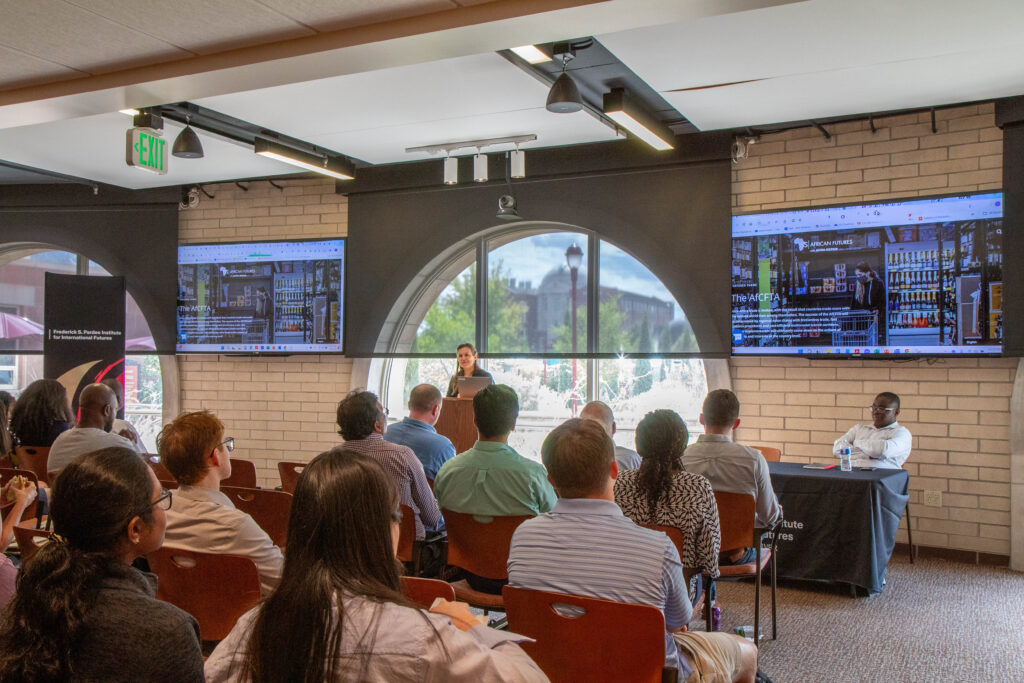 Alize le Roux addresses the audience. Photograph taken by Pam Hoberman.
The first graph explored GDP per capita in Africa relative to the rest of the world from 1960 to 2023. While Africa’s GDP per capita has been “growing since 1960 to 2023, [...] it's growing very slowly in relation to that of the rest of the world,” le Roux said, noting that the gap has widened, from roughly $2,700 in 1960 to just under $15,000 in 2023, and is projected to exceed $21,000 by 2043.
The takeaway, she underscored, is that there is wealth generation on the continent, but it is “very unequally distributed” and “not translating into real poverty reduction”.
The second graph focused on poverty trends. While the UN Sustainable Development Goal is to reduce poverty to below 3% by 2030, AFI projections show that Africa’s poverty could remain around 26% in 2030 without significant intervention.
“This is really the foundation of our work,” she said. They AFI considers Africa’s current development trajectory, or the Current Path, and explore how policies and scenarios can accelerate development and reduce poverty more rapidly.
Chipanda then introduced AFI’s scenario analysis approach, which explores how targeted policy interventions might alter these trends. AFI has developed eight sectoral scenarios, covering governance, demographics and health, agriculture, education, manufacturing, the African Continental Free Trade Agreement (AfCFTA), large Infrastructure and leapfrogging, and financial flows, and then combines them into a “Combined Scenario” that estimates the overall impact on development outcomes.
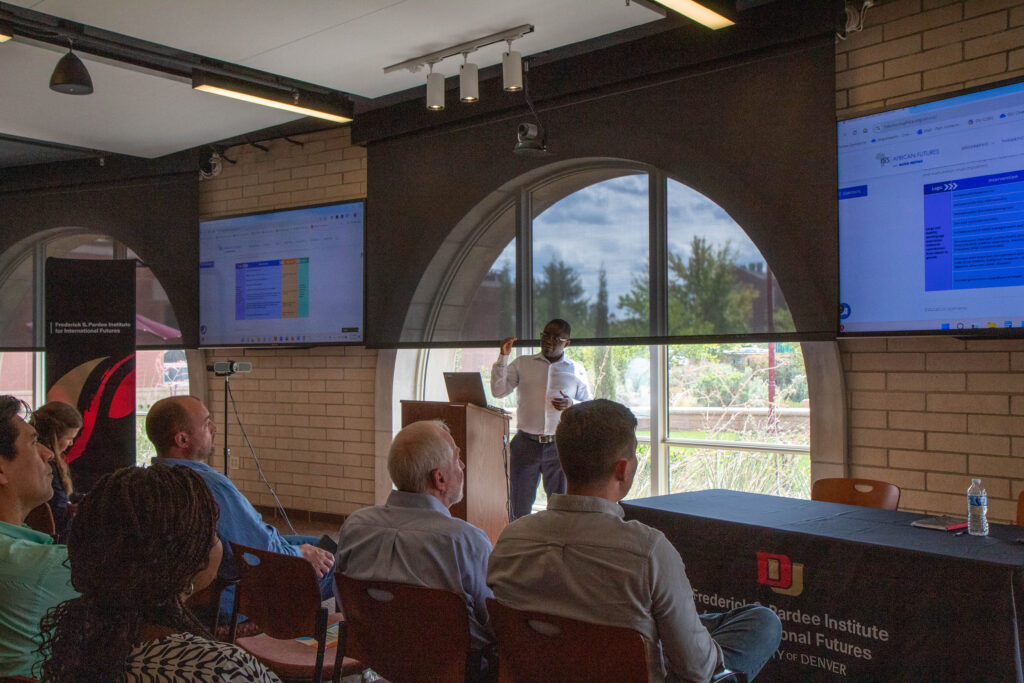 Blessing Chipanda gives an overview of the African Futures website. Photograph taken by Pam Hoberman.
“Our analyses are done at the country level. Then we form what is called a Combined Scenario,” Chipanda explained. He highlighted results showing that agriculture, infrastructure, and manufacturing have the greatest impact on GDP per capita across different country income groups. For extreme poverty, the Combined Scenario showed a decline from 385 million people, forecasted by the Current Path, to 168 million by 2043.
Both speakers emphasized the importance of open access to these data and scenarios. Everything they produce is publicly accessible, Chipanda said, encouraging students and researchers to explore interactive graphs on their website and country reports online.
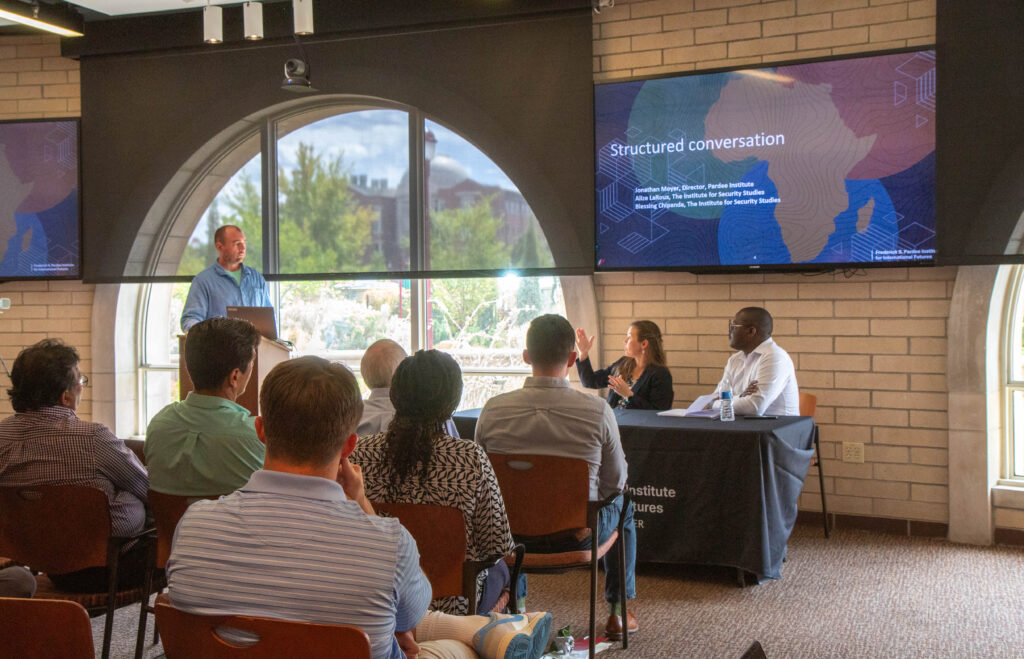 Jonathan D. Moyer leads a structured conversation with le Roux and Chipanda. Photograph taken by Pam Hoberman.
Following the presentation, Pardee Institute Director Jonathan D. Moyer led the conversation with le Roux and Chipanda on career pathways and lessons learned in development work.
Le Roux reflected on her 14 years working in research and development before joining AFI. “Good research does not automatically speak for itself,” she said. One can produce excellent tools and findings, but if they are not effectively communicated to decision-makers, they will not drive change. She also stressed the importance of networks, and as a student, it is important to build relationships as they will matter later in your career.
Chipanda shared how his background in economics led him to scenario building and modeling, highlighting the collaborative nature of AFI’s work with policymakers across Africa.
The event concluded with an open Q&A, moderated by Sanneh, with students asking about the challenges of aligning national development plans with continental goals, the role of governance reforms, and the future updates to AFI’s scenarios.
The session highlighted the power of data-driven foresight in shaping policy and offered students and researchers a practical view of how models like IFs can address some of Africa’s most pressing development challenges.
By: Sylvia Morna Freitas
The Frederick S. Pardee Institute for International Futures, in partnership with Octopus Energy and the United Nations Development Programme (UNDP), shaped the analytical foundation of the report Charged for Change: The case for renewable energy in climate action, which presents a vision for how renewable energy can simultaneously drive climate action and sustainable development. “Universal electricity and clean cooking access”, a global GDP boost of $48 trillion USD, and the end of extreme poverty for 193 million people are all achievable within a 1.5°C-aligned future, the report finds in its Renewable Acceleration and Sustainable Development Goals (RA+SDG) scenario.
For the report, the Pardee Institute used its International Futures (IFs) model to quantify the impacts of three future scenarios of renewable climate action, or inaction, to provide an evidence-based foundation for revising and implementing Nationally Determined Contributions (NDCs) from the Paris Agreement for over 120 countries. These countries are supported by the UNDP’s Climate Promise: Pledge to Impact Programme, which is a commitment by the UNDP to help countries reach their NDCs by implementing needed programs.
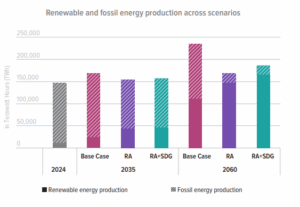
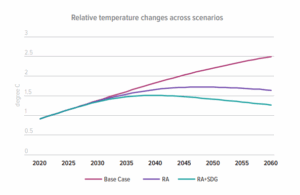
Graphs showing snapshot of scenario findings, including alignment with outcomes of the first global stocktake from report. Source: Charged for change: The case for renewable energy in climate action
The Institute’s International Futures (IFs) model was used to compare the Base Case, Renewable Acceleration (RA), and Renewable Acceleration + SDGs (RA+SDG) scenarios. In the report, the Base Case forecasts our trajectory under current policies while the Renewable Acceleration pathway simulates a world with ambitious, integrated renewable energy policy. The RA+SDG scenario simulates a world with similar integrated renewable energy policy and the advancement of the UN Sustainable Development Goals (SDGs).
Under current policy trajectories (the Base Case scenario), global temperatures are projected to rise by 2.6°C by 2060, leaving 400 million people without electricity, 700 million without clean cooking access, and 380 million in extreme poverty. The RA scenario, on the other hand, envisions a world where renewable energy transition is accelerated in line with the decision at the first global stocktake which calls on countries to triple renewable energy, double energy efficiency and phase out fossil fuels. This pathway would put the world on track to limiting global average temperature rise to below 2°C.
In stark contrast, the RA+SDG scenario envisions universal access to electricity and clean cooking, lifting 193 million people out of extreme poverty and reducing undernutrition for 142 million. It also brings safe water and sanitation to 550 million more people and boosts agricultural productivity by up to 40% in low- and middle-income economies. Such a transition contributes an additional $48 trillion USD to global GDP by 2060, increases per capita income by $6,000, and saves $20.4 trillion through improved energy efficiency and lower renewable energy costs.
These findings suggest that a just, 1.5°C-aligned energy future with economic gains is possible. They also help bridge the gap between climate ambition and real-world development outcomes, particularly in emerging economies. Countries like Nigeria, Indonesia, Ecuador, and Türkiye could reach 80–94% renewable energy shares by 2060, lifting millions out of poverty and bringing SDG targets within reach.
Importantly, these findings challenge the false dichotomy that pits climate action against sustainable development and provides pathways where both aims are mutually beneficial, and within reach. In a world grappling with climate instability and widening inequality, this kind of evidence-based foresight is essential—and urgently needed.
By: Wara Irfan
Frederick S. Pardee Institute for International Futures, in collaboration with UNICEF Innocenti’s Global Office of Research and Foresight and the African Union Development Agency–NEPAD (AUDA‑NEPAD), has released a new foresight report titled Unlocking the Potential of AfCFTA for Africa’s Young Population, exploring how the African Continental Free Trade Area (AfCFTA) could transform outcomes for children and youth across Africa.
Using the Pardee Institute’s International Futures (IFs) model, the report compares three scenarios: continuing current trade patterns without AfCFTA (referred to as the Current Path scenario), full AfCFTA implementation (AfCFTA scenario), and AfCFTA plus strategic reinvestment of trade revenues into education, welfare transfers, and research & development (R&D) (AfCFTA For Africa’s Young Population scenario). The report finds that a child-centered approach to the trade agreement is crucial for ensuring equitable and sustainable development in the region.
Led by Pardee researchers Deva Sahadevan, Taylor Hanna, and Jonathan Moyer, the collaboration began in late 2023, alongside a 2024 contribution to UNICEF’s Global Prospects for Children report. Although the AfCFTA has been established, it has not yet been fully implemented across all African Union member states, so its full potential remains unrealized. Building on Pardee’s previous work on AfCFTA and intended to model the effects of a complete implementation of AfCFTA, the recent report uniquely leverages IFs’ bilateral trade model, covering all 55 African Union members, to capture both tariff and non‑tariff barriers, such as bureaucratic delays, which the model shows can suppress trade as strongly as tariffs themselves.
The report finds that fully implementing the AfCFTA could boost intra-African trade by 97 percent and increase foreign direct investment (FDI) inflows by 20 percent by 2063, compared to the Current Path scenario. Moreover, the AfCFTA for Africa’s Young Population scenario is projected to generate far greater improvements in GDP growth and poverty reduction across Africa’s regions than the AfCFTA-only scenario.
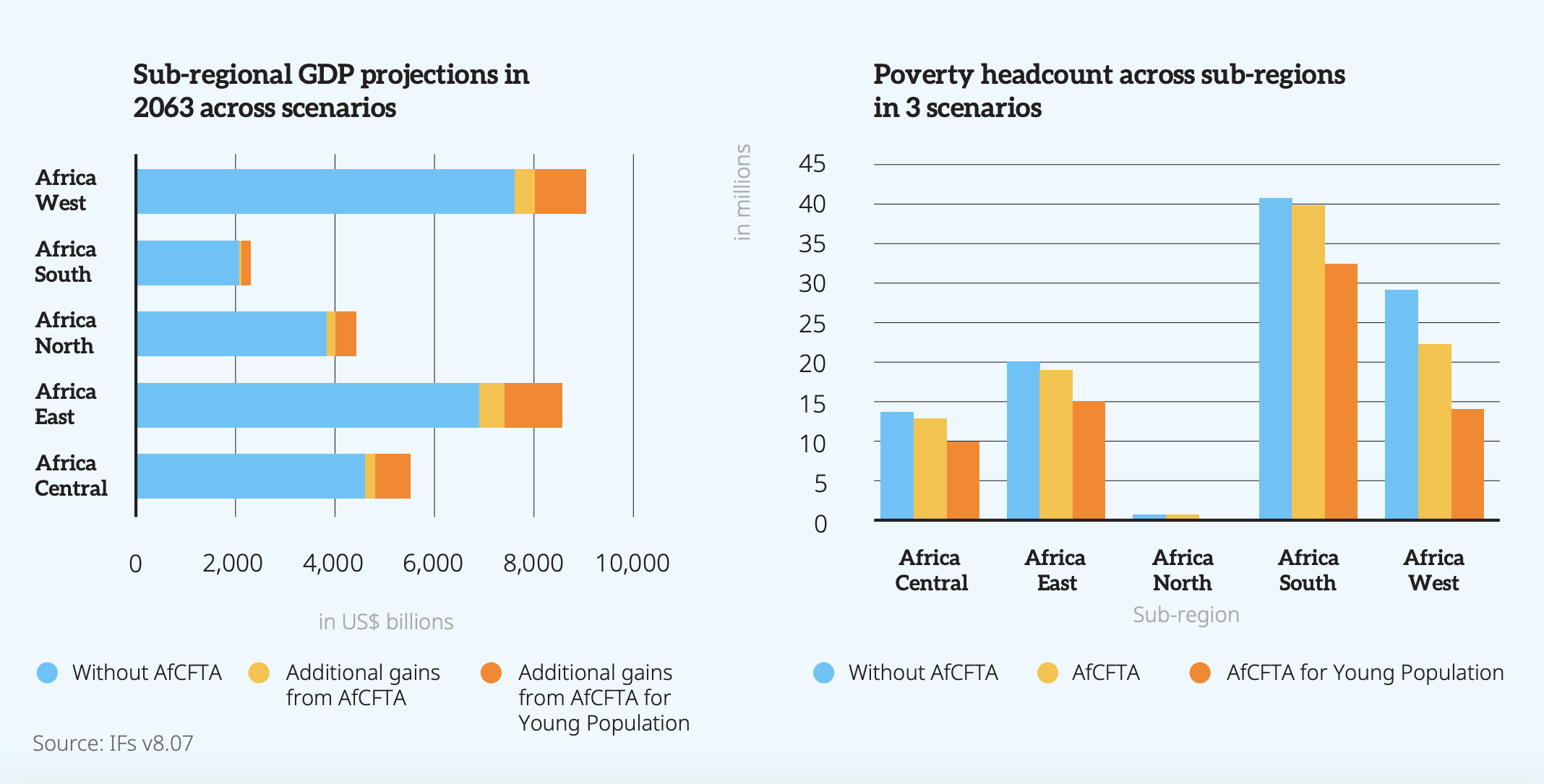 Credit: Pardee Institute via UNICEF Innocenti
However, it is the third scenario that can significantly amplify the benefits. Under the AfCFTA for Africa’s Young Population scenario, reinvesting cumulative AfCFTA revenue of around US$4 trillion, with US$2.4 trillion allocated to education, US$1.8 trillion to welfare transfers, and US$90 billion to R&D, yields multi-fold benefits by 2063. Africa’s GDP could rise to US$29 trillion (nearly US$3.5 trillion more than the no-AfCFTA scenario), 32.5 million people could be lifted out of extreme poverty, child stunting could fall by 3.4 million cases, malnutrition in children by 900,000, and female upper‑secondary graduation could increase by 72 million, narrowing longstanding gender gaps.
By quantifying how trade gains can be ring‑fenced for child‑centered investments, the Pardee Institute provides governments and partners with key strategic policy actions. It recommends encouraging youth participation in AfCFTA implementation, creating transparent monitoring systems, reinvesting in human capital, establishing systems of accountability, and promoting public-private collaboration.
The broader goal is to shift the narrative from merely economic integration to social transformation, with a particular emphasis on advancing the well-being of children and young people. Stakeholders can use Pardee’s insights in this report to design capacity‑building initiatives that foster digital, green, and STEM skills among the youth, consistent with emerging business models in the region. Aligned with the African Union’s Agenda 2063 and positioning the AfCFTA as a strategic development tool rather than merely a market‑access agreement, the findings underscore that investing in human capital today is essential to forge a healthier, better‑educated, and more prosperous Africa by 2063.
By: Wara Irfan
While many experts forecast Russia’s long-term decline amid economic stagnation and isolation from the West, a new collaboration between the Frederick S. Pardee Institute for International Futures and the Stimson Center suggests a more complex and contingent future. In a recent commentary titled “Why Russia Isn’t Doomed” for The National Interest, Collin Meisel, director of analysis at the Pardee Institute, and Mathew Burrows, counselor at the Stimson Center, reveal that strategic realignment towards Asia, investment in Arctic infrastructure, and potential climate-related gains may sustain the Russia’s geopolitical relevance in the decades ahead.
This commentary previews a few key insights from the Russia Futures 2035 project, a collaborative research effort between the Pardee Institute and the Stimson Center. Both organizations bring deep geopolitical expertise to forecast Russia’s future under various scenarios. In addition to contributing scenario modeling through the International Futures (IFs) platform, Pardee draws on its broader expertise in forecasting. By translating qualitative scenarios into modeled outcomes, this project aims to inform strategic planning for the U.S. administration and its allies as they navigate the evolving geopolitical landscape surrounding Russia. The full report will be published this summer.
Among the preliminary findings revealed in their recent commentary for The National Interest, the authors note several structural advantages that may bolster Russia’s future standing despite its current isolation. Russia has created an alternative economic lifeline through its long-standing pivot to the East, deepened by infrastructure links and energy trade with China. Favorable public opinion in countries like India, ongoing diplomatic efforts within BRICS (a growing intergovernmental organization originally comprising Brazil, Russia, India, China, and South Africa), and a recent treaty with North Korea are all contributing to the expansion of Russia’s influence in a shifting global order. Climate change may further benefit Russia by expanding arable land, increasing agricultural yields, particularly in the country’s northwest.
However, Burrows and Meisel also point to vulnerabilities. Sustained conflict in Ukraine, declining technological capacity, and the emigration of educated and skilled youth may constrain Russia’s long-term development. Despite having immense renewable energy potential, structural barriers, such as the absence of a countrywide carbon pricing system, could hinder Russia’s ability to capitalize on its clean energy potential. While trade with China is booming, growing dependence on Beijing creates strategic vulnerabilities. Rising defense spending may further constrain social and economic development. Without meaningful reform or resolution of conflict, Russia may be unable to convert its latent strengths into lasting geopolitical gains.
With novel and specific insights into how Russia’s future could unfold under different global conditions, stakeholders of this project, like the U.S. and its allies, can adjust their positioning to better neutralize these potential gains and even leverage them for economic and security gains of their own.
By: Sylvia Morna Freitas
International Studies Quarterly published a new article authored by Institute Director Jonathan D. Moyer, Acting Director of Analysis Collin J. Meisel, COLT Project Manager Kylie X. McKee, and a larger team of researchers, making the Country and Organizational Leader Travel (COLT) dataset public for the first time. The COLT dataset is a research project at the Frederick S. Pardee Institute for International Futures that documents the travel of heads of government and state (HOGS) from 212 different countries from 1990 through 2024. The COLT dataset is the first of its kind. Accounting for 78,641 foreign trips as of 2023, the article delves into how the comprehensive and global nature of the dataset allows for “the first generalizable findings on the causes and effects of global leader travel.”
In their ground-breaking article on the COLT dataset, the authors demonstrate the utility of the data through a series of statistical tests. First, they provide descriptive statistics about trends in HOGS travel over time. Second, they test the drivers and correlates of travel and use the analyses to evaluate causal relationships between leader travel and a variety of other factors. And third, they conduct a special exploration of the relationship between travel and trade with the first global dataset.

The country-level annual net in-visits minus out-visits averaged from 1990 to 2023 with higher values indicating more net in-visits. Source: Moyer et al. June 2025. "When Heads of Government and State (HOGS) Fly: Introducing the Country and Organizational Leader Travel (COLT) Dataset Measuring Foreign Travel by HOGS", International Studies Quarterly, Volume 69, Issue 2.
Digging into the richness of the data, the authors highlight several interesting trends for the 1990-2023 period. For example, leaders averaged 10.9 international trips per year, and despite a significant decline in travel due to COVID-19, by 2023, leader travel reached a post-1990 high with 3,188 total trips occurring that year. The United States and European countries received the most visits, while countries like Palestine visited the most countries, and the African region had the fastest annual growth rate for visits at 4.5 percent. From the data, the authors found that democracies tend to travel more than autocracies, although there is significant variation at the country level. Additionally, countries with higher diplomatic influence, such as those in the European Union or North Atlantic Treaty Organization, received a disproportionate share of visits.
The authors were then able to test theories about drivers of leader travel from previous research with a global dataset for the first time. “Our findings reinforce many explanations of what drives leader travel, showing that levels of development, material capabilities, economic and institutional interdependencies, conflict, distance, and homophily all matter,” the authors say in the article.
Their analysis came to these conclusions by examining both monadic (country-year) and dyadic (country-pair-year) models. The findings show that material interests are a key factor influencing leader travel, with countries involved in economic exchanges—such as fossil fuel exports, foreign aid, and arms trade—experiencing more visits. Additionally, states involved in conflict are more likely to engage in diplomatic travel, possibly as part of efforts to manage or resolve conflicts. Another significant factor is the logic of homophily, where leaders tend to visit countries with similar political values or regime types, with shared voting behavior in the UN also correlating with more frequent bilateral visits. Geographical distance also plays a crucial role with greater distance between countries leading to fewer trips due to the increased costs of travel. In addition, the routine and reciprocal nature of visits is important, with regular diplomatic exchanges leading to more frequent travel.
Overall, the authors findings demonstrate that diplomatic travel is driven by a combination of economic, political, and geographical factors that have been explored in past literature but can now be interrogated and probed more deeply with the COLT data. For example, prior literature claims “an increase in diplomatic travel is a leading indicator of increased trade.” The authors were able to test the robustness of this claim by testing the relationship between travel and trade across COLT’s global dataset, instead of just the two countries, China and the U.S., that the original study was based on. The authors find that while leader travel is a leading indicator of increased trade, increased trade is also a leading indicator of increased travel. In other words, the causal relationship is complex and bidirectional.
The authors of the COLT project were motivated to create this dataset because of the under-investigation this topic has received in the past. Despite literature that highlighted the importance of HOGS visits vis-a-vis a variety of diplomatic factors, earlier studies were often limited to western or powerful countries, overlooking smaller, non-western states and limiting the reach of conclusions drawn on the causes and effects of leader travel. This previously unaddressed gap is where the COLT dataset is making a unique contribution. As the first public-access resource of its kind, the COLT dataset will further future research on “issues such as national prestige, public diplomacy, weaponized interdependence, and interstate conflict.”
The COLT dataset is the product of several years of dedicated work from the authors of the new article and hundreds of undergraduate and graduate research aides at the Pardee Institute. A large part of what makes it possible for the COLT dataset to be so extensive is the large team of student employees that actively track and code new leader trips. Participation in the project also gives students at the University of Denver a unique opportunity to expand their professional and data management skills. The cross-sectional nature of COLT’s team, from the Pardee Institute’s director to undergraduate research aides, is indicative of the Institute’s wider innovative approach to generate useful research and help develop a new generation of experienced professionals in the field.
The COLT dataset and codebook are freely available to the public and are included with the replication materials accompanying the article in the International Studies Quarterly. To access the dataset, click here. To read the full article, click here.
COLT is part of the Institute’s Diplometrics Program. Diplometrics is funded by the U.S. government to better understand and measure relationships in the international system by gathering data, building tools, and conducting analysis. The project identifies international interactions that measure the depth and breadth of political, diplomatic, economic, security, and cultural ties between countries. The results and views expressed are those of the authors alone and do not represent the views of the U.S. Government.
Copyright ©2026 University of Denver | All rights reserved | The University of Denver is an equal opportunity institution