
Join us for Open House on November 13, 2026. Register now.

Menu

Menu
Join us for Open House on November 13, 2026. Register now.
Scrivner Institute Community Profile: Dr. Frank Laird
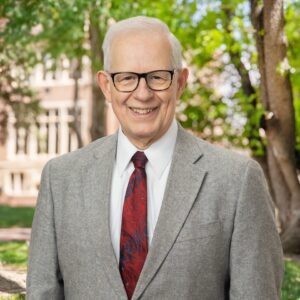
When did you join the faculty here at Korbel, and what drew you to the Korbel School?
I started here in September 1987. At the time, Korbel, then known as the Graduate School of International Studies, had a strong emphasis on international technology policy. My scholarly interests are in science, technology, and environmental policies, so this was a good fit. Also, I directed the international technology policy concentration and realized I could move it in whatever direction I wished. Within a few years I added a course in global environmental governance and taught it for many years.
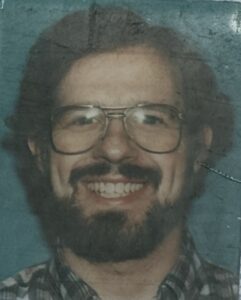
What are your research interests and areas of expertise? What courses do you teach?
I have three main research interests. 1. Energy policy, especially renewable energy policy. 2. Science policy, which encompasses both government funding for science and the government’s use of science for developing policies, such as environmental regulations. 3. Environmental policy, especially related to climate change.
I have taught numerous courses during my time at Korbel, most recently Global Environmental Governance (grad), Sustainable Energy Policy (grad and undergrad), and the Policy Making Process (grad). Earlier in my time at Korbel I taught courses on international technology policy and several other courses at the undergraduate and graduate levels.
You’ve been a Scrivner faculty affiliate since the institute’s inception. How has the MPP program evolved since then, and what institutional or academic progress during that period are you most proud to have been a part of?
The MPP program has grown in the last several years in both the breadth of its offerings and the quality and rigor of the courses. The improvements have led to a growth in enrollments and a growing scholarly reputation. My greatest source of pride in that progress has been serving on the search committee that brought Naaz Barma to Korbel to direct the Scrivner Institute and the MPP.
Over the course of your tenure, how have you seen the field of environmental policy evolve, and in what ways have you had to adapt to those changes as a professor and researcher?
The biggest change to environmental policy in the last 39 years has been the rise of climate change as both a domestic and international issue. Other topics are still important. For example, water issues are now high profile and, as it happens, linked to climate change. Climate change links closely to energy policy and that has been an important avenue for me to explore. I have adapted to these issues, both in my teaching and research, by bringing two different theoretical lenses to the issue, historical institutional analysis and critical policy studies, an approach that emphasizes framing and narratives in policy making.
As you prepare for your next chapter after Korbel, what has been the most meaningful aspect of your time here? Do you have a favorite memory or moment that stands out?
This is a tough question because there are so many possible answers. One accumulates quite a few memories in 39 years. I could list some of the big events that have occurred at Korbel over the years. But in some ways, the things that stick with me the most are smaller ones, such as just popping into a colleague’s office for a chat or going for coffee or lunch. The other things that stand out are when former students have told me that something in my classes or our discussions in office hours led them in new directions in their lives. We don’t often get that feedback 10 or 20 years later, but occasionally we do and it really sticks with me. It’s the most gratifying part of my work as a faculty member.
What counsel would you offer to current and prospective students as they embark on their studies, particularly in policy?
Some pieces of advice are old but still relevant. Work on writing clearly and compellingly. Develop a sharp and critical analysis of all the approaches to policy, including the one you favor. Cultivate an ethic of humility; you won’t always get it right.
Other advice pertains to our current time. Jobs are scarce, so look widely for opportunities at every level and in every sector. However grim things seem, there could be opportunities for our practical idealists, which is what I hope our graduates are, to do important and rewarding work in the coming years. Policy making institutions, from those that create policies to those that implement them, will need quite a bit of rebuilding in the next decade or so.
What are you looking forward to the most as you approach this next chapter? What will you miss the most about your time at Korbel?
I look forward to being able to structure my own time and to write without concern about peer reviewers or the academic standing of the outlet, hopefully reaching wider audiences than I have in the past. What I would miss most is what I hope to be able to maintain, connections with my friends here and with the intellectual life at Korbel.
Any additional fun facts you would like to share with us?
Sometimes intellectual pursuits come from personal experiences. I bought my first car while in college using money I had saved from summer jobs. It was a 5-year-old Pontiac Bonneville, a huge boat of a car that got, maybe, 10 miles per gallon. Three months later, the 1973 oil embargo by the Arabic members of OPEC caused the price of gasoline to quadruple almost overnight, and on many days one could not buy gasoline at all. I felt that I had just purchased my first piece of the American Dream and it had been yanked away from me. How could this happen? I’ve been interested in energy policy ever since.
Copyright ©2026 University of Denver | All rights reserved | The University of Denver is an equal opportunity institution