

Menu

Menu
The Human Dimension of Security: A Korbel Student's Perspective of the 2026 Aspen Security Forum
This reflection was written by Izzy Knaus (MA, International Security), one of four students selected to represent the Josef Korbel School of Global and Public Affairs at the 2026 Aspen Security Forum.
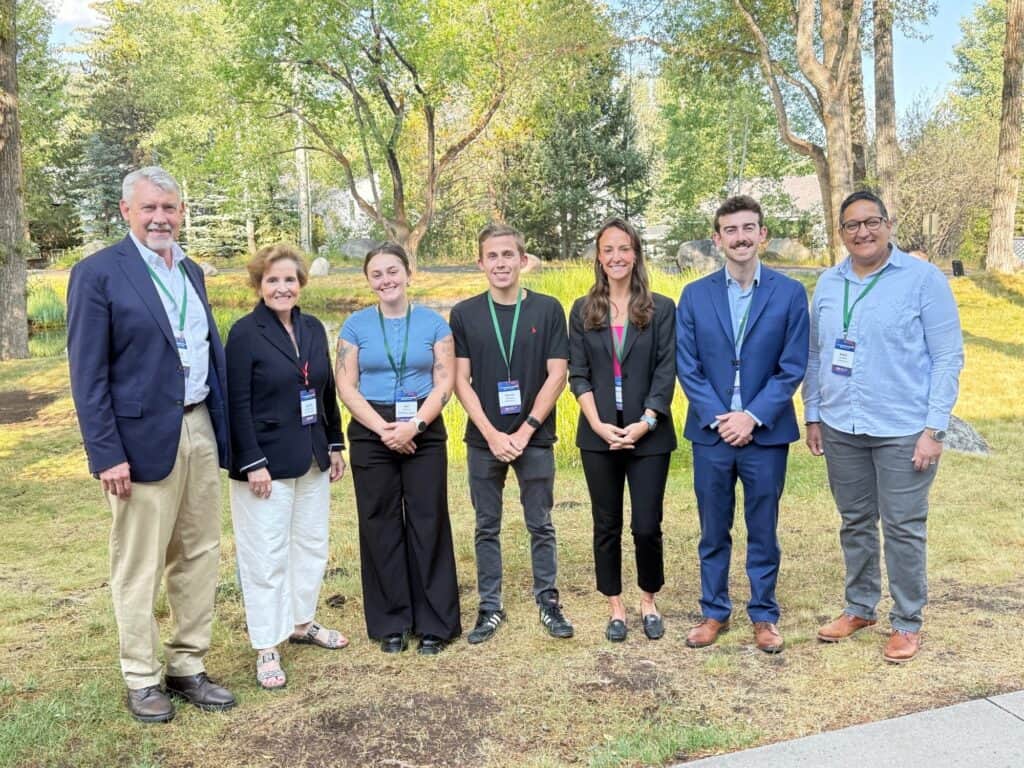
As a student in the International Security program here at Korbel, my studies, conversations, and assignments are often centered on war: its causes, its conduct, and the systems designed to contain it. We analyze evolving methods of warfare, emerging technologies, and the strategic frameworks that shape global conflict.
But throughout the 2026 Aspen Security Forum, I began to reconsider the lens through which I approach these questions. My true interest is not in war itself, but in who it impacts and how. That is the essence of human security, and it emerged as a quiet but persistent thread woven through many of the discussions in Aspen.
One of the most striking examples came from conversations on technology and security, particularly the panel on digital resilience through integration featuring Ambassador Nick Burns, Lisa Monaco, Wolfgang Schmidt, and Kaupo Rosin. In a moment where artificial intelligence is often framed in existential or zero-sum terms, the discussion reframed the stakes. The future of technological competition, they emphasized, is not about replacing human decision-making, but about augmenting it. Even in the most high-stakes domains, including nuclear command and control, human beings will remain at the center. The “winners” of the AI era will not be those who build the most advanced systems alone, but those who most effectively harness technology to expand human judgment, coordination, and resilience. In this sense, digital resilience is fundamentally human.
This human-centered lens also shaped conversations on alliances and collective security. In discussions on NATO and the so-called “continental drift” of global power, speakers repeatedly underscored the importance of allies not just as strategic assets, but as communities bound by shared commitments. The war in Ukraine was a powerful case study. Panelists noted a stark contrast in how the conflict is being fought: Ukraine’s approach reflects a prioritization of its people, while Russia’s strategy has often appeared indifferent to human cost. This distinction is not just moral; it is strategic. The legitimacy and endurance of a security effort are inseparable from how it values human life.
In sessions focused on the Western Hemisphere, the human dimension of security became even more visible. Conversations around Venezuela, Haiti, and broader regional instability emphasized that conflict is rarely confined to battlefields. Economic collapse, political repression, and natural disasters all produce cascading human consequences: displacement, food insecurity, and the erosion of public trust. These are not secondary effects of insecurity; they are central to it. Addressing them requires not only policy coordination, but sustained attention to the lived experiences of affected populations.
The Forum also made space for a more personal dimension of human security through reflections on military service. Speakers such as Colonel Jack Jacobs, Lieutenant Colonel Will Swenson, and Joseph Dinkel spoke about service across generations, offering a perspective grounded in lived experience rather than abstraction. One idea in particular stood out: the notion that heroism is not something one owns, but something one holds “in trust.” It is a reminder that the burdens of conflict are carried by individuals, often shaped by a sense of duty that transcends any single moment. Their stories highlighted that the human spirit, with its capacity for resilience and sacrifice, remains at the core of security.
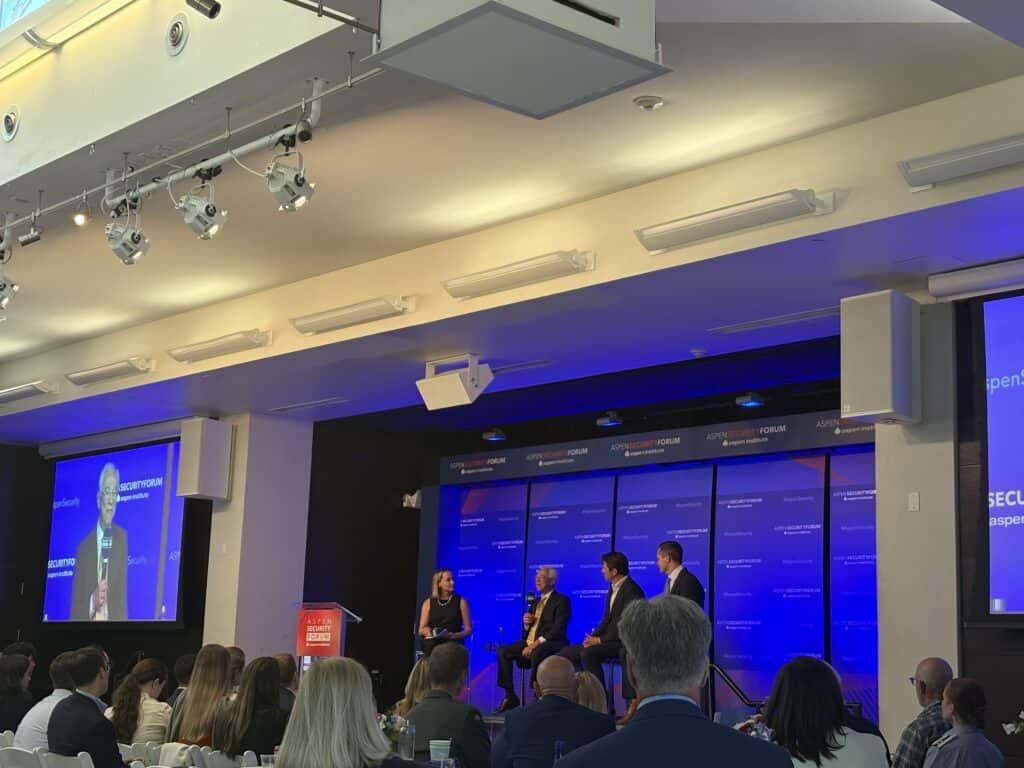
In a powerful intervention, Jordanian Foreign Minister Ayman Safadi emphasized the centrality of dignity in any lasting peace. Speaking about Gaza, he underscored the urgent need for humanitarian aid while also articulating a broader vision: that Palestinians and Israelis must be able to live in dignity and mutual acceptance. His assertion that “in order for peace to prevail, it must be just” encapsulated a key takeaway from the Forum. Security cannot be reduced to stability alone. Without justice and human dignity, it remains fragile and incomplete.
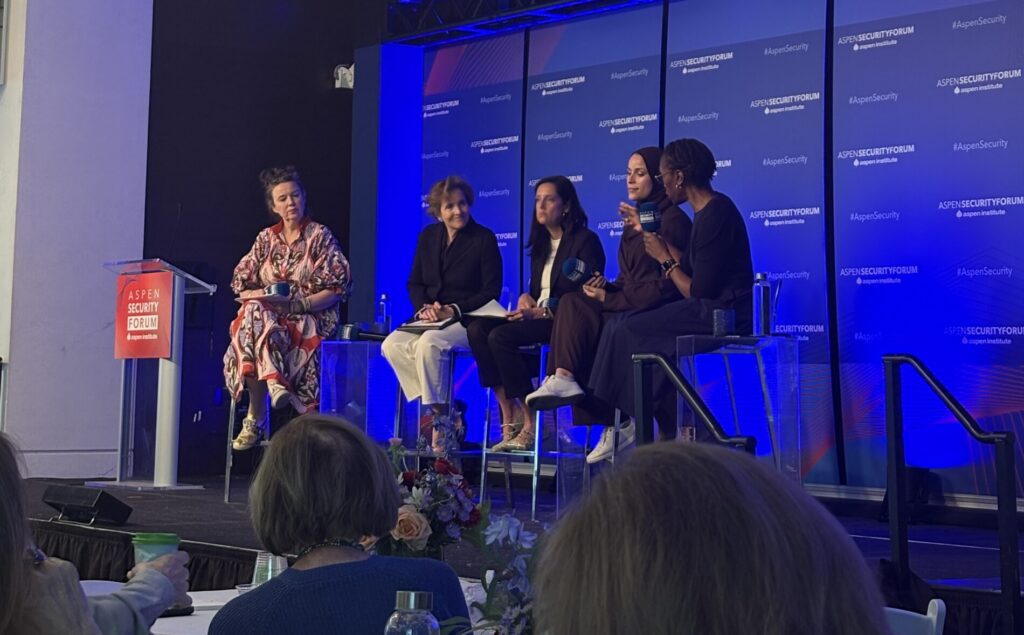
Perhaps the most meaningful session I attended at the Forum was the Denver Dialogues session on foreign assistance and national security in partnership with the Korbel School, which reflected the strong connection between Korbel and the Aspen Institute. The session included Alice Albright, granddaughter of the school’s founder and namesake, Josef Korbel. Her career has centered on development, diplomacy, and the kinds of human-centered priorities that sit at the heart of human security. Her conversations with fellow panelists (Comfort Ero, Alaa Murabit, and Ana Zacapa) and with us Korbel students before the session reflected a broader message that security is not just about states, strategy, or power, but about the conditions that allow people and communities to live with dignity, stability, and opportunity.
This is a complete reframing of traditional security concerns. Technology, alliances, and military strength remain essential, but their significance lies in how they shape human lives. If human security is foundational, then our frameworks for thinking about war, deterrence, and stability must account for more than territory and power. They must account for people.
As I return to my studies at Korbel, that is the shift I will carry forward. Understanding conflict now means not only analyzing strategy and systems, but also centering the human beings who live with their consequences. As panelist Alaa Murabit argued in the Denver Dialogues session, “We need to really start thinking about education and healthcare and water and food security as upstream of national security… They are actually what create national security.” Her insight reinforced what emerged throughout the Aspen Security Forum: that security is not built solely through deterrence or defense, but through the conditions that allow societies to thrive.
Huge thanks to the Korbel School of Global and Public Affairs and the Scrivner Institute of Public Policy for sponsoring this opportunity, and to the Aspen Institute and Aspen Strategy Group for hosting us!
Copyright ©2026 University of Denver | All rights reserved | The University of Denver is an equal opportunity institution