
Join us for Open House on November 13, 2026. Register now.

Menu

Menu
Join us for Open House on November 13, 2026. Register now.
Governing Colorado: Student Reflections on a Policy Dialogue with Gubernatorial Candidates
This article was written by MPP student Jenni Gutierrez Marquez
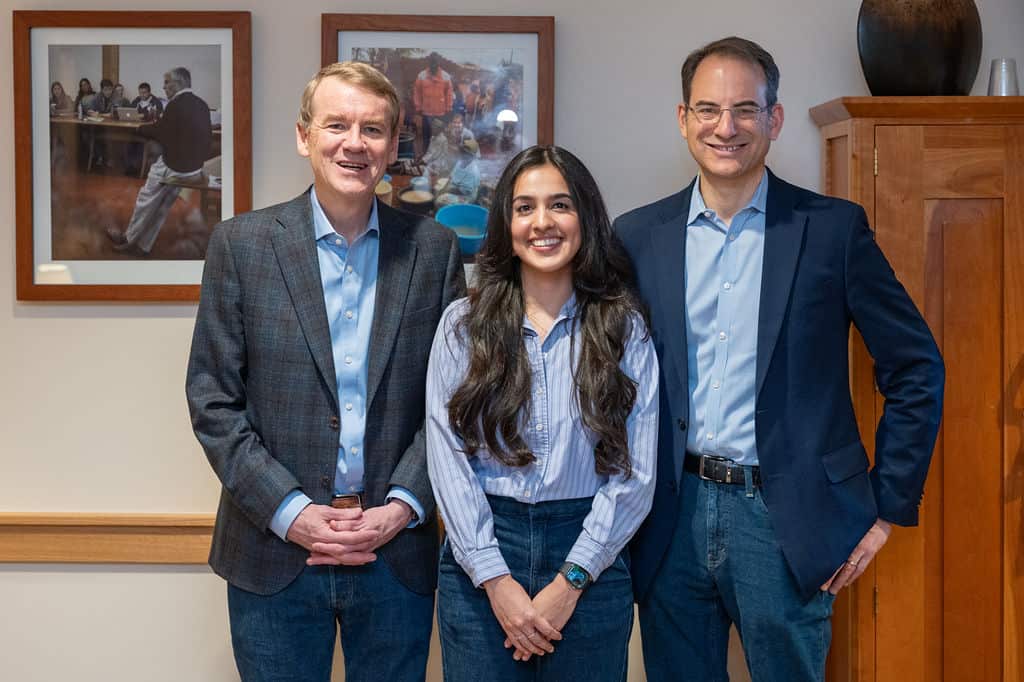
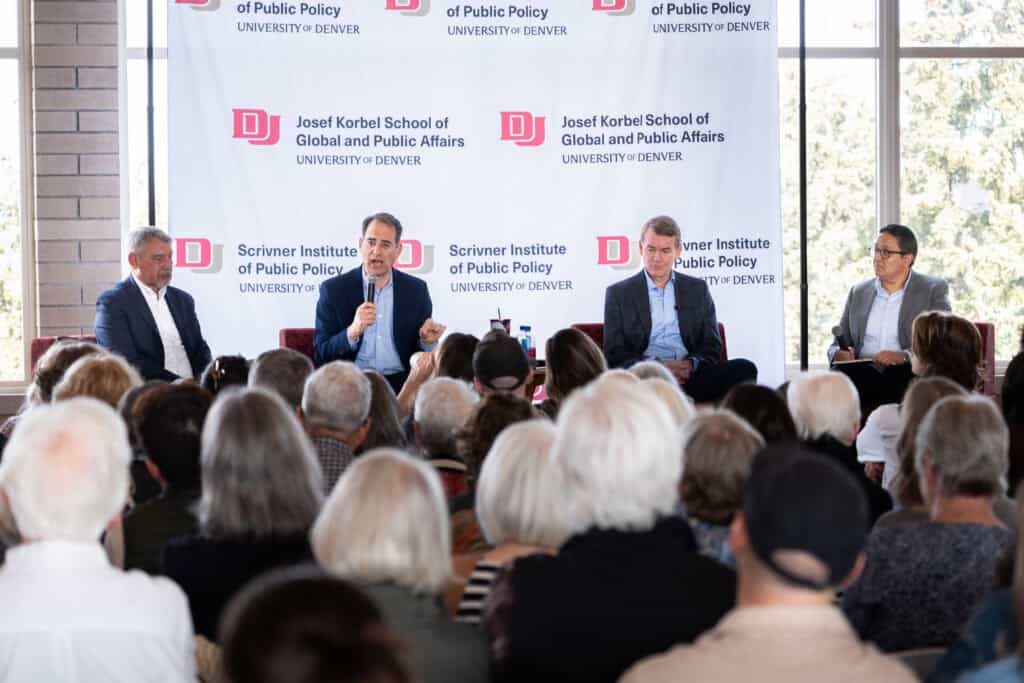
On March 1, 2026, I had the honor of meeting U.S. Senator Michael Bennet and Colorado Attorney General Phil Weiser at the Governing Colorado: Policy Challenges and Priorities event, hosted by the Scrivner Institute of Public Policy. This event provided a unique opportunity for the public to engage directly with two of Colorado’s most prominent leaders, and current gubernatorial candidates, on some of the state’s most pressing policy challenges.
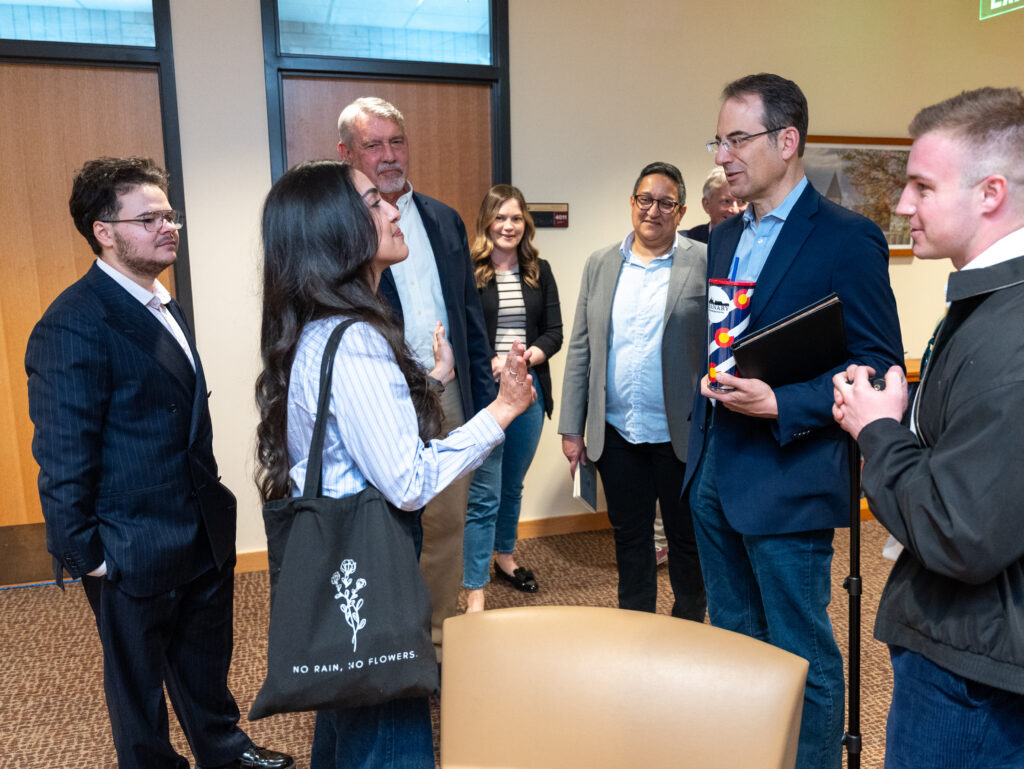
What set this event apart was its educational approach and non-debate format. As Scrivner Institute Director and moderator Naazneen Barma described, it was “a deep dive dialogue on major policy issues that are facing the state in a non-partisan educational space.” The civil discourse felt significant, offering our community both insight into Colorado’s future leadership and a chance to come together around the gravity of issues ranging from affordability and housing to healthcare, natural resources, and more. The dialogue allowed students and community members to learn about potential solutions from state leaders, appreciate new perspectives, and develop a deeper understanding of the challenges Coloradans across the state are facing. The event embodied what it means to be at the heart of meaningful, community-focused education and civic discourse. On a personal note, I truly appreciated the chance to briefly meet both speakers and engage in informal conversations about my own and my classmates’ interests in public policy.
Affordability emerged as a recurring theme, particularly against the backdrop of current economic challenges. The panel discussed the potential effects of the Kroger and Albertsons merger, which could have led to the closure of grocery stores in rural Colorado. This scenario raised important concerns about the possibility of food deserts, making it even harder for vulnerable populations, especially the elderly, to access affordable groceries. Town halls became crucial forums for both workers and consumers to express their concerns and highlight how issues of affordability touch everyone in the community. The discussion on affordability naturally extended to housing, with widespread anxiety over so many Coloradans spending more than 30% of their income on a place to live. The central takeaway was the need to build an economy where everyone can thrive, an idea both candidates addressed by sharing different approaches they would take to achieve this goal.
Healthcare was another significant topic, particularly the question of how and when the state should step in to address gaps left by the federal government. The conversation focused on the risks of rural hospitals closing and the broader issue of retaining essential healthcare professionals across Colorado. There was a strong emphasis on the need to ensure primary care for all at lower costs, with the understanding that fair compensation is crucial not only in healthcare but also in education and other vital professions. The message was clear: Colorado cannot afford to wait for federal action and must pursue innovative state-level solutions.
Both speakers underscored the importance of the entire state coming together, pooling resources, and moving beyond political differences to protect all Coloradans. The conversation also explored the complex relationship between state and federal governments, focusing on the importance of secure democratic practices and the rule of law. For example, the prosecution of Tina Peters was discussed not as a political issue, but as an affirmation of legal integrity. Throughout, the need for Colorado to advocate for its own rights and remain resilient in defending democratic values was a recurring theme.
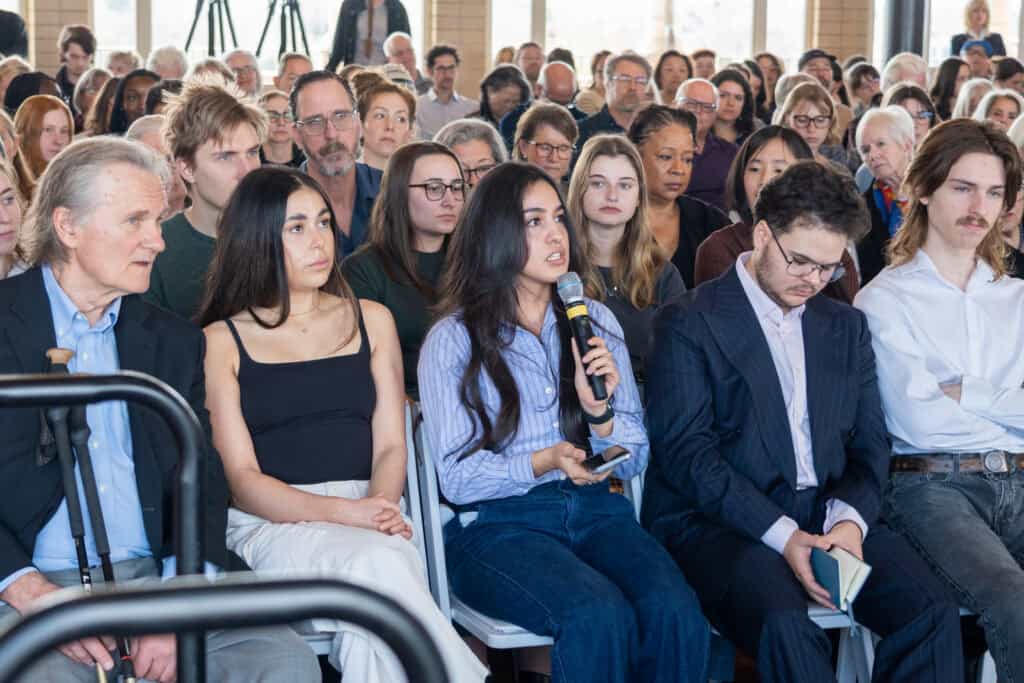
Immigration emerged as a deeply personal theme for both speakers, shaped by their family histories. There was broad agreement on the need for Colorado’s next governor to support mixed-status families and prevent unnecessary separations, as well as a shared recognition of the vital role the immigrant community plays in the state. Both speakers highlighted the continued need for immigration reform and emphasized the importance of creating a culture that values and appreciates immigrant neighbors and first-generation Americans. For me, it was particularly refreshing and meaningful to ask a question about immigration enforcement and receive responses rooted in personal experience. Hearing such thoughtful, nuanced answers, focused on community preservation rather than political posturing, was a reminder of the power of honest, empathetic dialogue in a policy setting.
Natural resources and conservation also featured prominently in the dialogue, with Colorado’s identity deeply tied to its beauty and wildlife. The most pressing issue discussed was the ongoing 25-year drought and the challenges it poses for water resources. Ensuring safe drinking water, particularly in southeastern Colorado, remains an ongoing struggle, despite efforts to address it. The panel underscored the need for state-first approaches to water management, prioritizing the rights of Coloradans in water treaties while also recognizing the needs of those downstream. There was a strong call to build coalitions that address these environmental challenges, including targeted efforts to mitigate wildfire risk in areas like Meeker and the Southern Slope. The conversation highlighted real opportunities for Colorado to lead on climate and resource policy, but progress will require concrete action and collective accountability.
Throughout the dialogue, both speakers exemplified a unique sense of Colorado pride. Even when they disagreed on specific policy solutions, there was an ever-present consensus on the need to protect Coloradans and put the state’s people first. The event went beyond just covering the topics, it dove into the political complexities behind them. As community members, we walked away not only with more knowledge but also with a deeper understanding of the challenges ahead and a sense of responsibility to become more aware and innovative. This especially resonated with me as a student preparing to enter the policy field.
Watch the recording of the discussion here.
Copyright ©2026 University of Denver | All rights reserved | The University of Denver is an equal opportunity institution