

Menu

Menu
Scrivner Institute Community Profile: Michaela Krause (MPP/JD '26)
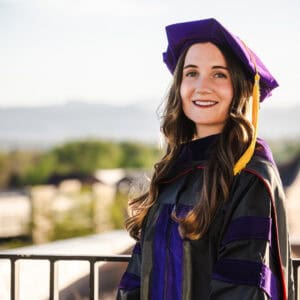
Tell us about your background prior to starting your graduate studies.
I was born and raised in Jefferson City, Missouri, and went to the University of Kansas for undergrad, where I majored in political science and sociology and minored in Spanish. After I graduated in 2019, I joined Teach for America and taught middle school science at a public charter school in Kansas City, Missouri. I taught at my placement school for a third year after my two-year TFA commitment, and I was also a policy fellow with the Urban Leaders Fellowship the summer between my second and third year teaching.
What motivated you to pursue both a JD and an MPP?
I was motivated to go to graduate school because I felt like I was having a difficult time making meaningful change in my role as a teacher, and I wanted to take a different approach to addressing the issues that mattered to me and that I saw affecting my students. I wasn’t sure, though, whether I wanted to focus my career on practicing law, doing policy work, or some combination of both. I knew some people end up doing policy work with only a J.D., but I wanted to make sure my graduate studies included an intentional focus on developing both sets of skills, and I thought a joint JD/MPP program was the best way to do that.
What has been your favorite class, and why?
Two of my favorite classes at Korbel were Professor Tamra d’Estree’s Negotiating Environmental Conflict and Policy class and the Negotiation Workshop. Because of scheduling conflicts and limited availability, I didn’t get the chance to take any negotiation or alternate dispute resolution classes through the law school, so it was great to be able to work on those skills—which are skills that I think are essential for both policy work and for the practice of law—at Korbel. These courses included elements of both theory and real-world application through negotiation simulations, and I thought that made them both especially effective and meaningful.
Copyright ©2026 University of Denver | All rights reserved | The University of Denver is an equal opportunity institution