

Join us for Open House on November 13, 2026. Register now.

Pardee Institute
Keith Gehring brings IFs into the classroom during Fulbright residency in Serbia
Join us for Open House on November 13, 2026. Register now.
Keith Gehring brings IFs into the classroom during Fulbright residency in Serbia
Keith Gehring brings IFs into the classroom during Fulbright residency in Serbia
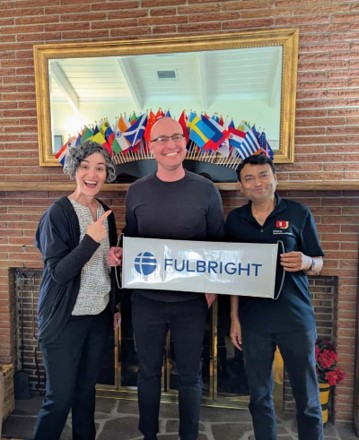
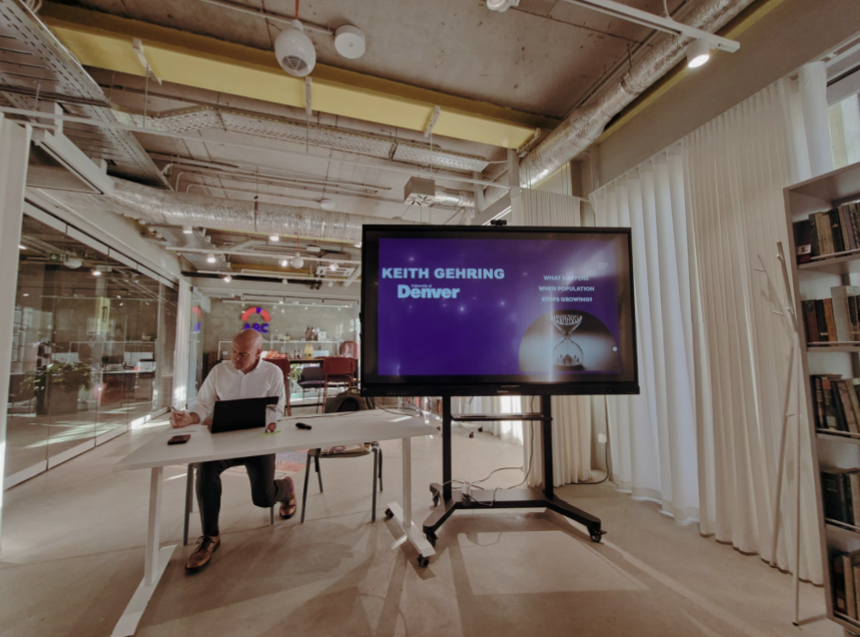
During a five-month Fulbright residency in Belgrade, Keith Gehring worked with students to examine how Serbia’s policy choices could shape its future, using International Futures (IFs).
Gehring, a teaching associate professor at the University of Denver's Josef Korbel School of Global and Public Affairs and a faculty affiliate of the Pardee Institute for International Futures, spent his Fulbright residency at the University of Belgrade's Faculty of Political Science. His project, "Serbia at the Crossroads," brought him together with resident academics, students, and members of the wider community to examine Serbia's political landscape: how a society shaped by conflict approaches governance, and which alternative futures remain open to it.
The interest runs deep. Gehring first traveled to the region years ago, and it stayed with him. "The world moved on, and I never did," he told DU News before his departure.
Forecasting as a way into the conversation
IFs, Pardee's open-source, integrated forecasting platform, loomed large in Gehring’s teachings. IFs connects demographics, economics, education, governance, energy, and other systems for 188 countries, allowing students to examine how a change in one area carries through to the others over time. In the classroom, students used IFs to examine assumptions about their own country, build scenarios, and trace plausible pathways.
During one lesson, a student modeled a Serbia that prioritized security as regional threats rose, shifting investment away from research and economic development. In that scenario, slower economic growth eventually constrained the country’s capacity to sustain its security spending. The exercise gave students a concrete trade-off to examine: how an immediate response to insecurity could affect the resources available for security over time.
Beyond the classroom
Gehring also came to know Serbia outside the lecture hall. In the first video of a Korbel series from his time abroad, he speaks with a Serbian resident about culture, politics, and daily life today. In another installment, he walks through Belgrade's graffiti and street art, where cultural identity, political expression, and the city's history sit in plain view on its walls.
Those encounters connect back to Gehring’s forecasting work, grounded in historical data and stated assumptions. Conversations with the people who live with a country's choices help anchor assumptions and directions in lived experience.
What stays in Belgrade
The work continues after Gehring's return. According to DU News, the IFs model and the curriculum developed during his residency remain with the University of Belgrade, enabling faculty to continue teaching with IFs and helping students examine how today’s choices could shape future outcomes.
Give to Pardee

Follow Pardee research, publications, events, and tools that help people reason more clearly about possible futures.
Subscribe
Contact us

Copyright ©2026 University of Denver | All rights reserved | The University of Denver is an equal opportunity institution