
Join us for Open House on November 13, 2026. Register now.

Menu

Menu
Join us for Open House on November 13, 2026. Register now.
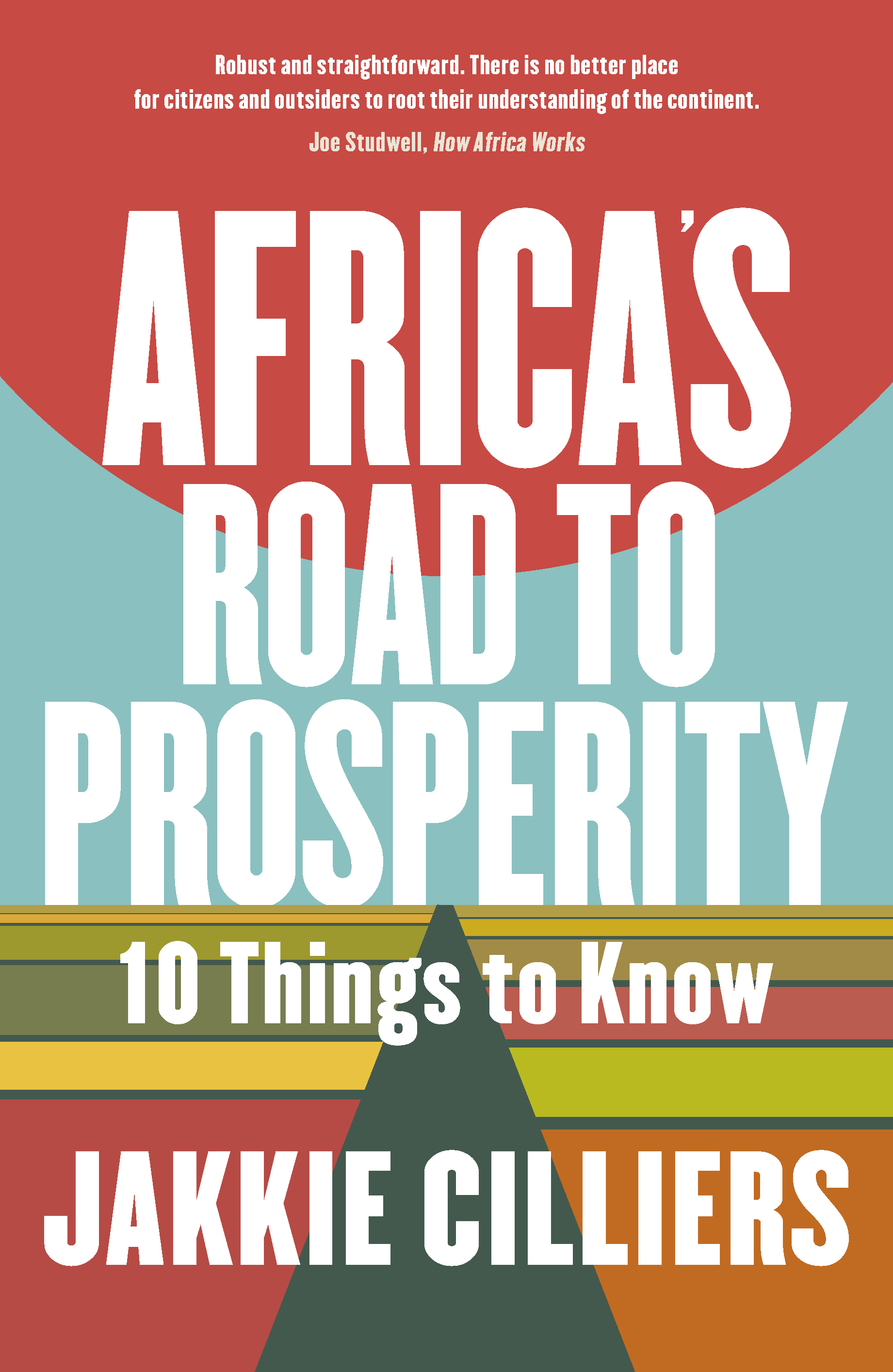
Jakkie Cilliers's new book, Africa's Road to Prosperity: 10 Things to Know, draws on data and scenario modeling from International Futures (IFs), the Pardee Institute's open-source, integrated forecasting platform, to ask which choices could most improve development outcomes across the continent.
Cilliers is the founder and former executive director of the Institute for Security Studies (ISS). He chairs the ISS Board of Trustees and heads its African Futures and Innovation Programme in Pretoria, South Africa. Cilliers and ISS are longtime partners of the Pardee Institute.
Ten priorities, examined over the long term
The book identifies 10 priorities for Africa’s development, including infrastructure, energy, regional trade, employment, land management, and income convergence with wealthier regions, and examines the forces that shape them.
These priorities interact. Expanding electricity access can raise productivity and support new jobs, while a faster-growing workforce needs education and job opportunities to translate demographic change into higher incomes. Using International Futures (IFs), Pardee’s open-source forecasting platform, Cilliers examines how these relationships unfold over time and how different policy choices could strengthen or constrain Africa’s prospects for prosperity.
Keisuke Minai. (2026, April 12). Qatar's mediation diplomacy strength: An analysis of reactions to Israel's September 2025 attack. The SAIS Review of International Affairs. https://saisreview.sais.jhu.edu/qatars-mediation-diplomacy-strength-an-analysis-of-reactions-to-israels-september-2025-attack/
Keisuke Minai used the Formal Bilateral Influence Capacity (FBIC) Index and Global Power Index (GPI) from the Pardee's Institute's Diplometrics research program to explore Qatar's use of mediation diplomacy following an air strike in its capital in September 2025. According to Professor Minai, their advanced statistical analysis "confirms that Qatar’s mediation activities are positively associated with its international influence in the long term, while its national power plays a role in the short term."
Chognot, J.-P. (2025, November 28). Papal travels reflect changing catholic diplomacy. Barrons. https://www.barrons.com/news/papal-travels-reflect-changing-catholic-diplomacy-ba4ed27f?gaa_at=eafs&gaa_n=awetsqf7k-jdeapnln-mjpiypsj7qcqzgshykxv4fr_eix5lb8m00gfm5z2cst2tomm%3d&gaa_ts=695c1151&gaa_sig=qwk6i9s6r6i2gp46bqzhwtalquci_nzqsup6ly1_3ajil14ej8rt77rvn3zanozwrzicigkxskc5prwgcydwxa%3d%3d&utm_source=&utm_medium=email&utm_campaign=&utm_content=read+the+article%26nbsp%3bhere&utm_id=40403667
Agence France-Presse highlighted the Pardee Institute’s Country and Organization Leader Travel (COLT) data in a widely syndicated story examining papal travel and the changing role of Catholic diplomacy in international affairs. The article drew on research to explore patterns in papal travel and what they reveal about the Catholic Church’s global diplomatic engagement. The piece, citing Director Jonathan Moyer and Collin Meisel, has generated more than 2 million media hits worldwide.
By: Sylvia Morna Freitas
The Institute for Security Studies African Futures (ISS) has released a new article about how the unprecedented shut-down of the U.S. Agency for International Development (USAID) will affect African countries. Using the Pardee Institute’s International Futures forecasting platform (IFs) to model the cut in assistance, the ISS found that 5.7 million more Africans would fall below the US$2.15 extreme poverty income level in the next year should the Trump administration continue with its sweeping aid reduction.
Author and Founder of the ISS, Jakkie Cilliers, provides detailed context on the reliance of several African countries on U.S. aid and delves into the changing landscape of U.S. foreign aid policy. The U.S. provides 26% of all aid that comes to Africa. The largest component of which is spent in the health sector to combat deadly diseases like HIV/AIDS, malaria, and more. Outside of the health sector, U.S. aid to African countries supports agricultural productivity and economic growth, bolsters security, promotes democracy, human rights, and governance, and improves access to quality education and social services.
In January 2025, U.S. President Donald Trump signed the Reevaluating and Realigning United States Foreign Aid executive order, which led USAID to suspend operations by award recipients. According to the models, the sudden loss of funding to these development sectors will have a considerable impact on the future of Africa. In this assessment, the ISS African Futures modeling platform used IFs to model a scenario in which aid to Africa is reduced by 20%. By 2030, they found that 19 million more Africans would be considered extremely poor as a result of the aid reduction. ISS tested an alternative scenario where Foreign Direct Investment (FDI) was used to replace the loss in aid. They increased FDI to the same volume to see if it could offset the loss but found “no evidence.” For the poorest countries, FDI increased inequality and poverty in the short and medium-term. Further findings include a dramatic decrease in the sub-Saharan economy by $4.6 billion and a rise in mortality and displacement throughout the continent. Cilliers offers alternative solutions that serve both the U.S. desire to reform its aid policy and African leaders as they navigate this geopolitical shift.
The IFs platform is the only open-source, global model that covers 188 countries and integrates data to forecast a range of interconnected variables across human, social, and natural systems. With a database that goes back to the 1960s in key areas—such as agriculture, economics, governance, health, and more—the IFs is a tool that allows researchers and policymakers to explore the way different policies will shape the future up to the year 2100 and can be used to model the potential consequence of aid loss to several African countries.
The importance of ISS’s work with Pardee’s International Futures model comes from its ability to forecast how the change in U.S. foreign aid policy will impact Africa. This will allow leaders in African nations and across the world to prepare themselves for the course ahead. It also enables ISS and other researchers to plumb the depths of aid reform and explore how alternative aid policy could better meet the needs of our global future.
Read the full article here.
By: Wara Irfan
A recent article published by the Modern War Institute at West Point analyzes how longstanding foreign actors will navigate Syria’s geopolitical landscape following the fall of Assad. It cites the Pardee Institute’s Formal Bilateral Influence Capacity (FBIC) Index data to identify major foreign actors and track the trajectory of their influence in Syria since the 1960s.
Written shortly after Assad’s fall, Assad’s Downfall in Syria: Who Wins and Who Loses? highlights, using FBIC data, the regional uncertainties and forecast potential winners and losers of Syrian regime change by examining the last 80 years of foreign influence exerted on Syria by major actors like Russia, Turkey, China, Iran, the United States, Europe (particularly through the activities of France), and Israel.
The FBIC Index measures formal relational power between countries across economic, political, and security dimensions, focusing on state-sanctioned interactions like diplomatic exchange and trade. Developed by the Diplometrics Program, it helps quantify global power dynamics and informs the International Futures (IFs) model, aids researchers and U.S. policymakers in assessing global power shifts.

Credit: Modern War Institute at West Point
The authors’ analysis of FBIC data suggests that Iran and Russia’s influence in Syria will likely continue to decline in a post-Assad era. Meanwhile, Turkey, which supports the Syrian National Army against both Assad and the Kurds, views this as an opportunity to expand its influence. FBIC data shows that Turkey’s capacity has grown over the past two decades and can see the regime change as an opportunity to continue countering perceived threats from the Syrian Kurds.
Furthermore, FBIC data reveals that U.S. influence in Syria began declining around the mid-2010s. While the U.S. still maintains approximately 900 troops at the al-Tanf garrison near the Iraqi and Jordanian borders to counter ISIS and Iran-backed militias, the future of this key outpost remains uncertain, as President Trump may choose to shut it down.
Modern War Institute at West Point—a leading research hub dedicated to the study of contemporary warfare—highlights the significance of the Pardee Institute’s FBIC data in analyzing global dynamics. This index not only informs strategic analysis but also shapes discourse surrounding bilateral relationships between nation-states.
Carbon bargain: The energy transition will be much cheaper than you think. (2024, November 16). The Economist.
The Pardee Institute's International Futures (IFs) model was featured in an article by The Economist that examines the costs of transitioning to clean energy. The article, “Carbon bargain: The energy transition will be much cheaper than you think.,” argues that existing cost estimates for “greening the economy” are exaggerated and based on unlikely assumptions and scenarios. The outcome, the article warns, gives climate activists and energy executives alike an unreliable price tag of the energy transition, complicating all stakeholders’ collective ability to plan for climate change.
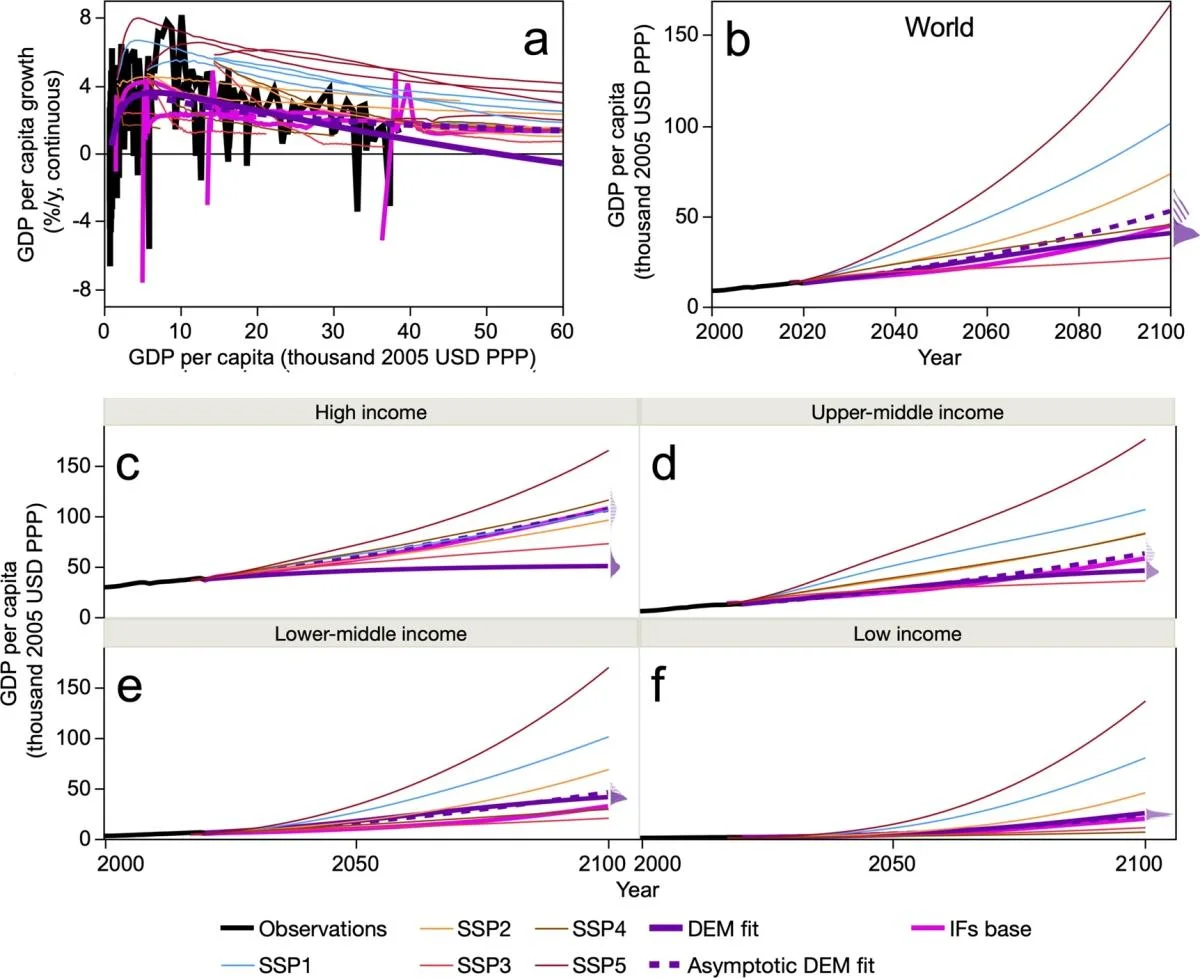
The article references research by Matthew G. Burgess and others, published in the journal Communications Earth & Environment, which argues that prevailing forecasting methods overestimate key assumptions, namely economic growth. Their research uses two methods to forecast long-term global economic growth.
The first method, a differential-equation model, relies on historical trends, examining past relationships between gross domestic product (GDP) levels and growth rates to project future patterns. The second approach involves IFs, which integrate data on economics, population, and technology using an array of quantitative techniques to create detailed global scenarios. IFs’ systems-wide approach to modeling potential futures offers a holistic view of how various inputs of the energy transition will interact over time.
In their research, Burgess et al. find their differential-equation model and the IFs model better predicted GDP per capita growth rates observed relative to the International Monetary Fund’s near-term forecast predictions. This approach, the article argues, offers more reliable foresight into future pathways. A key takeaway from Burgess et al.’s research is their long-term forecasts for GDP per capita are closer to Shared Socioeconomic Pathway (SSP) 4, “Inequality”, than SSP 2, the “Middle of the Road” scenario often treated by climate researchers as a business-as-usual projection. While an SSP4 world bodes ill for humanity’s ability to adapt to climate change, it also implies a world of lower challenges to climate change mitigation given slower economic growth, slower convergence in GDP per capita between low- and high-income countries, and, consequently, lower demand for fossil fuels than in an SSP2 world.
The citing of the IFs-related work in the Economist article highlights its value as a reliable tool for climate change stakeholders in understanding global challenges and for cost-effective climate planning. Read the entirety of Burgess et al.’s research here.
Burgess et al., 2023, Figure 3, Communications Earth & Environment, Nature.com
Collin Meisel, Associate Director of Geopolitical Analysis at the Frederick S. Pardee Institute for International Futures recently published an article in Journal of Peace Research. The article, titled “Bearing Witness: Introducing the Perceived Mass Atrocities Dataset (PMAD)” is a country-year measure of atrocities with accompanying narratives, commissioned by the US State Department to support the Elie Wiesel Act, which requires relevant organizations within the U.S. government to measure global atrocities.
Built to support the US Congress’s Elie Wiesel Genocide and Atrocities Prevention Act of 2018, PMAD enables the systematic comparison of the occurrence and magnitude of seven atrocity types, in addition to group-perpetrated violence against women and LGBTQIA+ groups, with aggregate atrocities indices for 196 countries from 2018 to 2022.
The article led by Colliin Meisel was co-authored by Jonathan Moyer, Director of Pardee Institutes alongside other authors including Austin S Matthews, Oliver Kaplan, Ruth Byrnes, Kerent Benjumea, and Phoebe Cribb.
When asked for comment, Collin Meisel made it a point to express his appreciation to the team at Pardee Institute and the Josef Korbel School of Global and Public Affairs, who supported over the years and continue to update the data for research.
Commenting on the publication, the Dr. Moyer described the piece as an impressive work, stating that, “Staff researchers can be an essential piece of the puzzle in research centers/institutes and Collin is outstanding and we are lucky to have him at Korbel bridging the gap between academic work and policy communities.”
A recent article by Defense News has highlighted insights from Collin Meisel, the Associate Director of Geopolitical Analysis at the Pardee Institute for International Futures. The article captures the defense budgetary challenges of Europe and NATO members.
The Defense News piece, “As more NATO countries meet spending targets, some push to raise goals,” quoted Meisel’s point on the shortfall in defense spending of Europe and its capabilities in supporting Ukraine, noting it may take long years to bridge the gap.
Meisel’s points have become even more relevant due to the ongoing debates within the alliance on how best to address emerging security challenges and maintain collective defense capabilities.
Click here to access the original report by Defense News.
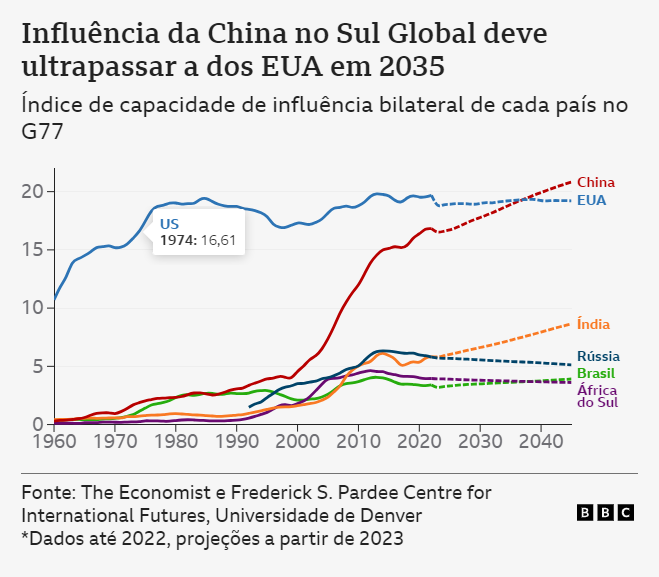
A recent report published in the Economist, which utilized Pardee Institute’s Formal Bilateral Influence Capacity Index (FBIC) data to compare the level of influence of some countries among the members of the G77, has inspired another article by BBC Brasil. The piece titled “Who competes with Brazil for leadership of the 'Global South” delves into the dynamics of influence within the Global South, focusing on Brazil's role and its competitors.
The FBIC data influenced BBC Brasil's analysis of how Brazil positions itself as a leader among developing nations and leverages its economic, political, and cultural ties to assert influence. Observing Brazil’s strategic partnerships and initiatives aimed at strengthening its leadership status.
Additionally, the article compares Brazil's influence with that of other emerging powers, such as China, India, and Russia who also compete for leadership within the Global South.
Prominent publications like The Economist and BBC Brasil Pardee citing the Pardee Institute’s FBIC data highlights the tool’s relevance and utility in understanding global dynamics, grows the Institute’s contribution to the field of international studies, and affirms the importance of the Institute's research in informing public discourse and policymaking.
Copyright ©2026 University of Denver | All rights reserved | The University of Denver is an equal opportunity institution